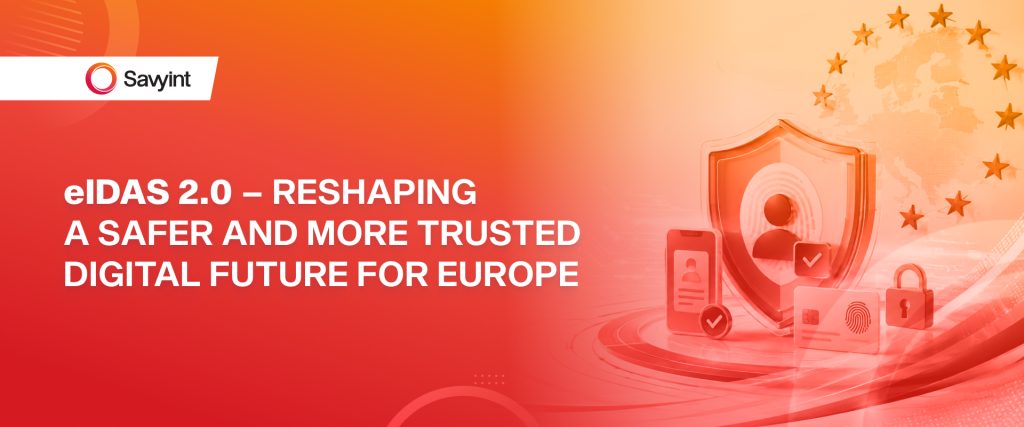
Building on the foundation of eIDAS – the European framework for “Electronic Identification, Authentication and Trust Services” in the European Single Market – eIDAS 2.0 was introduced to strengthen the region’s digital infrastructure, promising greater efficiency and higher levels of trust in the digital economy.
eIDAS – The Regulation on Electronic Identification, Authentication and Trust Services
Approved in September 2014, the Regulation on “Electronic Identification, Authentication and Trust Services” for the European Single Market, known as eIDAS, became fully applicable in September 2018. Under eIDAS, European citizens and businesses can use nationally issued electronic identification systems to verify their identities when accessing public services or carrying out cross-border electronic transactions. eIDAS focuses on two key areas:
- Electronic Identification: eIDAS establishes standards and requirements for electronic identification (eID) schemes, enabling them to operate at different assurance levels when accessing online services across the EU. This simplifies online interactions for citizens, allowing them to securely access government portals, bank accounts, and other services, regardless of the country in which those services are provided.
- Trust Services: The Regulation covers a wide range of trust services, including electronic seals, electronic time stamps, and website authentication certificates. These services play a critical role in ensuring the authenticity, integrity, trustworthiness, and security of electronic transactions.
Importantly, eIDAS applies not only to public authorities but also to private-sector organizations that use electronic identification or trust services, including those in the financial services, insurance, healthcare, and e-commerce sectors. As such, eIDAS serves as a unified digital trust infrastructure for cross-border electronic transactions across Europe.
Why is eIDAS 2.0 Needed?
Although eIDAS significantly improved Europe’s electronic identification and trust services infrastructure, several limitations remained.
The emergence of new electronic identification services and models has resulted in a fragmented market. The scope of the existing legal framework no longer fully reflects the way electronic identification and trust services are being used in practice. Today, private companies also provide eID solutions, but these solutions do not necessarily follow a unified standard offering the same high levels of security, assurance, and transparency as eID schemes recognized under eIDAS.
While eIDAS-compliant eID solutions are secure, their adoption and usability in the private sector have remained relatively limited. Challenges also exist in areas such as identity verification, data management, and user control.
Today’s users expect a seamless and secure online experience. They want to access both public and private services such as healthcare and banking through a single, convenient digital identity or Single Sign-On (SSO) experience. However, the original eIDAS framework focused primarily on cross-border access to public services, while giving less attention to the needs of the private sector. Even for public services, barriers remain that prevent many citizens from accessing trusted electronic identification solutions.
Social media platforms and private technology companies already offer login options based on existing accounts, such as Facebook, Microsoft, or Google. However, these solutions raise concerns regarding data control and security. They often lack robust real-world identity verification processes, potentially making systems more vulnerable. In addition, using these platforms across multiple services may result in non-transparent data sharing and privacy concerns.
What is eIDAS 2.0?
eIDAS 2.0 – officially known as the European Digital Identity Framework under Regulation (EU) 2024/1183 – is the updated version of the European Union’s framework for electronic identification, authentication, and trust services.
The updated framework is designed to improve the efficiency of cross-border services while supporting secure electronic identification solutions for both the public and private sectors.
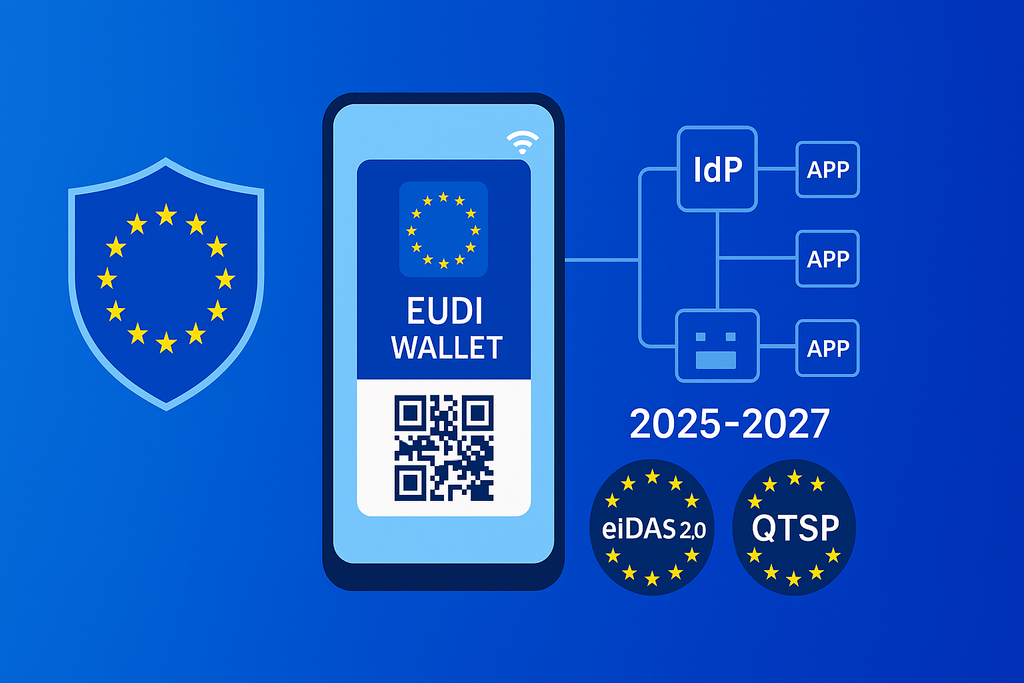
eIDAS 2.0 represents a structural evolution of Europe’s digital identity and trust services framework. It addresses limitations in the original framework, expands the range of regulated trust services, strengthens security and governance requirements, and, most notably, introduces the European Digital Identity Wallet (EUDI Wallet) as a core component of Member States’ digital identity ecosystems.
Key Changes Introduced by eIDAS 2.0
The transition from eIDAS to eIDAS 2.0 introduces two major developments aimed at strengthening Europe’s legal and regulatory framework for electronic identification and trust services.
Expanded Trust Services
eIDAS 2.0 further develops the regulatory framework for Qualified Trust Service Providers (QTSPs), with particular emphasis on identity verification processes for individuals and legal entities when qualified certificates are issued. The objective is to ensure greater consistency and harmonization across Europe.
In addition, new qualified trust services – including electronic archiving, electronic ledgers, and the management of remote electronic signature devices – have been introduced under eIDAS 2.0.
European Digital Identity Wallet (EUDI Wallet)
One of the most significant innovations introduced by eIDAS 2.0 is the European Digital Identity Wallet (EUDI Wallet).
The EUDI Wallet is a secure, user-controlled digital wallet that enables individuals to store, manage, and selectively share their identity data, credentials, and other personal information, as well as verified legal documents such as driving licences, educational qualifications, professional certificates, or bank account information.
The Wallet can be used for both online and offline services, allowing users to conveniently share verified credentials with relying parties including government authorities and private-sector organizations for purposes such as identity verification or electronic signing.
Under the original eIDAS framework, EU Member States had the discretion to decide whether to develop or notify official national electronic identification schemes. This resulted in significant differences in adoption rates among Member States and inconsistencies in cross-border interoperability.
eIDAS 2.0 replaces this approach with a more unified and mandatory framework. By the end of 2026, each EU Member State is required to make at least one European Digital Identity Wallet (EUDI Wallet) available to its citizens and residents.
Conclusion
The adoption of eIDAS 2.0 marks a significant step toward a secure, interoperable, and trusted ecosystem for electronic identification and trust services across the European Union.
By emphasizing user-friendly experiences, strong security mechanisms, and streamlined processes, eIDAS 2.0 is expected to deliver tangible benefits for citizens, businesses, and government institutions alike.
While the detailed implementation roadmap is still being developed, the foundations have now been established for a safer, more inclusive, and more trusted digital future for people across Europe.