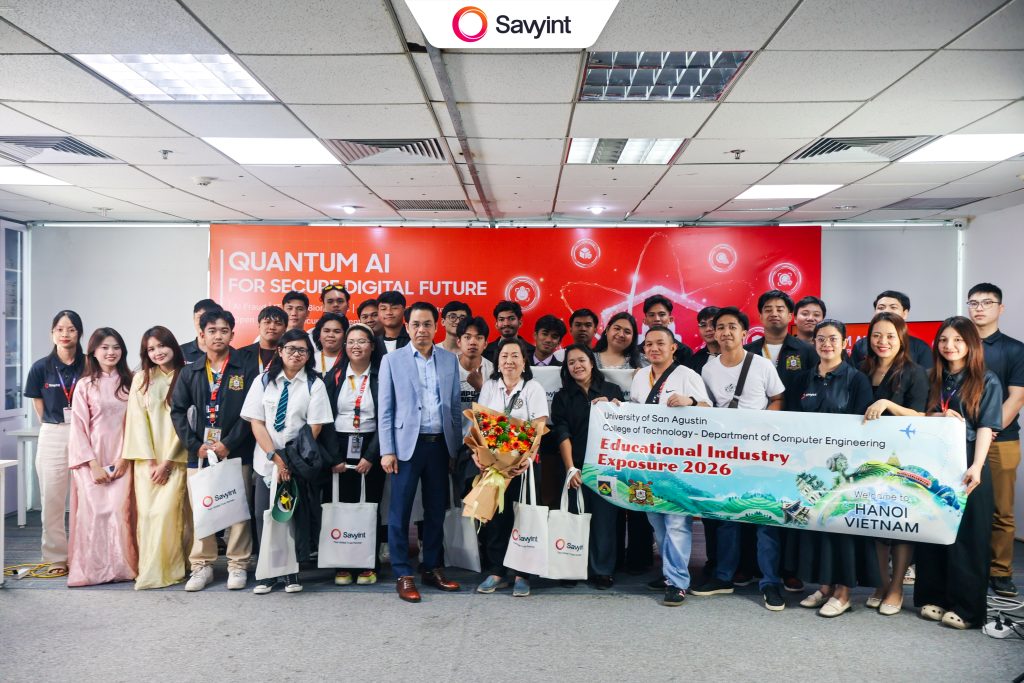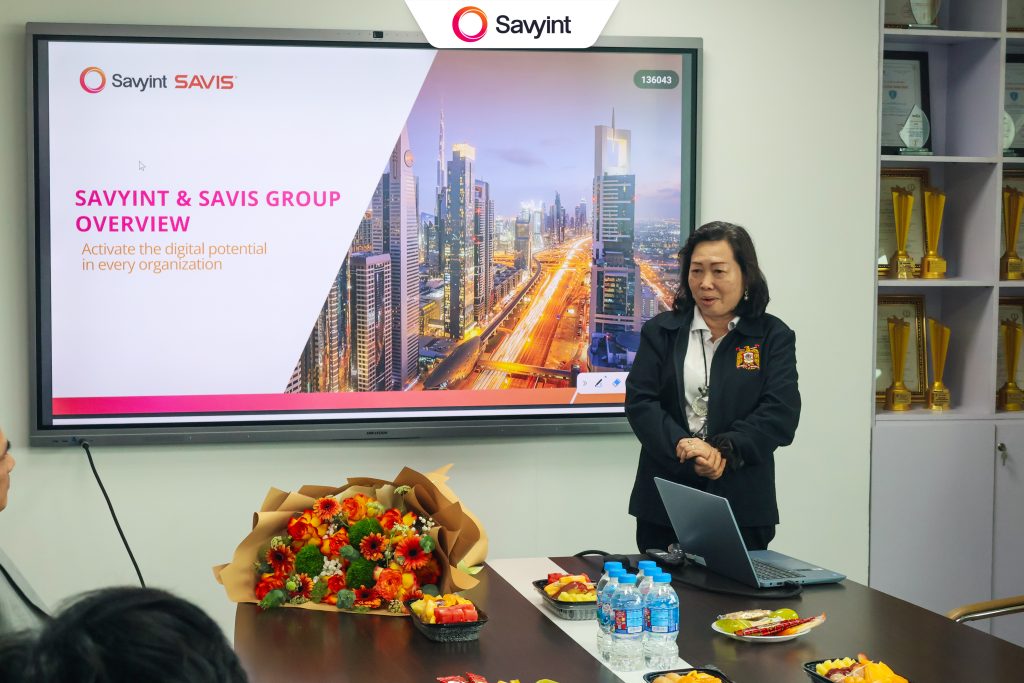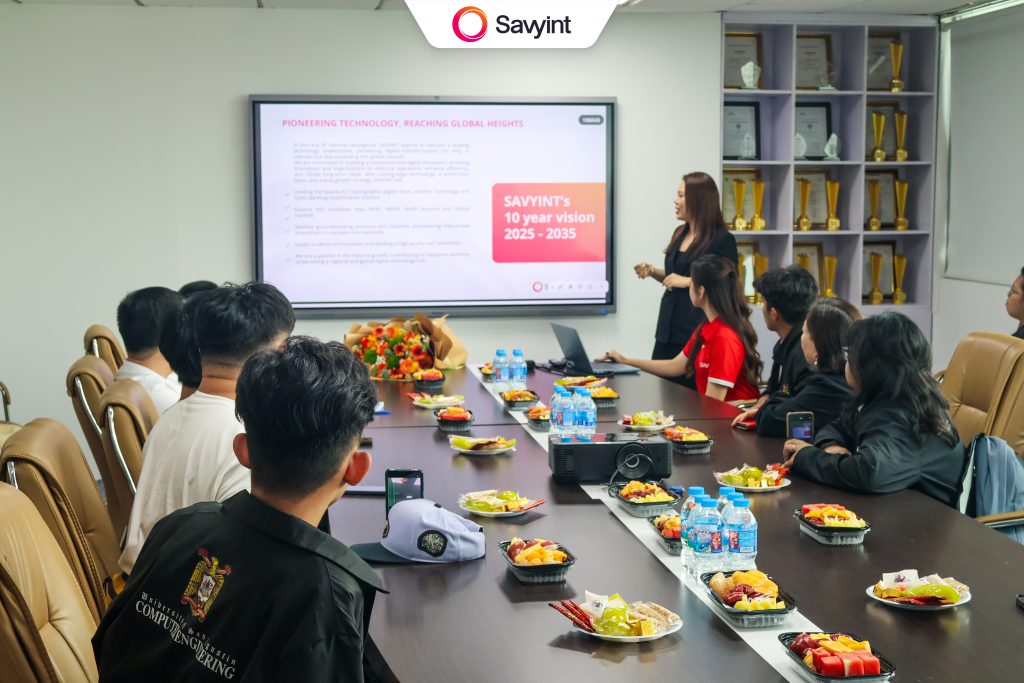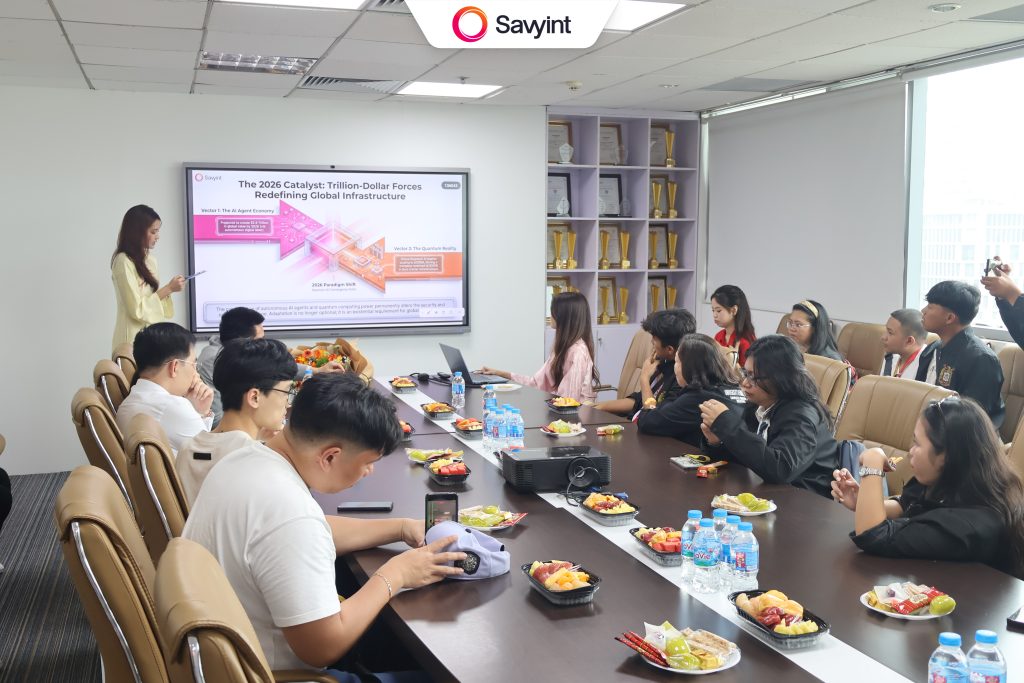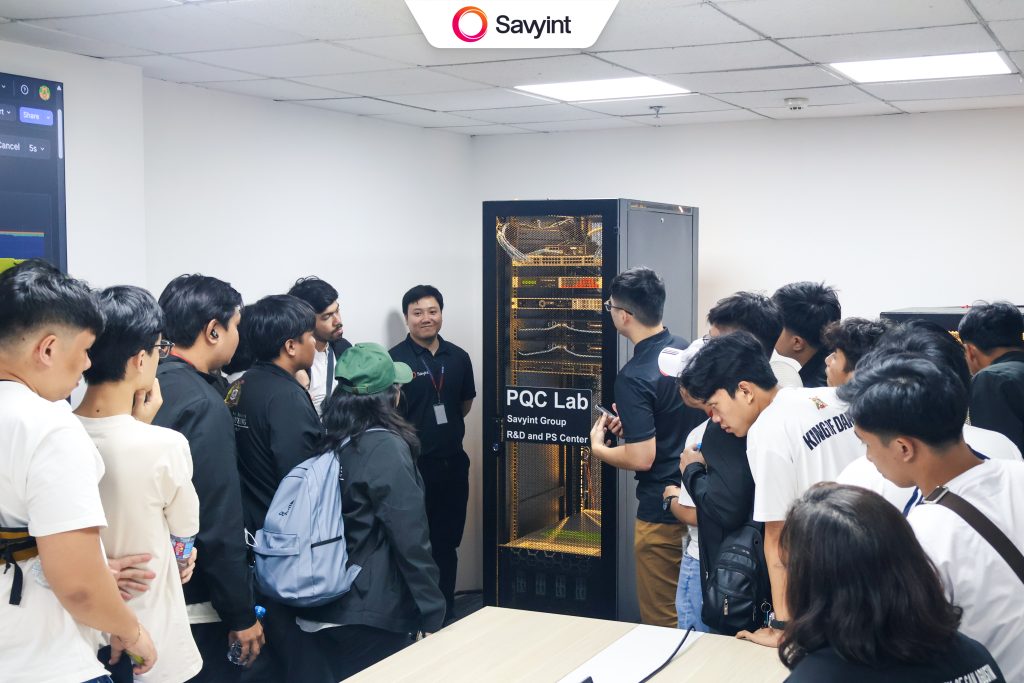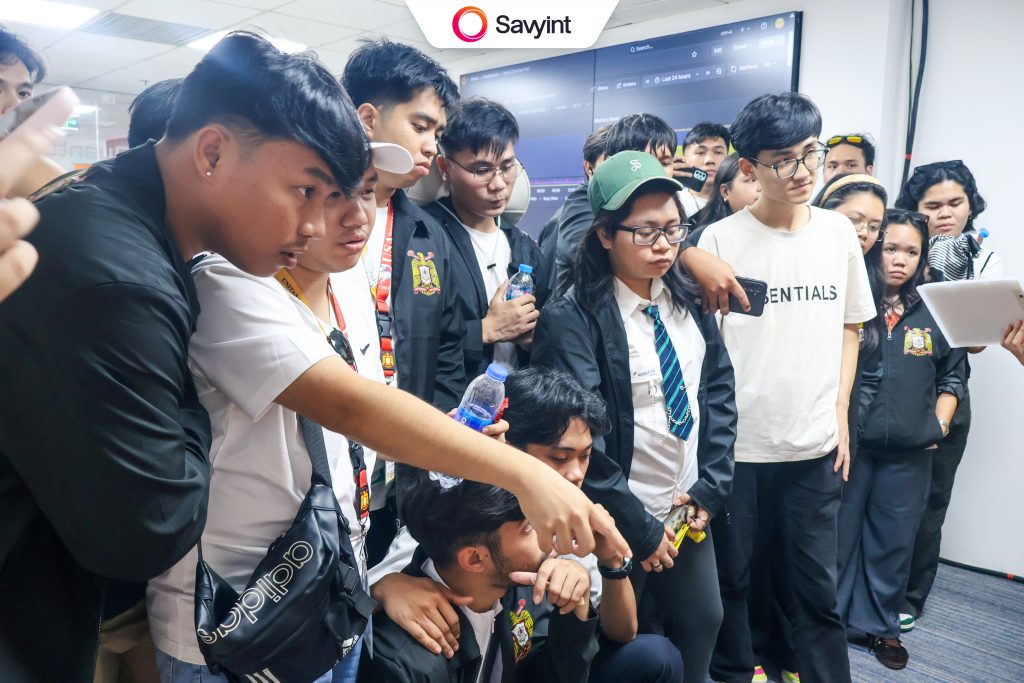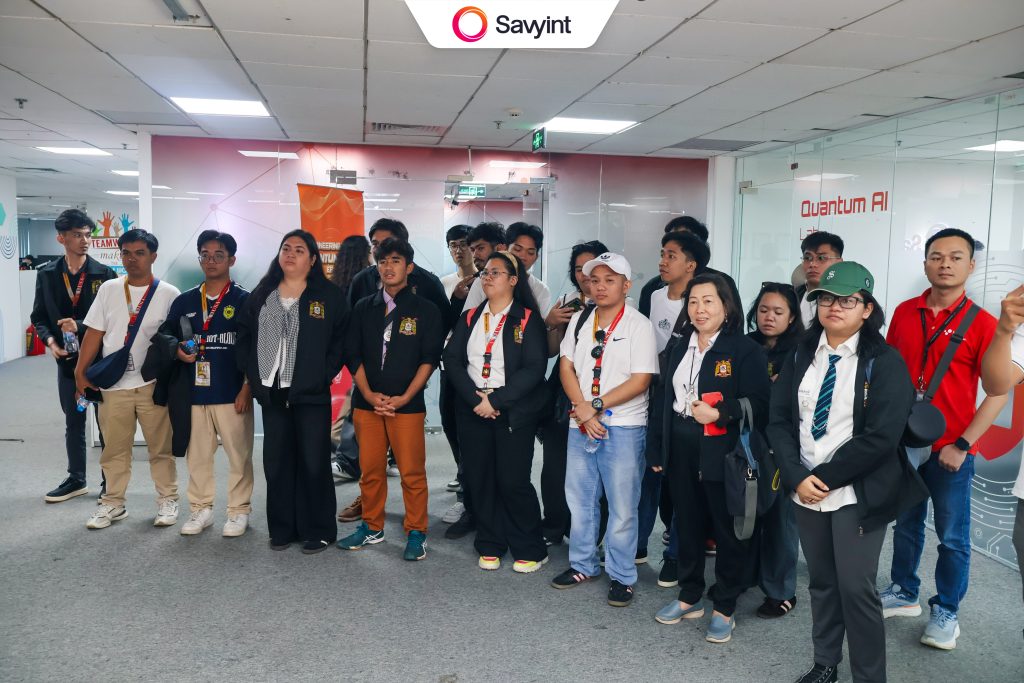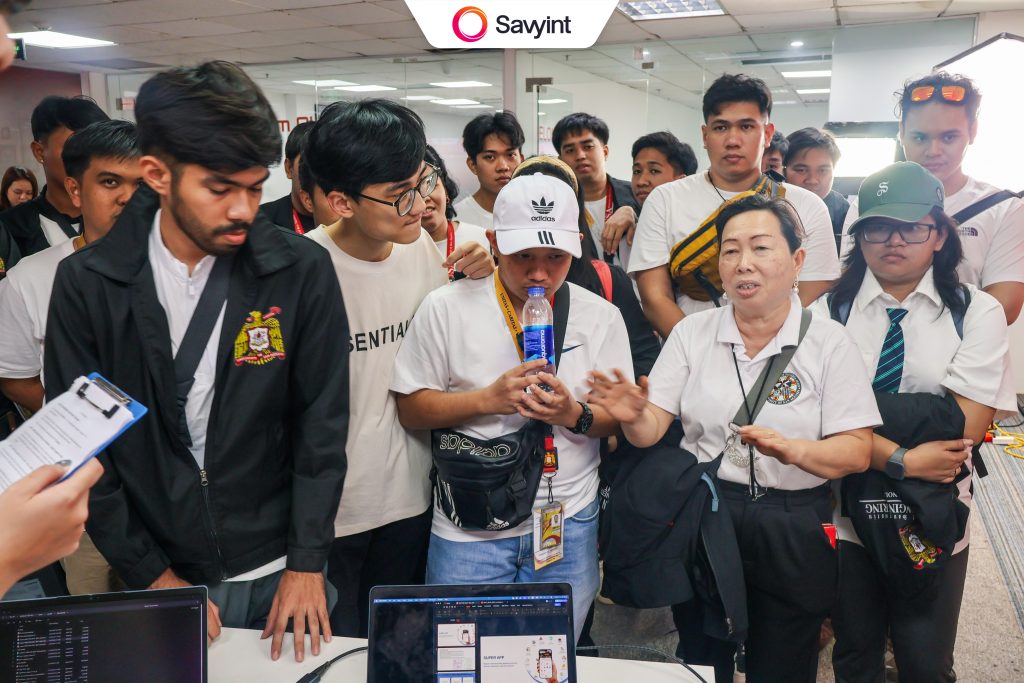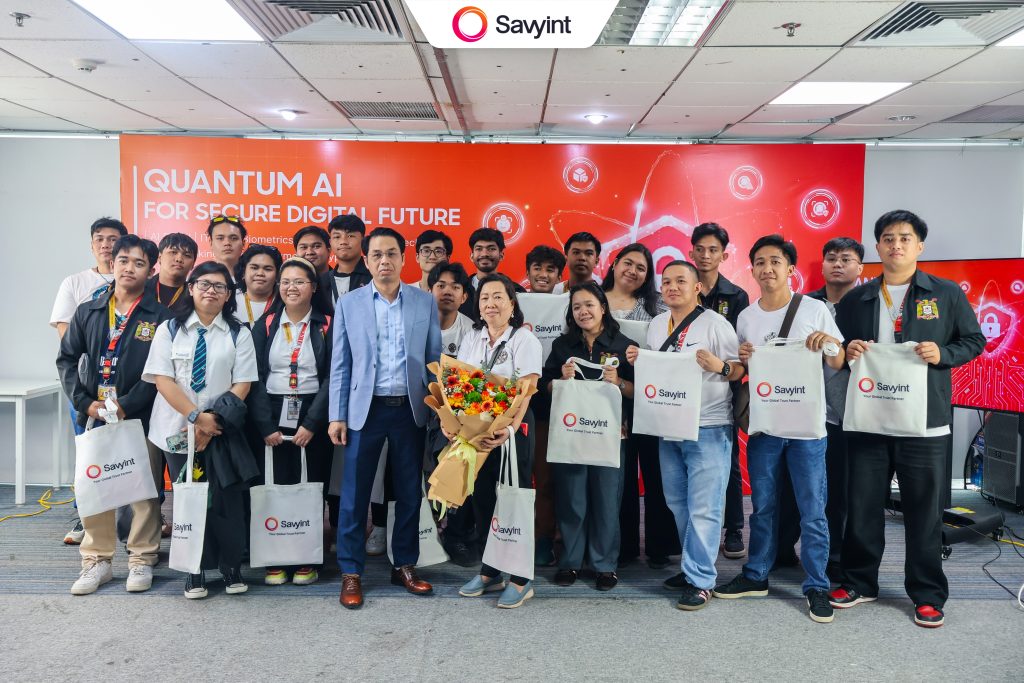
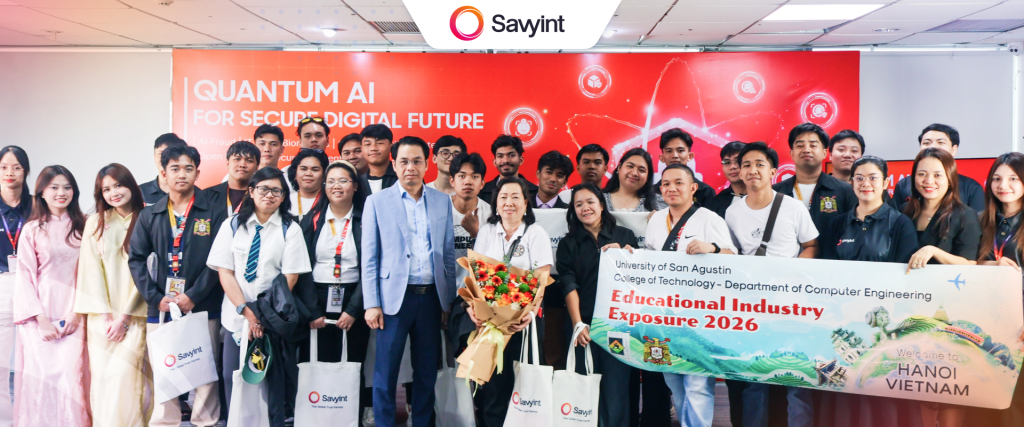
On March 26, Savyint welcomed a student delegation from the University of San Agustin, Philippines. During the visit, the students got a first-hand look at leading technology trends such as Post-Quantum Cryptography (PQC), the Digital Trust platform, AI in fraud prevention, and especially Agentic AI – fields that are shaping the future of global digital security and transformation.
1. Post-Quantum Cryptography (PQC) – Ready for the New Era
As quantum computing gets closer to a breakthrough, traditional encryption methods are at risk of being broken. PQC (Quantum-Resistant Cryptography) has emerged as a vital solution, designed to protect data infrastructure against the massive computing power of this new era.
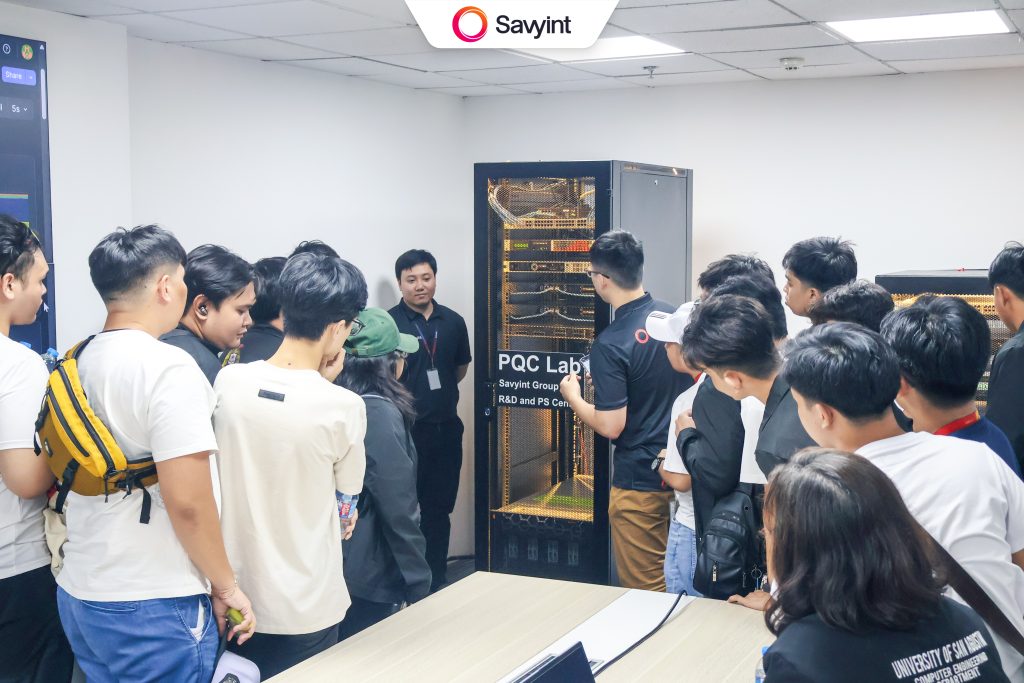
Savyint is a pioneer in integrating advanced PQC standards (like ML-KEM and ML-DSA) into its core systems to secure devices. Furthermore, Savyint has established the Quantum AI Lab – a leading lab in Vietnam for researching and testing these quantum-resistant algorithms. Here, they simulate real-world attacks from “AI hackers” to test how strong their security layers really are.
2. AI Fraud & Digital Trust – Protecting Finance in the AI Age
Beyond the pressure from quantum computers, threats like Deepfakes and automated malware are making financial security more urgent than ever.
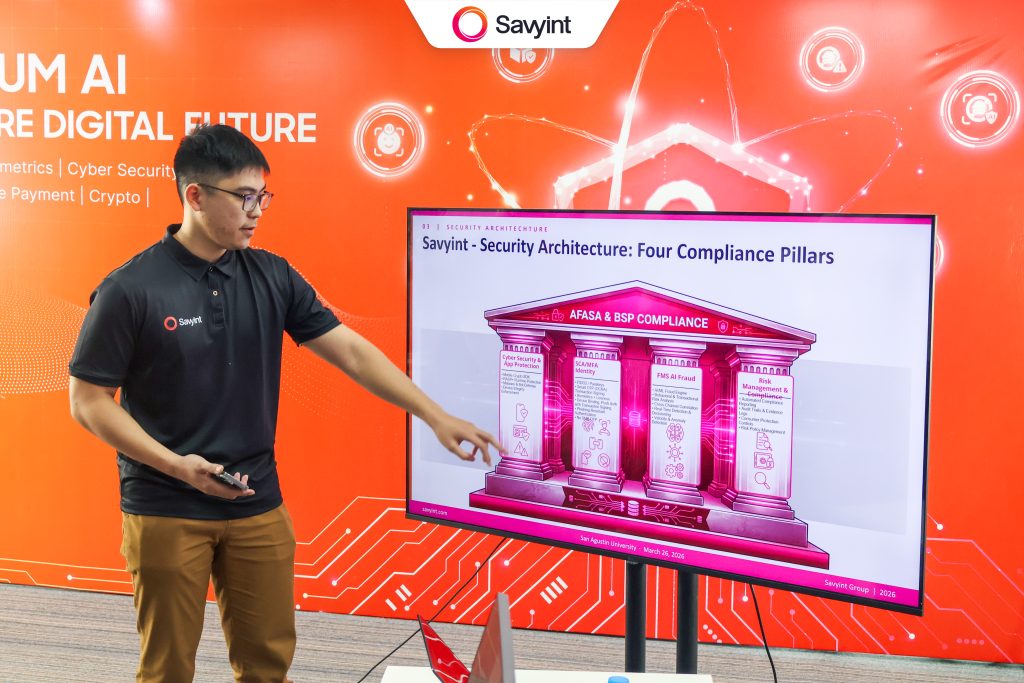
Savyint shared an overview of the 2025 threat landscape, where fraud not only causes financial loss but also creates legal risks for organizations. To fight this, Savyint introduced its Digital Trust platform. This platform uses AI to analyze user behavior, detect unusual activity, and make decisions in real-time. The system is built on four pillars: device security, advanced authentication, AI-based fraud detection, and risk management.
3. Agentic AI – Toward Self-Operating Security Systems
Savyint also introduced Agentic AI – AI systems capable of making decisions and taking action on their own, rather than just creating content or analyzing data.
In fraud prevention, Agentic AI is used to simulate complex attack scenarios to “train” defense systems, helping them react and adapt faster over time. Additionally, these AI agents can:
- Automatically monitor and analyze changes in legal regulations
- Proactively suggest updates to security policies
- Perform continuous identity checks based on user behavior
This approach marks a shift from “reactive” systems to “autonomous” (self-operating) systems, where AI acts as an active partner in the security ecosystem.
The visit gave the University of San Agustin students a practical look at how cutting-edge tech is used in real businesses. It was more than just a learning experience; it was inspiration for the younger generation to join the journey of global innovation.
See more photos from the event below: