
Tourist e-Wallet and Digital Dirham: Great Potential but Significant Challenges
To meet the operational demands of the digital economy and enhance the efficiency of payment systems, the Central Bank of the UAE (CBUAE) has introduced the national digital currency, the Digital Dirham. Recently, the CBUAE discussed four potential use cases for the Digital Dirham, with the development of an electronic wallet for tourists being a particularly prominent topic. The CBUAE recently released the Digital Dirham Primer, a policy report outlining the design principles, policy framework, and initial development steps for the Digital Dirham. In addition to highlighting benefits, challenges, and implementation processes, the report details four use cases for the digital currency, including: Among these, the concept of an electronic travel wallet for tourists has garnered significant attention, given that the UAE attracts millions of international visitors annually, who collectively spend vast amounts on accommodation, shopping, dining, and entertainment. Theoretically, even if just 10% of tourism spending shifts to the Digital Dirham wallet, it could create a substantial economic impact and promote the adoption of the digital national currency. However, launching a tourist e-wallet is not as simple as introducing it to the market and expecting adoption. Most tourists in the UAE rely on Apple Pay, Google Pay, international credit/debit cards, or digital wallets from their home countries, such as UPI (India) or Alipay and WeChat Pay (China). For tourists to adopt a new payment method like the Digital Dirham, it must offer superior value and address inconveniences that existing infrastructure fails to resolve. Key considerations include: The electronic travel wallet scenario is a complex challenge involving multiple factors, including user experience, cost, widespread payment acceptance across various locations, and integration with diverse payment methods. If these elements are effectively addressed, capturing 10% of the tourism spending market share is entirely feasible. Banks and wallet developers must carefully strategize to turn this potential into tangible success.
Curity and Savyint Partner to Advance Identity and API Security for Open Banking in APAC
In July 2025, Savyint, an IT product company specializing in information security, payment security and open banking, and Curity – A global leader in identity and access management (IAM) platforms, announced a strategic partnership to strengthen identity management, user authentication and API security in Open Banking in Vietnam and the broader APAC region. Aligned with Vietnam’s strategy to build a modern digital economy and supported by regulations laying the foundation for open banking, Savyint and Curity collaborate to deliver IAM and API management (APIM) solutions that ensure flexibility, security, and compliance with open banking standards. The partnership focuses on developing highly secure IAM and APIM solutions for the financial and banking sector, adhering to global security and identity standards including OAuth2, OpenID Connect (OIDC), and FAPI – aligned with PSD2, mTLS, and others. Joint solution highlights: This comprehensive authentication, identity management and API security solution serves as the core foundation in the open banking, enabling seamless integration for banks and third-party providers (TPPs), ensuring interoperability with APIM platforms and meeting the technical standards outlined in Circular 50/2024/TT-NHNN on security for online banking services and Circular 64/2024/TT-NHNN on implementing open APIs in the banking sector. Compared to other IAM platforms, Curity demonstrates superior security, compliance with international standards, and deployment flexibility, supporting over 40 security standards like OAuth2, OpenID Connect, FAPI, PKCE, SAML, CIBA, CDR, HSM keystore, Mobile SDK, MFA/SCA, and more. Notably, Curity offers over 30 authentication methods and a specialized Consentor module, a feature not commonly found in other platforms. With PCI DSS compliance, Phantom Token and Token Handler support for SPAs, Curity is an ideal choice for open banking systems requiring high financial security and long-term scalability. According to Kuppinger Cole’s API Security and Management report, Curity ranks among the top leaders in technology and performance, underscoring its ability to deliver robust API security solutions aligned with modern trends, particularly in IAM and API security per standards like OAuth 2.0 and OpenID Connect. Mr Brad Palmer, Chief Operating Officer & Executive Vice President of Savyint, stated: “Our partnership with Curity enables Savyint to deploy advanced IAM solutions that meet the stringent requirements of open banking in Vietnam. With flexible authentication methods, consent management and HSM integration, together with Curity, we will build a secure, transparent, and efficient ecosystem.” Mr Stefan Nilsson, Chief Commercial Officer at Curity, added: “We are excited to collaborate with Savyint to advance open banking in Vietnam. Partnering with Savyint allows us to apply Curity’s global IAM expertise to local markets with precision, fostering secure and scalable open banking frameworks.” About Curity Founded in 2015, Curity is a leading provider of identity management solutions, trusted by major organizations in sectors such as finance, telecommunications, retail, online gaming, energy, and government across multiple countries. Curity focuses on delivering identity and API security solutions compliant with open standards like OAuth 2.0, OpenID Connect, FAPI 1&2, Mobile SDK, MFA/SCA, ensuring data security and optimized user experiences. Curity’s core system, the Curity Identity Server, is recognized as the most comprehensive server supporting OAuth and OpenID Connect standards. Curity is headquartered in Stockholm, Sweden, with a global team of experts. About Savyint Savyint is an IT security company based in Sydney, Australia with an R&D center in Hanoi and international offices in Singapore, Dubai, Ho Chi Minh City (Vietnam), and Sofia (Bulgaria). With over 20 years of experience, Savyint is among the world’s leading IT companies, providing software platforms, system solutions, and services for digital transformation. Its expertise includes open banking, information security, and FinTech, particularly in the Finance & Banking, FSI, Government, Manufacturing, Telecommunications, Healthcare, Education, and Media sectors.
UAE’s Payment Authentication Revolution: The End of SMS OTP
On July 25, 2025, the Central Bank of the UAE (CBUAE) issued a landmark directive mandating all UAE banks to phase out SMS and email OTPs by March 2026. This pivotal move signals a major overhaul of the payment infrastructure, aiming to standardize in-app biometric authentication across the entire banking ecosystem. For years, SMS and email OTPs have been the go-to method for authenticating financial transactions. However, this approach has increasingly revealed vulnerabilities, including OTP leaks and delays due to inconsistent telecommunications infrastructure. Globally, fraud related to SMS OTPs caused a staggering $6.7 billion in losses in 2021. In the UAE alone, scams surged by 43% year-on-year, impacting over 40,000 individuals in 2023, making SMS OTPs an easy target for cybercriminals. To mitigate risks and enhance the user experience in payments and transactions, the CBUAE has directed the banking sector to adopt safer and more advanced authentication mechanisms integrated into mobile banking applications. The directive mandates all UAE banks to: This means that within the first eight months of implementation, financial institutions must develop a transition roadmap, test, and roll out new authentication systems to fully replace traditional OTPs. Users will no longer receive OTPs via SMS or email; instead, they will approve transactions directly within banking apps using fingerprints, facial recognition, or push notifications. This shift reduces transaction latency, enhances user experience, and strengthens security. Currently, banks like Emirates NBD and ADIB have already adopted biometric login and soft tokens, while many others still rely on traditional OTPs and must urgently upgrade before the deadline. This bold move by the UAE is expected to ripple across the GCC, particularly Saudi Arabia, within the next 12 months. A unified standard for secure payment authentication across the MENA region is likely to emerge, fundamentally transforming the current payment infrastructure. Savyint – Pioneering Strong Authentication Solutions for MENA Payments Amid increasingly stringent payment security and user authentication requirements, particularly with the CBUAE’s new regulations, SAVYINT – a global technology leader in open banking, data security, and authentication solutions – is poised to partner with financial institutions and payment service providers across the MENA region. SAVYINT delivers a comprehensive ecosystem of advanced strong authentication solutions, fully compliant with international standards and leveraging cutting-edge passwordless technologies to elevate user experience: SAVYINT offers a robust suite of authentication solutions for payments and transactions: By combining robust authentication technologies with strict adherence to international security standards such as FIDO2, PSD2, eIDAS, GDPR, and PCI DSS, Savyint’s solutions enable banks, fintechs, and service providers in MENA to rapidly deploy modern, flexible authentication platforms that integrate seamlessly with existing systems and fully comply with CBUAE regulations. Connect with Savyint’s experts today to build a secure and compliant payment ecosystem.
Savyint Group attends Entrust UNRIVALED APAC Partner Bootcamp FY26

From July 22-24, 2025, Savyint Group joined leading technology partners from the Asia-Pacific region in Da Nang, Vietnam, to participate in the UNRIVALED APAC Partner Bootcamp FY26, Entrust’s annual in-depth training program. The APAC Partner Bootcamp FY26, hosted by Entrust – a global pioneer in security and PKI – aims to provide comprehensive training for strategic partners across the Asia-Pacific region. This year, event brought together numerous IT experts, strategic partners and senior Entrust leaders from across the Asia-Pacific (APAC) region. The bootcamp served not only as a platform for exchanging expertise in cybersecurity but also as an opportunity for Savyint Group to reinforce its leadership position, expand its data security and PKI solutions in Vietnam and strengthen international partnerships. Through various sessions, Entrust experts shared insights on critical cybersecurity topics, including: Crypto Security – Unified cryptography management to support compliance and risk management; PKI & CLM – Public Key Infrastructure and Certificate Lifecycle Management; Cyber Risk Prevention – Centralized security and identity verification; nShield5 HSM – Next-generation hardware security modules, enhancing performance and meeting the highest security standards. Notably, the topic “Data Security in the AI and Quantum Era” provided deep insights into challenges and solutions for enhancing data security in the age of artificial intelligence and quantum computing – an area where Savyint Group is actively advancing and holds a strong market position. At the event, Mr. Steve Hoang, CTO of Savyint Group, stated: “Participating in the UNRIVALED APAC Partner Bootcamp FY26 alongside Entrust enables Savyint Group and regional strategic partners to stay ahead of 2026 data security trends and expand our ecosystem of comprehensive security solutions. This is also an opportunity for us to enhance our capabilities to serve clients and increase our influence in the region.” With over 20 years of experience in consulting and deploying PKI, HSM, and digital identity and signing platforms for government, finance, banking, healthcare, and education sectors, Savyint Group is committed to partnering with Entrust to build a secure and sustainable digital ecosystem, meeting the growing demands of customers in the digital era. Event hilights: Day 1: Day 2: Day 3:
SAVYINT Named First Official Technology Partner for IDEX’s Next-Gen Access Cards
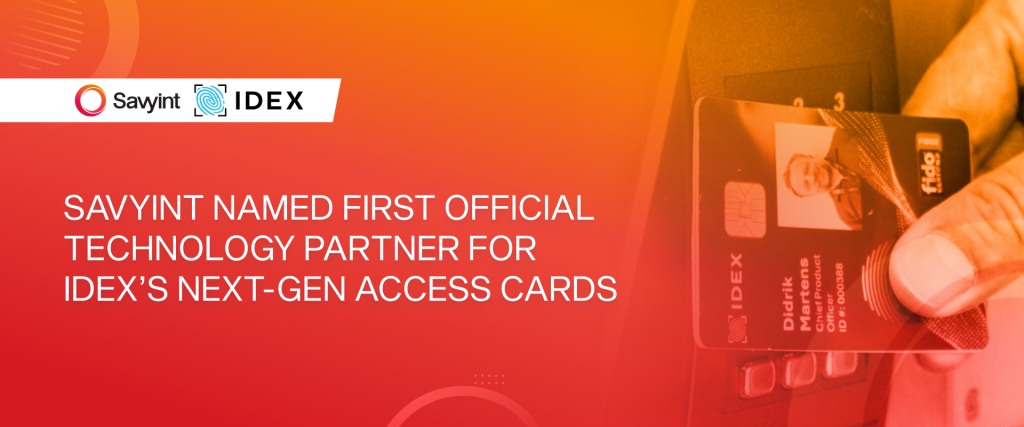
Oslo, Norway – July 25, 2025 – IDEX Biometrics ASA (OSE: IDEX) today announced its first official technology partner agreement with Savyint Group, a leading digital identity and trust services provider in Vietnam. This strategic agreement will bring IDEX’s innovative biometric FIDO Access cards to market across Vietnam and Southeast Asia, marking a significant milestone in the company’s commercial expansion and demonstrating market acceptance for IDEX’s new product line in ID/Access. The agreement addresses the rapidly growing demand for secure digital authentication solutions in Southeast Asia, where organizations across finance, government, enterprise, healthcare, and education sectors are increasingly adopting passwordless authentication and zero-trust security frameworks. The global digital identity solutions market is experiencing explosive growth, projected to grow from $43.07 billion in 2025 to $153.63 billion by 2032, driven by escalating cybersecurity threats and regulatory compliance requirements. The FIDO authentication market specifically is expanding at an exceptional 24.4% CAGR, reaching an expected $5.72 billion by 2029, as organizations rapidly adopt passwordless authentication to combat rising phishing attacks and credential theft. Southeast Asia represents a particularly dynamic opportunity, with the region’s digital economy already reaching $295 billion in 2024 and on track to become a $1 trillion market by 2030, while Asia Pacific is anticipated to register the fastest growth rate in digital identity solutions globally. The IDEX Total Access card represents a breakthrough in secure authentication technology, combining the convenience of traditional access cards with advanced fingerprint biometric authentication. These FIDO-certified cards eliminate the need for passwords while providing the highest levels of security through on-card biometric matching. Users simply place their finger on the card’s integrated sensor for instant, secure authentication to access digital services, making it ideal for enterprise access control, secure login applications, and digital identity verification across multiple platforms. “Digital trust represents the confidence users place in people, technology, and processes to create a secure digital ecosystem,” said Mr. Steve Hoang – CTO & Chairman at Savyint Group. “IDEX’s biometric FIDO Access cards enable us to significantly strengthen and expand our identity solutions portfolio, providing the robust authentication foundation that transparent and secure digital services require.” “Savyint Group has established itself as a trailblazer in digital identity and trust services throughout Vietnam and APAC, with an impressive customer base spanning finance, government, enterprise, healthcare, and education,” said Anders Storbråten, CEO of IDEX Biometrics. “Their proven expertise in customer authentication and commitment to building comprehensive digital trust ecosystems makes them an ideal partner for introducing our biometric access technology to this dynamic market.” This agreement represents a crucial step in building IDEX’s distributorship channel strategy, providing a proven go-to-market pathway for the company’s Total Access cards in the high-growth Southeast Asian region. The agreement positions both companies to capitalize on the accelerating shift toward biometric authentication solutions while establishing a foundation for broader regional expansion. About SAVYINT Savyint is an IT security company based in Sydney, Australia with an R&D center in Hanoi and international offices in Singapore, Dubai, Ho Chi Minh City (Vietnam), and Sofia (Bulgaria). With over 20 years of experience, Savyint is among the world’s leading IT companies, providing software platforms, system solutions, and services for digital transformation. Its expertise includes open banking, information security, and FinTech, particularly in the Finance & Banking, FSI, Government, Manufacturing, Telecommunications, Healthcare, Education, and Media sectors. Website: https://savyint.com/ About IDEX Biometrics IDEX Biometrics ASA (OSE: IDEX) is a global technology leader in fingerprint biometrics, offering authentication solutions across payments, access control, and digital identity. IDEX’s solutions bring convenience, security, peace of mind and seamless user experiences to the world. Built on patented and proprietary sensor technologies, integrated circuit designs, and software, IDEX biometric solutions target card-based applications for payments and digital authentication. As an industry-enabler we partner with leading card manufacturers and technology companies to bring IDEX’s solutions to market. For more information, visit www.idexbiometrics.com For further information, please contact: Anders Storbråten, CEO and CFO, Tel: +47 416 38 582 E-mail: ir@idexbiometrics.com About this notice: This notice was issued by Kjell-Arne Besseberg, COO, on July 29, 2025 at 08:00 CEST on behalf of IDEX Biometrics ASA. This information is subject to the disclosure requirements pursuant to the Norwegian Securities Trading Act section 5-12.
Top 3 drivers of Open Banking
Open Banking is reshaping the financial industry by creating a flexible, transparent, customer-centric financial ecosystem. Supported by technology, regulatory frameworks and rising customer expectations, participating in the Open Banking ecosystem has become a key strategy for innovation, personalization, and enhancing competitiveness. Meeting customer expectations for personalized experiences Today’s customers demand more than traditional financial services. They seek seamless, instant, and value-added experiences in every transaction—from opening accounts and securing loans to managing personal assets. Open Banking enables financial institutions (FIs) and fintechs to leverage customer data—with consent—to deliver personalized solutions and streamline financial processes. For instance, HSBC allows intermediaries to share business account statements, reducing mortgage approval times. Banks and fintechs can develop innovative, personalized financial solutions in areas like payments, lending, or personal financial management (PFM). Statistics show that over 90% of North American consumers use apps for financial management, from bill payments to financial forecasting and cryptocurrency investments. This signals a growing demand for intelligent, data-driven, personalized financial products. Enhancing connectivity through Open APIs Open APIs are the backbone of Open Banking, enabling financial institutions to expand distribution channels and create multi-party ecosystems by: However, this requires modernizing infrastructure. While fintechs are often built with API-first and cloud-native architectures, many FIs are still undergoing digital transformation. Shifting from traditional value chains to multi-party ecosystems presents significant opportunities but demands strategic technology investments. Customer identity: the foundation for secure digital experiences In Open Banking, Know Your Customer (KYC) processes are not just regulatory requirements but central to customer experience and data security. FIs are modernizing identity systems to: Amid rising cybercrime, many banks have adopted Zero Trust Architecture (ZTA) and Multi-Factor Authentication (MFA) to replace traditional passwords—the weakest link. This reduces identity theft risks and better protects customers. Open Banking is no longer just a technological trend but a driver of financial inclusion. With growing customer expectations, the need for Open API connectivity, and secure identity systems, Open Banking is ushering in a new era for FIs, fintechs, and customers, redefining how the financial industry operates. Comprehensive Open Banking solutions from SAVYINT As Open Banking becomes an inevitable trend, with improving regulatory frameworks globally, SAVYINT introduces a comprehensive suite of Open Banking solutions that meet legal and technological requirements, enabling businesses and organizations to fully harness the potential of Open Banking: With deep expertise in deploying electronic identity systems, digital signatures, data encryption, and public key infrastructure (PKI), SAVYINT has partnered with numerous banks and FIs to provide strategic consulting, technical architecture design, standards development, and integration workflows for Open Banking. As a pioneer in developing architecture models, technologies, and process workflows, SAVYINT confidently delivers comprehensive solutions to realize Open Banking strategies—from API integration, consent management, and secure digital identity to establishing ecosystems with third-party providers (TPPs), ensuring compliance with domestic and international regulations. Contact SAVYINT’s experts today to unlock new opportunities with Open Banking.
Open Banking 2025: From data to personalized financial experiences with AI
The year 2025 marks a transformational shift in the Finance – Banking industry as Open Banking combines with Artificial Intelligence (AI) to deliver highly personalized financial experiences – faster, smarter, and better aligned with each individual’s needs. In the Open Banking ecosystem, where financial data is securely and transparently shared via APIs, AI acts as the “brain” that rapidly processes this data to generate personalized recommendations, predictions, and automated financial actions. Here’s how AI is reshaping Open Banking: Today’s customers increasingly demand tailored financial solutions. By learning from behavioral and transactional data, AI enables banks and third parties to offer highly relevant financial recommendations based on each user’s profile, spending patterns, and goals. These include smart budgeting suggestions, loan proposals matched to repayment capacity, or real-time cash flow analysis for improved financial control. Security remains a top priority in digital finance. By analyzing behavioral trends and standard transaction patterns, AI systems can detect anomalies and proactively flag suspicious activities in real time – often before damage occurs. AI also supports the deployment of Zero Trust security models, where every access request is treated as untrusted until verified. With continuous monitoring and threat detection capabilities, AI becomes a trusted guardian of users’ financial data. The finance industry generates massive volumes of data every day – from transactions and credit scores to behavioral signals. AI is the only technology capable of processing and analyzing these large datasets in real time while turning them into actionable insights. For organizations, this means smarter decision-making. For users, it represents a leap from simply viewing account balances to receiving real-time, personalized financial advice. AI-powered chatbots using Natural Language Processing (NLP) are becoming increasingly common in financial institutions. These systems operate 24/7, significantly reduce service costs, and provide instant responses to investment inquiries, debt management questions, account lookups, and more – all contributing to higher customer satisfaction and loyalty. Open Banking extends far beyond traditional bank accounts. Thanks to API and AI integration, financial services can now be embedded across diverse digital platforms – from ride-hailing apps and e-commerce to social media. This means customers can make payments, purchase insurance, or access financing directly within non-banking apps – enabling a seamless and contextual financial experience. AI is accelerating the growth of Banking-as-a-Service (BaaS). Businesses can integrate AI and financial APIs to provide banking-like services without holding a traditional banking license. This fast, flexible, and cost-efficient model is redefining how financial services are delivered and is reshaping the global competitive landscape. Instead of fixed monthly payments, users can now authorize systems to adjust payment amounts and timing based on their account status, income fluctuations, or financial priorities. AI plays a central role in enabling this flexibility by setting intelligent financial triggers – ensuring that all transactions remain automated, secure, and within user-approved parameters. AI is truly transforming data into experience – enabling hyper-personalized financial services for every user. In the race toward inclusive and intelligent finance, the leading edge belongs to those organizations that master data and seize emerging trends with agility and vision.
SAVYINT secures two wins at the 2025 Sao Khue Awards on its first entry

Making a remarkable debut, SAVYINT triumphed at the 2025 Sao Khue Awards with two standout solutions—Enterprise Security Appliance – All in a Box and its Open Banking Platform—winning in the categories of Cybersecurity and Digital Banking, respectively. On April 19, the 2025 Sao Khue Awards Ceremony took place at the Military Theatre, drawing the attendance of key leaders from the Ministry of Information and Communications, executives from VINASA, prominent IT experts, and representatives from Vietnam’s leading technology enterprises. Both of SAVYINT’s award-winning solutions represent significant advancements in the fields of data encryption, digital identity, certificate management and digital banking. Notably, SAVYINT’s Open Banking Platform (BaaS) became the first solution in Vietnam specifically designed for the financial and banking sector to build and connect digital financial ecosystems, earning top honors in the Digital Banking category. Enterprise Security Appliance – All in a Box Following years of research and development in key management, PKI, and digital signature systems – and a deep understanding of enterprise challenges – SAVYINT introduced the Enterprise Security Appliance – All in a Box. This all-in-one solution integrates robust security features into a single hardware device, complete with a built-in Hardware Security Module (HSM). It enables organizations to encrypt data, establish electronic identities, deploy dedicated PKI systems, conduct remote signing, and manage digital certificates throughout their lifecycle. The appliance offers flexible functional modules, including: Tokenization, Electronic Authentication, Digital Identity, PKI System (CA, VA, TSA), Remote Digital Signing, Data Encryption, SCA/FIDO2, End-to-End Encryption (E2E), Data Privacy, Transaction Signing Compact, portable, and easy to deploy, the solution seamlessly integrates with existing IT infrastructures and can be customized or scaled to meet specific business needs—ensuring long-term adaptability. All hardware and software components, along with system operations, comply with the highest international standards for security and legal compliance: Leveraging its status as a Qualified Trust Service Provider (QTSP) under the EU’s eIDAS framework, SAVYINT empowers clients to build tailored Enterprise Security Appliances with remote signing capabilities—fully independent of third parties and optimized for cost-effectiveness and compliance. Open Banking Platform (BaaS) Open banking represents the future of the financial services industry. Around the world, this model has seen rapid evolution. In Vietnam, the State Bank’s Circular No. 64/2024/TT-NHNN on open API implementation marks a major milestone for open banking development in 2025 and beyond. SAVYINT’s Open Banking Platform is the first solution in Vietnam developed to meet both legal and technological demands for creating a comprehensive open banking ecosystem—paving the way for financial inclusion in the digital era. Consumer-centric and API-first, the platform seamlessly integrates cutting-edge technologies such as IoT, Big Data, AI, and Open API. Operating within a transparent and innovative financial ecosystem, it enhances service efficiency and fosters digital transformation. Key components include: As regulatory frameworks solidify and IT infrastructure becomes increasingly robust, now is the optimal time for banks, financial institutions, and fintech companies to embrace open banking—unlocking new revenue streams and elevating customer experience. SAVYINT’s recognition at the 2025 Sao Khue Awards is a testament to its pioneering spirit and unwavering commitment to technological innovation. By developing high-impact IT solutions, SAVYINT is helping businesses and institutions build smart, secure digital ecosystems—supporting Vietnam’s national digital transformation and aligning with global tech trends. About the Sao Khue AwardsHosted annually by the Vietnam Software and IT Services Association (VINASA) under the patronage of the Ministry of Information and Communications, the Sao Khue Awards have honored 1,715 individuals, companies, and IT solutions since their inception in 2003. The awards represent the most prestigious recognition in Vietnam’s IT industry and are highly trusted by both the business community and the broader technology market. Event highlights:
[Stablecoins Report] Stablecoins and CBDCs: Definitions and Objectives – Part 2
Stablecoins and Central Bank Digital Currencies (CBDCs) are widely regarded as powerful instruments for advancing traditional financial systems. They promise to usher in a more inclusive, efficient, and cost-effective global financial landscape. 1. Understanding Stablecoins and CBDCs Both stablecoins and CBDCs are forms of digital currency with stable values typically pegged to fiat money. However, they differ significantly in terms of issuing authorities, governance mechanisms, and several other key aspects: • Issuing Authorities Stablecoins are issued by private entities or decentralized organizations (e.g., Tether, Circle, MakerDAO), whereas CBDCs are issued directly by a country’s central bank. In essence, CBDCs represent state-backed digital versions of national currencies, while stablecoins function as “private money” governed by corporations or communities. • Collateral and Value Assurance CBDCs are recognized as legal tender in some countries, backed by the “full faith and credit” of the government, ensuring their value and usability. In contrast, stablecoins rely on collateral assets or algorithmic mechanisms promised by the issuers. Their value assurance is tied to the issuer’s credibility and reserves, without any governmental guarantee—introducing credit risks not present in CBDCs, which are virtually risk-free like cash. • Technology and Distribution Stablecoins are inherently built on distributed ledger technology (DLT), most commonly blockchain. Users manage stablecoins via personal digital wallets and engage in peer-to-peer transactions over the internet. Conversely, CBDCs are typically developed using centralized ledger technologies. Distribution models vary by country and include: While CBDCs can adopt DLT, they usually employ private versions where the central bank or authorized parties retain control—unlike the open, permissionless nature of public blockchains. • Transparency and Privacy Stablecoin transactions on public blockchains are highly transparent—every transaction is recorded and can be traced using blockchain explorers. However, user anonymity is relatively preserved since wallet addresses aren’t directly linked to real-world identities. CBDCs, on the other hand, are designed with more stringent oversight. Central banks can often access detailed user transaction data (e.g., China’s PBoC can trace all e-CNY transactions). Privacy levels vary by country, but full anonymity—like with cash—is generally avoided due to concerns about financial crime. • Integration with Financial Systems CBDCs integrate seamlessly into national financial systems and monetary policy frameworks. Central banks can regulate the supply of CBDCs and set policies like usage limits or interest rates. Stablecoins operate independently of these systems, and central banks can only influence their supply indirectly through regulation. This independence has raised concerns among regulators who see unregulated stablecoins as potential threats to monetary policy and systemic stability. Nevertheless, with proper regulation, stablecoins and CBDCs can coexist and complement each other. As Singapore’s stance suggests: “Stablecoins can be useful alongside CBDCs if risks are well-managed.” 2. Objectives of CBDCs and Stablecoins Enhancing Payments and Transactions In several countries, both CBDCs and stablecoins are already being used for everyday payments and peer-to-peer (P2P) transfers. Stablecoins offer low-cost, near-instant transactions, enabling users to make payments, shop, or send money directly without going through banks. In China, the e-CNY has been piloted in over 20 major cities including Shenzhen, Beijing, and Shanghai… Citizens can use digital wallets for offline purchases, subway rides, and bill payments. e-CNY is also integrated with popular payment platforms like WeChat Pay and Alipay, boosting accessibility and convenience. Expanding Financial Inclusion In countries with underdeveloped banking systems, stablecoins offer a viable alternative for value exchange, ensuring that transactions can occur even without access to banking services. Digital currencies drive innovation in both technology and economic models, acting as catalysts for digital economies and societies. For instance, migrant workers use stablecoins to send remittances home, bypassing high fees and bureaucratic hurdles associated with traditional money transfer services. Similarly, in Nigeria—where a large portion of the population is unbanked—the Central Bank launched the eNaira in 2021. According to government statistics, millions of new users gained access to financial services through the CBDC, helping bridge the digital divide and support marginalized communities. Facilitating Cross-Border Trade Stablecoins significantly simplify cross-border payments by reducing costs and transfer times. Transactions are nearly instantaneous and much cheaper than traditional bank transfers or services like Western Union. CBDCs also aim to improve cross-border transactions, often through international collaborations. Notable projects include: Powering Decentralized Finance (DeFi) Stablecoins serve as foundational assets in the DeFi ecosystem. Due to their price stability, they are widely used as collateral or borrowing assets in blockchain-based lending platforms. The advent of stablecoins has greatly expanded DeFi’s reach, allowing users to trade and invest without the volatility typical of traditional cryptocurrencies. Preserving Value Amid Inflation and Currency Instability In countries facing high inflation, USD-pegged stablecoins help citizens preserve the value of their assets. Instead of holding rapidly depreciating local currency, people turn to stablecoins as a safe haven. In Nigeria, for example, where the naira depreciated sharply in 2024, stablecoins became a popular choice—helping the country become the world’s second-largest crypto user. These digital dollars enable individuals to save value without needing foreign bank accounts, serving as an effective hedge in unstable economies. Strengthening Monetary Policy and Sovereignty By issuing CBDCs and aggregating user data from wallet providers, central banks gain precise tools to manage money supply and monitor cash flow in real-time. This enhances the effectiveness of monetary policy by reducing reaction time and improving decision-making accuracy. CBDCs also help preserve national monetary sovereignty in the face of competing digital currencies. Unlocking Opportunities for Fintech Innovation CBDCs or stablecoins could attract domestic fintech companies to participate in emerging technology markets—such as the development of open banking products, decentralized finance (DeFi), or cloud-based services—thereby enhancing the country’s financial infrastructure.They also help position a nation as a digital innovation and tech-startup-friendly environment, while still maintaining financial and monetary stability. Stablecoins and CBDCs are promising solutions that can drive the growth of the digital economy.Stablecoins offer flexibility and are widely adopted by the private sector and in emerging markets, whereas CBDCs act as state-led tools to modernize financial systems and improve control over money flows. CBDCs are expected to shape the future of national currencies in the digital era. The