
eIDAS 2.0 – Reshaping a Safer and More Trusted Digital Future for Europe
Building on the foundation of eIDAS – the European framework for “Electronic Identification, Authentication and Trust Services” in the European Single Market – eIDAS 2.0 was introduced to strengthen the region’s digital infrastructure, promising greater efficiency and higher levels of trust in the digital economy. eIDAS – The Regulation on Electronic Identification, Authentication and Trust Services Approved in September 2014, the Regulation on “Electronic Identification, Authentication and Trust Services” for the European Single Market, known as eIDAS, became fully applicable in September 2018. Under eIDAS, European citizens and businesses can use nationally issued electronic identification systems to verify their identities when accessing public services or carrying out cross-border electronic transactions. eIDAS focuses on two key areas: Importantly, eIDAS applies not only to public authorities but also to private-sector organizations that use electronic identification or trust services, including those in the financial services, insurance, healthcare, and e-commerce sectors. As such, eIDAS serves as a unified digital trust infrastructure for cross-border electronic transactions across Europe. Why is eIDAS 2.0 Needed? Although eIDAS significantly improved Europe’s electronic identification and trust services infrastructure, several limitations remained. The emergence of new electronic identification services and models has resulted in a fragmented market. The scope of the existing legal framework no longer fully reflects the way electronic identification and trust services are being used in practice. Today, private companies also provide eID solutions, but these solutions do not necessarily follow a unified standard offering the same high levels of security, assurance, and transparency as eID schemes recognized under eIDAS. While eIDAS-compliant eID solutions are secure, their adoption and usability in the private sector have remained relatively limited. Challenges also exist in areas such as identity verification, data management, and user control. Today’s users expect a seamless and secure online experience. They want to access both public and private services such as healthcare and banking through a single, convenient digital identity or Single Sign-On (SSO) experience. However, the original eIDAS framework focused primarily on cross-border access to public services, while giving less attention to the needs of the private sector. Even for public services, barriers remain that prevent many citizens from accessing trusted electronic identification solutions. Social media platforms and private technology companies already offer login options based on existing accounts, such as Facebook, Microsoft, or Google. However, these solutions raise concerns regarding data control and security. They often lack robust real-world identity verification processes, potentially making systems more vulnerable. In addition, using these platforms across multiple services may result in non-transparent data sharing and privacy concerns. What is eIDAS 2.0? eIDAS 2.0 – officially known as the European Digital Identity Framework under Regulation (EU) 2024/1183 – is the updated version of the European Union’s framework for electronic identification, authentication, and trust services. The updated framework is designed to improve the efficiency of cross-border services while supporting secure electronic identification solutions for both the public and private sectors. eIDAS 2.0 represents a structural evolution of Europe’s digital identity and trust services framework. It addresses limitations in the original framework, expands the range of regulated trust services, strengthens security and governance requirements, and, most notably, introduces the European Digital Identity Wallet (EUDI Wallet) as a core component of Member States’ digital identity ecosystems. Key Changes Introduced by eIDAS 2.0 The transition from eIDAS to eIDAS 2.0 introduces two major developments aimed at strengthening Europe’s legal and regulatory framework for electronic identification and trust services. Expanded Trust Services eIDAS 2.0 further develops the regulatory framework for Qualified Trust Service Providers (QTSPs), with particular emphasis on identity verification processes for individuals and legal entities when qualified certificates are issued. The objective is to ensure greater consistency and harmonization across Europe. In addition, new qualified trust services – including electronic archiving, electronic ledgers, and the management of remote electronic signature devices – have been introduced under eIDAS 2.0. European Digital Identity Wallet (EUDI Wallet) One of the most significant innovations introduced by eIDAS 2.0 is the European Digital Identity Wallet (EUDI Wallet). The EUDI Wallet is a secure, user-controlled digital wallet that enables individuals to store, manage, and selectively share their identity data, credentials, and other personal information, as well as verified legal documents such as driving licences, educational qualifications, professional certificates, or bank account information. The Wallet can be used for both online and offline services, allowing users to conveniently share verified credentials with relying parties including government authorities and private-sector organizations for purposes such as identity verification or electronic signing. Under the original eIDAS framework, EU Member States had the discretion to decide whether to develop or notify official national electronic identification schemes. This resulted in significant differences in adoption rates among Member States and inconsistencies in cross-border interoperability. eIDAS 2.0 replaces this approach with a more unified and mandatory framework. By the end of 2026, each EU Member State is required to make at least one European Digital Identity Wallet (EUDI Wallet) available to its citizens and residents. Conclusion The adoption of eIDAS 2.0 marks a significant step toward a secure, interoperable, and trusted ecosystem for electronic identification and trust services across the European Union. By emphasizing user-friendly experiences, strong security mechanisms, and streamlined processes, eIDAS 2.0 is expected to deliver tangible benefits for citizens, businesses, and government institutions alike. While the detailed implementation roadmap is still being developed, the foundations have now been established for a safer, more inclusive, and more trusted digital future for people across Europe.
SAVYINT Showcases Its Comprehensive Digital Trust Ecosystem at Vietnam Television (VTV)

On August 4, at the exhibition “Cybersecurity for Digital Transformation and Artificial Intelligence Applications at Vietnam Television (VTV)”, SAVYINT introduced its comprehensive Digital Trust ecosystem, helping media and broadcasting organizations build secure digital infrastructure, protect critical data, and proactively address emerging security challenges in the AI era. The exhibition was organized in celebration of Vietnam Cybersecurity Day (August 6) by the Technology and Broadcasting Center of Vietnam Television (VTV) in collaboration with the Department of Cybersecurity and High-Tech Crime Prevention (A05), Ministry of Public Security. The event brought together government agencies, cybersecurity experts, and leading technology companies to showcase the latest innovations in information security, digital transformation, and AI applications for the broadcasting industry. Digital Trust – Strengthening Digital Confidence for Broadcasters Artificial intelligence is fundamentally transforming the way television broadcasters produce, manage, and distribute content, significantly improving operational efficiency and accelerating production workflows. However, these opportunities are accompanied by growing risks, including data breaches, identity fraud, cyberattacks on critical systems, copyright infringement, and the misuse of AI technologies. For television and media organizations – where digital content, sensitive data, and broadcasting infrastructure represent mission-critical assets – establishing a robust Digital Trust foundation through data encryption, identity protection, and strong authentication has become essential for secure and sustainable digital transformation. To address these challenges, SAVYINT introduced its comprehensive Digital Trust portfolio for media and broadcasting organizations. Built on Identity-First and Zero Trust architectures and enhanced with Post-Quantum Cryptography (PQC), the ecosystem enables organizations to secure identities, data, and digital infrastructure against both current and future cyber threats. Beyond compliance with Vietnam’s cybersecurity regulations, SAVYINT’s solutions adhere to internationally recognized security standards and frameworks, including eIDAS, FIPS 140-2 Level 3, ISO 9001:2015, ISO 14001:2015, ISO/IEC 27001:2022, GDPR, SOC 2 Type II, HIPAA, and PCI DSS. At the exhibition, SAVYINT made a strong impression on leaders of Vietnam Television (VTV), representatives from the Ministry of Public Security, the Ministry of National Defence, as well as government agencies and media organizations. The event further reinforced SAVYINT’s position as a leading provider of advanced cybersecurity and Digital Trust solutions, supporting the protection of data, digital content, and Vietnam’s digital sovereignty.
SAVYINT Showcases Post-Quantum Digital Trust Solutions at the International Conference: “Shaping the Future of PKI Infrastructure: Transitioning Cryptographic Standards for Trust Services into the Post-Quantum Era”
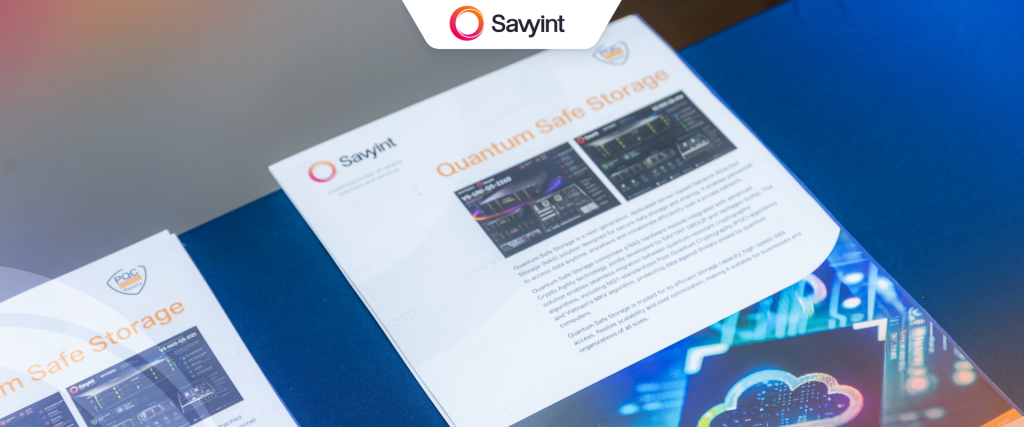
On July 21, in Hanoi, the National Electronic Authentication Center (NEAC) under the Ministry of Science and Technology hosted the international conference “Shaping the Future of PKI Infrastructure: Transitioning Cryptographic Standards for Trust Services into the Post-Quantum Era.” At the event, SAVYINT demonstrated its forward-looking vision by showcasing its comprehensive Digital Trust solutions powered by Post-Quantum Cryptography (PQC). The Post-Quantum Era and New Challenges for Digital Trust The conference was held at a time when countries around the world are accelerating research and preparations for the impact of quantum computing on digital infrastructure. While quantum computing promises unprecedented computational capabilities, it also presents significant challenges to the cryptographic mechanisms currently used to safeguard data, digital identities, and electronic transactions. During the conference, experts discussed emerging trends and challenges in trust services, shared international experiences in modernizing PKI infrastructure, enhancing crypto agility, and preparing migration roadmaps toward next-generation security technologies to ensure digital trust in the post-quantum era. Digital Trust Infrastructure as the Foundation of the Digital Economy In her opening remarks, Ms. To Thi Thu Huong, Director General of the National Electronic Authentication Center (NEAC), emphasized that Vietnam is entering a period of rapid development in its digital economy, digital society, and digital government. In this transformation, Public Key Infrastructure (PKI), digital signatures, and trust services serve as the foundation for electronic identity authentication, data integrity, and trust in digital transactions. Proactively studying international standards, adopting global best practices, and preparing for future cryptographic transitions will not only help maintain digital trust and protect electronic transactions, but also facilitate cross-border interoperability and mutual recognition of trust services, supporting Vietnam’s international integration in the digital era. Three Major Challenges Facing Digital Trust Infrastructure in the Next Decade At the conference, domestic and international experts highlighted three critical challenges that are reshaping digital trust infrastructure worldwide. First, the rapid advancement of quantum computing requires a transition to new cryptographic standards capable of protecting data, digital identities, and electronic transactions in the future. Second, the explosive growth of cloud computing, artificial intelligence (AI), the Internet of Things (IoT), and large-scale digital systems is dramatically increasing the number of digital certificates, connected devices, and trust services requiring authentication, making PKI modernization an urgent priority. Third, the global trend toward shorter digital certificate lifecycles, aimed at strengthening cybersecurity, is placing increasing pressure on certificate lifecycle management and operational efficiency. Experts agreed that the transition to the post-quantum era is not merely a technological challenge, but also one of governance, standardization, and organizational adaptability in an increasingly digital world. One of the key concepts highlighted during the conference was Crypto Agility – the capability that enables systems to seamlessly adopt and transition between cryptographic algorithms. Experts emphasized that adopting Hybrid Cryptography represents the most practical and strategic approach for Certification Authorities (CAs) in Vietnam to gradually migrate to post-quantum security while ensuring uninterrupted operation of existing systems. Strengthening Cryptographic Security Mr. Hoang Nguyen Van, Vice President of theVietnam Institute for Digital Transformation and Innovation (VIDTI), pointed out that the threat posed by quantum computing is no longer a distant concern – it is becoming a reality. Once sufficiently powerful quantum computers emerge, many of today’s cryptographic algorithms protecting government systems, national defense, financial services, banking, healthcare, and other critical infrastructures could be broken. Every nation is facing this security challenge. As economies become increasingly digital, the issue extends beyond protecting data – it is about safeguarding digital sovereigntyandtechnological sovereignty. “Long-lived data with retention periods of 25 to 30 years – such as financial records, strategic assets, public service contracts, and healthcare data faces a significant risk if not protected by next-generation cryptographic standards. Such data could be collected today and decrypted in the future through ‘harvest now, decrypt later’ attacks,” Mr. Hoang Nguyen Van stated. He also proposed a reference roadmap for the 2026 – 2030 period, including: Conducting a comprehensive inventory of cryptographic assets, assessing cryptographic risks, piloting new algorithms and deployment models; and gradually building national capabilities in post-quantum cryptography to safeguard data, electronic transactions, and financial security in the years ahead. According to Mr. Hoang Nguyen Van, the guiding principle for this transition should be “Crypto-Agility First.” This approach enables organizations to update cryptographic algorithms flexibly while maintaining interoperability and minimizing operational disruption when traditional algorithms are no longer considered secure. He further emphasized that the migration extends far beyond replacing cryptographic algorithms. It requires comprehensive modernization across the entire IT ecosystem, including network infrastructure, servers, authentication systems, operational processes, and business applications. To ensure security throughout the transition period, he recommended adopting a Hybrid Cryptography model that combines today’s widely deployed algorithms with quantum-resistant algorithms such as lattice-based cryptography. SAVYINT Brings Post-Quantum Digital Trust Technologies to Vietnam and the Region More than just delivering technology, SAVYINT provides a comprehensive Digital Trust platform that empowers organizations to protect their most valuable data and critical digital assets – both today and in the post-quantum future. SAVYINT’s Digital Trust portfolio addresses the full spectrum of enterprise security and trust requirements while meeting the specialized needs of highly regulated industries such as banking and financial services. Its solution portfolio spans Data Security & Cryptography, Digital Identity & Fraud, and Secure Payment. Post-Quantum Cryptography (PQC) is a foundational technology embedded across many of SAVYINT’s solutions. While awareness of post-quantum security remains relatively limited among many organizations, SAVYINT has proactively integrated globally standardized PQC algorithms into its existing platforms. This enables both existing and new customers to benefit from the latest cryptographic innovations while ensuring that their data and electronic transactions remain protected over the long term – regardless of future algorithm transitions or emerging cyber threats. – SAVYINT SAM FIDO2 Identity Server is a passwordless mobile authentication and identity solution based on the FIDO2 standard, combining data encryption and transaction security. The solution ensures compliance with requirements for blockchain, cryptocurrency, mobile payments, data encryption, transaction encryption, system security, and authentication, addressing the security demands of modern digital ecosystems. – SAVYINT SAM Auth Server is an all-in-one solution for strong authentication data encryption, digital signature
S-Teambuilding 2026: Ride the Infinite Wave

Against the breathtaking backdrop of Angsana Lang Co, Hue, S-Teambuilding 2026 officially kicked off, marking an unforgettable summer for every SAVYINT member. Under the inspiring theme “Ride the Infinite Wave,” the event set the stage for a new journey of resilience, collaboration, and limitless ambition. Three Legendary Teams Ready to Ride the Big Waves The excitement began with the spirited entrance of three dynamic teams, each showcasing its own unique identity and energy. King & Queen 2026 – Where Confidence Meets Charisma Keeping the excitement alive, the much-anticipated King & Queen 2026 competition returned as one of SAVYINT’s signature teambuilding traditions. Contestants competed through three challenging rounds: a freestyle catwalk in self-selected outfits, a creative catwalk featuring surprise props prepared by the organizing committee, and finally, an intelligence round designed to crown the most outstanding King and Queen. After a series of entertaining performances and impressive displays of confidence, King Hine Minh and Queen Nhung Mira from Long Phung Sum Vay claimed the prestigious titles. Beyond their captivating stage presence, both winners impressed the judges with remarkable confidence, effortlessly embracing even the most unconventional accessories provided by the organizers, while delivering outstanding performances in the intelligence round by answering three out of five questions brilliantly. Team Challenges – Where Strength and Unity Prevail Following the emotional coronation ceremony, the three teams dove straight into a series of action-packed challenges filled with laughter, determination, and teamwork. The first challenge, “Relay Together,” required participants to coordinate seamlessly while spinning and passing a rope from one teammate to another before the final member attempted a basketball shot. Although seemingly straightforward, the challenge demanded agility, precise coordination, and even a strong sense of balance to complete successfully. Next came “Ball Collection,” where players had to keep a hoop around their bodies while racing to transport balls back to their team’s basket. The challenge tested not only endurance and agility but also concentration and teamwork under time pressure. The final challenge, “Magic Flying Carpet,” proved to be the ultimate test of synchronization. Four teammates worked together to stretch a fabric sheet and transport cups of water safely to the finish line without spilling. The more water preserved, the greater the chance of victory. Success depended not only on physical coordination but also on strategic planning and flawless teamwork – one mistimed movement meant starting all over again. Gala Dinner – Redefining the Future, Honoring the Journey As the sun set over the stunning Lang Co Bay, SAVYINT’s Gala Dinner unfolded in a warm and inspiring atmosphere. During the evening, Chairman Mr. Steve Huang shared SAVYINT’s strategic vision for the years ahead. Looking toward expansion across the Asia-Pacific region and global markets, SAVYINT aims to become a multinational technology company built upon three strategic pillars: Accelerating platformization, with AI serving as the “operating system” of its technology platforms.; Investing heavily in AI Security research and developmen and expanding a comprehensive partner ecosystem with core strengths in cryptography and data security, digital identity and authentication, Open Banking & Open Finance, payment security, and digital assets. One of the most memorable highlights of the evening was the S-Award 2026 Ceremony, honoring employees who have dedicated 5, 10, and 15 years to SAVYINT. While time may pass in the blink of an eye, every milestone, contribution, and achievement reflects the unwavering commitment and lasting value each individual has brought to the organization. If the afternoon showcased everyone’s physical endurance through exciting team challenges, the Gala Dinner became the stage where hidden artistic talents truly shined. Team All-in-one energized the audience with a lively performance of the hit song APT, getting everyone on their feet. Team Visilead captivated the crowd with a vibrant summer dance performance, perfectly capturing the carefree spirit of the season. Meanwhile, team Long Phung Sum Vay leveraged both its impressive team size and remarkable synchronization to deliver an unforgettable contemporary dance performance. At the end of an exhilarating day, after tallying the scores from every competition, Team Long Phung Sum Vay emerged as the overall champion with a commanding lead. Team Visilead secured second place, while Team All-in-one proudly finished in third. Riding the Infinite Wave Together S-Teambuilding 2026 concluded amid the breathtaking blue waters of Lăng Cô Bay, leaving behind unforgettable memories and an enduring spirit of “Ride the Infinite Wave.” Thank you to every SAVYINT member for making this extraordinary summer possible—where every challenge strengthened our unity, every achievement reflected our determination, and every shared moment became a lasting memory. Together, we will continue riding new waves, embracing new opportunities, and conquering even greater horizons in the journeys ahead. Highlights:
Strengthening Authentication, Fraud Prevention and Risk Governance Become Top Priorities for Philippine Banks
To strengthen fraud prevention, the Bangko Sentral ng Pilipinas (BSP), under Circular No. 1213, requires institutions to adopt enhanced authentication methods in place of SMS and email OTPs, while also strengthening automated fraud management systems. According to BSP Circular No. 1213, issued in May 2025, the central bank requires BSP-supervised financial institutions to replace SMS- and email-based OTPs with stronger authentication methods such as biometrics, behavioural authentication, adaptive authentication, or passwordless authentication by 25 June 2026. In addition, the circular sets out specific requirements for strengthening automated fraud monitoring. This directive applies to banks and e-wallet operators with average online transaction revenues of more than PHP 75 million per month, including most commercial banks, digital banks, cooperative banks, and rural banks. Banks that fail to comply must reimburse customers for funds lost due to fraud. 1. Authentication and Compliance Requirements Circular 1213 requires institutions to move away from authentication mechanisms that can be shared with or intercepted by third parties. SMS and email OTPs fall under this definition. By 30 June 2026, high-risk transactions and critical account changes must use phishing-resistant, device-bound alternatives, such as server-side biometrics authenticated against templates stored by the bank, or FIDO2/WebAuthn passkeys with device authentication. OTPs may only be used to confirm ownership of a registered mobile phone number. Biometrics BSP requires financial institutions to adopt server-side biometric authentication, where customer identity is verified within the bank’s secure backend system based on biometric templates stored on the bank’s server. The use of biometrics is expected to reduce the risks of account takeover, device compromise, spoofing, and unauthorized changes to authentication credentials. FIDO2 Passkey FIDO2/WebAuthn is a passwordless authentication standard designated by BSP as a mandatory solution for high-risk transactions and critical account changes, which must use phishing-resistant and device-bound alternatives. Smart OTP As mentioned above, Smart OTP is used for one purpose only: confirming ownership of a registered mobile phone number. It must not be used for transaction authentication. This is an important distinction that banks should note to avoid confusion with traditional OTPs. 2. Fraud Prevention and Management Requirements In addition to strong authentication methods, Circular 1213 also requires financial and banking institutions to strengthen their proactive fraud monitoring and detection capabilities by identifying suspicious transactions, unfamiliar devices, and abnormal customer behaviour before financial losses occur. Accordingly, fraud management systems must operate in real time and be capable of: BSP emphasizes that batch processing or end-of-day reconciliation does not meet this standard. 3. AI-Powered Strong Authentication and Fraud Prevention Solutions from Savyint With extensive experience working with and supporting financial institutions, SAVYINT provides a security and fraud prevention solution suite that supports compliance with AFASA and BSP Circulars 1213, 1214, and 1215. The solution suite is built around four pillars: strong and passwordless authentication; AI-powered fraud management; security, data encryption, and application protection; and risk management and compliance with local and international regulatory requirements. It ensures end-to-end protection across the entire customer journey, from registration, login, and transaction authentication to post-transaction monitoring. Key differentiators of the SAVYINT solution suite include: In particular, Savyint’s solution suite supports compliance with regulatory requirements in multiple countries, including the Philippines, such as AFASA and BSP Circulars 1213-1215; Vietnam, such as Circulars 50, 64, and 77 of the State Bank of Vietnam; and Singapore, such as MAS requirements. It also aligns with international security standards including FIDO2, PSD2/PSD3, eIDAS, GDPR, PCI DSS,… Connect with our experts today to quickly achieve compliance with AFASA and BSP Circulars 1213-1215.
Savyint Attends Entrust IGNITE APAC Partner Bootcamp FY27 in Bali
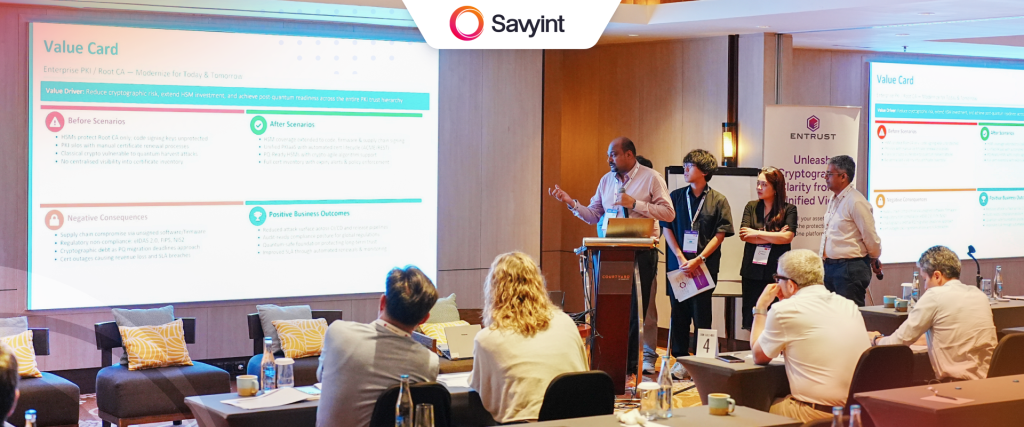
From June 2 to 5, 2026, Savyint joined leading technology partners from across Asia-Pacific in Bali, Indonesia, to attend Entrust IGNITE APAC Partner Bootcamp FY27 – Entrust’s annual intensive training program designed for its strategic partner ecosystem. This year, IGNITE APAC Partner Bootcamp FY27 brought together 79 delegates from 49 companies across 14 countries in the Asia-Pacific region. Under the theme “IGNITE”, the Bootcamp aimed to accelerate growth, strengthen deployment capabilities, and empower partners to capture new opportunities in the evolving markets of data security, digital identity, and cryptographic protection. During the three-day training program, Entrust experts shared key insights into the FY27 market strategy, focusing on enhancing the value of the Cryptographic Security Platform (CSP), modernizing Hardware Security Modules (HSM), and addressing today’s critical security challenges, including: Beyond theoretical training, IGNITE APAC Partner Bootcamp FY27 also provided an interactive learning environment through group activities, case discussions, and hands-on project presentations. Partners from different countries were divided into teams to analyze real-world scenarios, develop solution messaging, respond to customer challenges, and present practical use cases. Ms. Rose Nguyen, BD Sales Director of Savyint, shared: “Participating in IGNITE APAC Partner Bootcamp FY27 was a valuable opportunity for Savyint to stay updated on Entrust’s strategic directions for the new fiscal year, especially key trends in cryptographic security, PKI modernization, and the expanded application of HSM. These insights will help us further enhance our consulting and implementation capabilities, while continuing to support customers in Vietnam.” With the strategic direction and valuable connections gained from this year’s Bootcamp, Savyint will continue to strengthen its technological capabilities and deliver advanced security solutions that address the practical needs of customers. Highlights from the event: Day 1 + Day 2: Day 3:
Savyint Showcases Comprehensive Security Capabilities at Vietnam – Asia DX Summit 2026
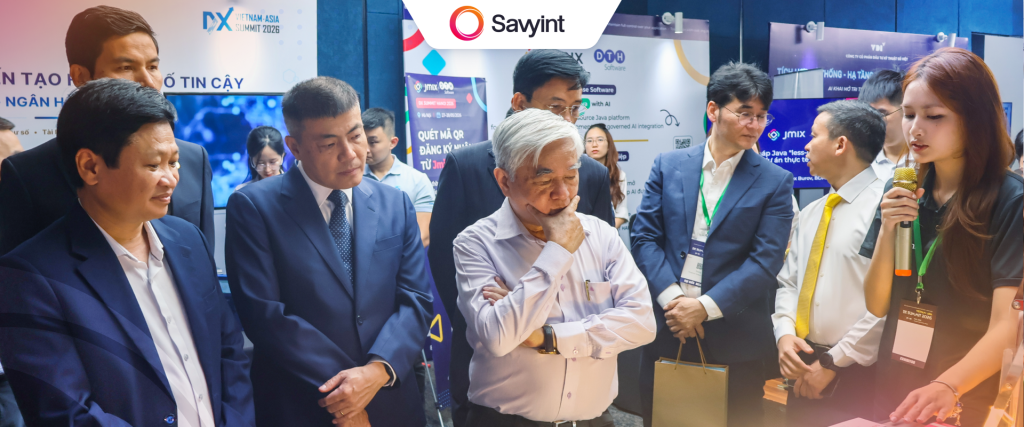
At Vietnam – Asia DX Summit 2026, Savyint Group showcased its comprehensive solution ecosystem, pioneering PQC algorithms to address critical challenges in data encryption, digital trust, fraud prevention, and open banking. Held in Hanoi from May 27–28, 2026, Vietnam – Asia DX Summit 2026 was organized by VINASA under the patronage of the Ministry of Science and Technology. As one of Asia’s leading digital transformation forums, the event gathered government leaders, ministries, local authorities, and 2,000 delegates from 12 economies to discuss solutions for Vietnam’s double-digit growth goals. Under the theme “Creating New Drivers for Double-Digit Growth”, the forum focused on key topics including AI, Data & Automation; Digital Government & Smart Cities; Safety, Security & Digital Sovereignty; Smart Manufacturing & ESG. It also opened up opportunities for strategic connection and cooperation between Vietnam and the broader Asian region in the 2026–2030 deep digital transformation phase. Digital safety, security, and sovereignty remain among the most pressing priorities globally and in Vietnam. A secure, trusted, and resilient digital infrastructure is becoming a critical foundation for businesses, financial institutions, and government agencies to accelerate growth and adapt to emerging risks. Against this backdrop, Savyint introduced at Vietnam – Asia DX Summit 2026 a security solution portfolio including SAM Appliance, Savyint Digital Trust, and Open Banking Tech Stack. Designed on a Zero Trust architecture, with flexible integration and compliance with international standards, these solutions help organizations protect data, verify identities, prevent fraud, and expand digital connectivity. SAM Appliance – An All-in-one Data Encryption, Digital Signature Authentication, and Mobile Identity Solution At the forum, Savyint introduced SAM Appliance, an all-in-one solution for data encryption, digital signature authentication and mobile identification, built on the Cryptographic Security Platform (CSP). SAM Appliance integrates SCA and MFA authentication, PKI-based passwordless authentication, tokenization, transaction signing with End-to-End Encryption, advanced mobile security using cryptography, and support for PQC algorithms. The solution is designed for the next era of security, enabling secure data and transaction encryption, blockchain and cryptocurrency integration, mobile payment and digital wallet connectivity, timestamped digital signing, and long-term electronic archiving for 5, 10, and 20 years. Beyond its technology capabilities, Savyint’s SAM Appliance complies with regional technical standards and international regulations including FIPS 140-2 Level 3, ISO 9001:2015, ISO 14001:2015, ISO 27001:2022, GDPR, SOC 2 Type II, HIPAA, and PCI DSS. It is well suited for sectors with stringent requirements for security, compliance, and data protection, such as finance, banking, e-government, healthcare, and digital commerce. Savyint Digital Trust Solutions – Strengthening Digital Trust from Authentication to Fraud Prevention Alongside its encryption and authentication capabilities, Savyint also presented its Digital Trust Solutions ecosystem, designed to build digital trust across the entire user journey, from identity verification, authentication, device protection, and application protection to real-time fraud detection and prevention. Open Banking Tech Stack – Secure, Open Infrastructure for Financial Ecosystem Connectivity The global financial sector is shifting rapidly toward open finance. Open banking is no longer just a trend, but a strategic requirement for financial institutions to maintain competitive advantage. Savyint’s Open Banking Tech Stack is developed to help banks, financial institutions, and enterprises accelerate digital transformation, expand ecosystem connectivity, and foster innovation in financial services. Compliant with rigorous global standards such as Berlin Group, UK Open Banking, Singapore, Australia, and Hong Kong frameworks, while also meeting domestic and regional regulations, Open Banking Tech Stack provides a complete toolkit for building a modern open banking system, including: Notably, Open Banking Tech Stack can also integrate with secure online payment gateways, creating an end-to-end process for banks and third-party providers participating in open banking, from registration, identity verification, authentication, integration, and data sharing to payment. With core security technologies built in and a comprehensive security ecosystem spanning SAM Appliance, Digital Trust, and Open Banking Tech Stack, Savyint reaffirms its commitment to supporting organizations, enterprises, and the Government in building a solid digital trust foundation for Vietnam’s digital transformation journey. Some snapshots from the event:
Savyint wins two Sao Khue 2026 Awards, with Savyint Digital Trust rated 5 stars

In its second year participating in the Sao Khue Awards, Savyint continues to stay committed to its mission of strengthening cybersecurity and digital trust, with two technology solutions honored at the Sao Khue Awards 2026: Savyint Digital Trust and SAM Appliance. Notably, Savyint Digital Trust received a 5-star rating in the Application and Data Security category. On May 28, the Sao Khue Awards 2026 Ceremony was solemnly held in Hanoi by the Vietnam Software and IT Services Association (VINASA), under the patronage of the Ministry of Science and Technology. Entering its 23rd year, Sao Khue 2026 marks an important transformation as it is redesigned under the “new-generation Sao Khue” model—not only as an event honoring outstanding digital technology products and services, but also as a system for evaluating, validating and positioning the digital technology capabilities of Vietnamese enterprises. After rigorous assessment rounds, the Final Jury of the Sao Khue Awards 2026 selected 123 outstanding digital platforms, services and solutions. These recognized solutions clearly reflect the strong shift in technology trends toward platforms capable of solving practical problems, optimizing operations, protecting data, enhancing transaction security and building trust in the digital environment. This year, Savyint’s award-winning solutions at Sao Khue demonstrate the company’s research, development and mastery of core technologies in cybersecurity, cryptography, electronic identification, digital signatures and online fraud prevention through Savyint Digital Trust and SAM Appliance. In particular, Savyint Digital Trust received a 5-star rating for its relevance and ability to keep pace with global fraud prevention trends. Savyint Digital Trust – A comprehensive security and fraud prevention platform In response to the growing need for proactive fraud prevention and increasingly stringent international regulatory requirements, Savyint Digital Trust is a unified security platform designed to protect the entire digital journey of users and transactions. Built on a Zero Trust security architecture powered by cryptography, Savyint Digital Trust helps organizations strengthen security, enhance user experience and build sustainable digital trust. The solution integrates key capabilities, including: With high scalability and flexible integration with internal enterprise systems, Savyint Digital Trust is suitable for various sectors, including digital banking, fintech, e-wallets, payments, e-commerce, enterprises, government, public services and systems that process sensitive data. SAM Appliance – An all-in-one solution for data encryption, digital signature authentication and mobile identification Alongside Savyint Digital Trust, SAM Appliance is also one of SAVYINT’s two solutions honored at Sao Khue 2026. It is an all-in-one solution for data encryption, digital signature authentication and mobile identity, built on a Cloud HSM platform. The solution ensures compliance with standards for remote signing, blockchain, crypto assets, mobile payment, data encryption, transaction encryption, timestamping, security, system authentication, IoT, Car2X and more. SAM Appliance includes: SAM Appliance confidently complies with regional technical standards as well as international legal and regulatory requirements such as FIPS 140-2 Level 3, ISO 9001:2015, ISO 14001:2015, ISO 27001:2022, GDPR, SOC 2 Type II, HIPAA and PCI DSS. Notably, SAM Appliance supports Post-Quantum algorithms such as ML-KEM, ML-DSA and SLH-DSA, helping shape organizations’ security strategies in the quantum era. The Sao Khue Awards 2026 are not only a recognition of SAVYINT’s innovation efforts, but also a motivation for the company to continue researching, improving and bringing to market more comprehensive solutions for security, identity and digital trust, contributing to the development of a safe, reliable and sustainable digital infrastructure for Vietnam and international markets. Two consecutive years of participation and two consecutive awards at Sao Khue stand as proof of the steadfast journey the company has pursued from the very beginning: strengthening security and building digital trust. Savyint will continue contributing to the development of a secure, trusted and sustainable digital infrastructure for Vietnam and the global market. Some snapshots from the event:
From PSD3 and eIDAS 2.0 to Zero Trust: A New Security Strategy for the Finance and Banking Sector
The financial sector is entering a period of profound transformation. Amid the rapid increase in both the frequency and financial impact of scams and payment fraud – alongside emerging risks from quantum computing and tighter regulatory requirements under PSD3 and eIDAS 2.0, financial institutions need a well-structured, proactive, flexible, and future-ready security strategy. From PSD1, PSD2 to PSD3: A new standard for digital payments and fraud prevention In 2007, the European Union’s first Payment Services Directive, PSD1, established a unified payments market, improved transparency, and enabled cross-border e-commerce. A decade later, PSD2 was introduced, driving competition through open banking, requiring Strong Customer Authentication (SCA), and creating a legal foundation for third-party access to payment accounts. By November 2025, the European Parliament and the Council of the European Union reached a provisional political agreement on PSD3, addressing emerging challenges in digital payments, open banking, and fraud prevention. One of the most notable aspects of PSD3 is the strengthened requirement for Strong Customer Authentication. SCA is no longer limited to payment authentication, but is also extended to a wider range of customer actions, such as changing transaction limits, updating contact information, restoring devices, setting up authorization, or changing authentication methods. Strong authentication is becoming an integral layer across the entire customer journey. Under the latest directive, PSD3 also reinforces the responsibility of payment service providers in fraud prevention. When incidents occur involving authentication failures or suspicious transactions, legal liability must be clearly defined. This is a key driver for financial institutions to invest more heavily in multi-layered authentication, risk analytics, transaction monitoring, and digital identity protection. In addition, PSD3 continues to promote API standardization in open banking, compliance with FAPI, and greater consistency, interoperability, and service quality among banks, fintech companies, and third-party providers. If PSD3 raises the question of how to strengthen customer authentication, reduce fraud, and ensure accountability in digital payments, then eIDAS 2.0 provides part of the answer – by positioning digital identity and electronic identity wallets as a trusted, standardized, and cross-border foundation for user verification. eIDAS 2.0: Digital identity as the foundation of digital trust While PSD3 focuses heavily on payments and financial services, eIDAS 2.0 places electronic identity and trust services at its core. One of the most prominent elements of eIDAS 2.0 is the European Digital Identity Wallet, or EUDI Wallet. The EU DI Wallet enables individuals and businesses to store, manage, and use their digital identity across a wide range of services. When integrated into the financial sector, digital identity wallets can become a powerful authentication method, helping customers access banking services, verify their identity, and conduct transactions more securely. Beyond promoting the EUDI Wallet, eIDAS 2.0 also introduces stricter requirements for Trust Service Providers, or TSPs, in areas such as governance, risk management, and auditability. In particular, crypto-agility and readiness for Post Quantum Cryptography, or PQC, are identified as critical factors to ensure the long-term resilience of trust services. The requirements under PSD3 and eIDAS 2.0 reflect a clear trend: financial security is becoming inseparable from digital identity. A secure transaction requires not only a protected payment system, but also a trusted and verifiable identity authentication foundation. For banks and fintech companies, this creates an urgent need to prepare modern authentication infrastructure that can integrate with digital identity wallets, support passwordless authentication, manage the identity lifecycle, and provide compliance evidence when required. Zero Trust Security Architecture: Never trust by default, always verify Zero Trust is one of the most widely discussed security architectures today, thanks to its strong security posture and core principles: Instead of assuming that users, devices, or applications inside the system are secure, the Zero Trust model starts from the principle that no user, device, or application should be trusted by default. As a result, every access request must be continuously verified, rather than checked only once at login. For the Finance and Banking sector – where sensitive data, high-value transactions, and multiple third-party connection points are involved – a well-implemented Zero Trust security architecture can help organizations reduce the risk of unauthorized access, minimize potential damage when incidents occur, and strengthen control over activities across the entire system. Further reading on Zero Trust: Savyint Group: A trusted partner in building digital trust Bringing together leading experts in open banking, data encryption, and payment security, Savyint is ready to accompany enterprises and global partner ecosystems throughout the journey – from assessment and roadmap consulting to testing and implementation of Zero Trust-aligned security solutions. These solutions are designed to meet stringent international standards such as PSD3, eIDAS 2.0, PCI DSS,… and to prepare organizations for the Post Quantum era. Savyint’s comprehensive security and fraud prevention solution suite, built on a Zero Trust architecture, addresses multiple critical challenges at once: Notably, Savyint is also the first organization to announce a PQC Lab in Vietnam. The lab enables organizations to explore NIST-approved PQC algorithms, address real-world challenges in the Finance sector, and assess compatibility, performance, and impact – without disrupting existing infrastructure or operational systems. Through this testing environment, organizations can reduce migration risks, select suitable technologies, and systematically build internal capabilities. In addition to its deep expertise, Savyint is also a global technology partner of major industry leaders such as Entrust, Keyfactor, Crypto4A, Kryptus, Futurex, Thales,… Connect with Savyint’s experts today to stay ahead of the next wave of security innovation.