
Lily Dream – A Thousand Acts of Love for SAVYINT’s Blooming Flowers

In celebration of Vietnamese Women’s Day on October 20, SAVYINT’s “blooming flowers” enjoyed their own special space to rest, relax, and receive sweet gifts from our male colleagues. With the theme “Lily Dream – A Wonderland of Blossoming Flowers,” this year, Savyint’s women were immersed in a dedicated space filled with the beauty of lilies. Taking a break from their busy work schedules, Savyint’s “blooming flowers” enjoyed a wellness experience featuring neck, shoulder, and upper-back massage. Skilled and professional massage techniques helped relieve stress and restore energy, allowing them to recharge and continue with their busy workday. In addition to neck, shoulder, and upper-back massage, the women also received milk tea, a sweet gift thoughtfully prepared by our male colleagues at Savyint. Each cup carried a message of love and appreciation for the “blooming flowers” who help make the Savyint community more vibrant every day. While the morning was a gentle and relaxing time dedicated to the women, the afternoon became livelier and more exciting with a sweet party celebrating Vietnamese Women’s Day and colleagues whose birthdays fall in October. To liven up the event, the “Fast-Paced Blooming Flowers” mini game brought Savyint colleagues together to compete by answering interesting questions about the women of Savyint, creating an engaging atmosphere and strengthening connections among team members. The winners were announced in no time! Congratulations to the teams and outstanding participants who excelled in the “Fast-Paced Blooming Flowers” mini game and claimed the exciting prizes. Following the mini game, everyone gathered for a warm birthday party with a delightful birthday cake. Savyint wishes all its women continued beauty, confidence, and radiance, along with positive energy in both work and life. To all colleagues celebrating their birthdays in October, may the new year of life bring good health, happiness, and success. Let’s look back at the memorable moments from Lily Dream – A Wonderland of Blossoming Flowers:
Savyint and SAVIS Advance Digital Trust for the Media Industry in Vietnam

On October 9, at the exhibition “VTV – From Traditional Television to a Digital Media Organization: Audience-Centric, Data-Driven and AI-Powered,” organized by Vietnam Television (VTV), Savyint and its partner in Vietnam, SAVIS, showcased a modern suite of AI-powered solutions built on Zero Trust architecture and designed to be post-quantum cryptography-ready for VTV’s digital platforms. As one of the key activities marking Vietnam’s National Digital Transformation Day 2026, the exhibition brought together leading technology companies showcasing solutions for the television and media industries. In his opening remarks, Mr. Đinh Đắc Vĩnh, Deputy Director General of Vietnam Television, stated that the exhibition is one of VTV’s practical annual initiatives, contributing to the effective implementation of Politburo Resolution No. 57-NQ/TW on breakthroughs in science and technology development, innovation and national digital transformation, as well as VTV’s own digital transformation program. In recent years, advanced technologies such as AI and cloud computing have had a significant impact on the television industry, creating numerous opportunities to automate business processes, improve production efficiency, analyze data and personalize viewer experiences. The exhibition’s theme also addresses a key challenge facing broadcasters today: how to make emerging technologies more accessible and apply them more effectively. Supporting the digital transformation of the television industry, SAVIS introduced an ecosystem of solutions combining AI and Zero Trust architecture with post-quantum cryptography readiness. The ecosystem aims to achieve three key objectives: optimizing content production and distribution, maximizing the value of data resources, and building a secure and trusted digital environment, ultimately strengthening national digital sovereignty. AI and data are driving innovation, but a digital media ecosystem can operate sustainably only when all participating entities are authenticated, data is protected, and access rights are appropriately controlled. Together with SAVIS, a leading provider of Digital Trust solutions, Savyint introduced an ecosystem of platforms designed to ensure cybersecurity and information security for press and television organizations: All these platforms incorporate post-quantum cryptography (PQC) algorithms, including ML-KEM, ML-DSA and SLH-DSA, enabling flexible cryptographic transitions while supporting compliance with stringent data security and privacy requirements in Vietnam and internationally, including GDPR, PCI DSS, eIDAS 2.0 and PSD3. With an ecosystem combining AI, Digital Trust, Zero Trust and post-quantum cryptography, Savyint and SAVIS aim to support Vietnam Television and other television and media organizations in Vietnam and across the region in modernizing operations, maximizing the value of data, protecting intellectual property and strengthening cybersecurity capabilities. Some snapshots from the event:
SAVYINT and Kryptus Partner to Build Sovereign Digital Trust Architecture for National-Scale Digital Identity
As countries accelerate the development of digital identity infrastructure and trusted digital services, the challenge is no longer limited to identity verification. It also requires building a Digital Trust foundation capable of protecting cryptographic keys, maintaining a robust Trust Hierarchy, ensuring transaction integrity, and meeting requirements for technological sovereignty. SAVYINT and Kryptus are working closely together across HSM systems, PKI infrastructure, digital signing, timestamping, electronic identity, mobile identity, and FIDO2/Passkey technologies, laying the foundation for Sovereign Digital Trust architectures designed for governments and public-sector organizations. This is not simply a combination of an HSM solution and a PKI platform. SAVYINT and Kryptus are pursuing a broader vision of connecting Cryptographic Trust with Identity Trust – from the protection of cryptographic keys to identity, authentication, and electronic transactions. From Cryptographic Trust to Digital Identity Trust A large-scale Digital Identity ecosystem requires multiple layers of trust to operate in coordination. At the foundational layer, HSMs and the Root of Trust play a critical role in protecting sensitive cryptographic keys and establishing the foundation for PKI. On top of this foundation, components such as Trust Hierarchy, Certificate Policy/Certification Practice Statement (CP/CPS), Key Ceremony, TSA/Timestamping, and Digital Signing help establish and maintain a trusted chain across the entire system. At the identity layer, Digital Identity, Mobile Identity, and FIDO2 extend the capabilities for authenticating and protecting user identities across digital environments. It is the integration of these layers that creates a Digital Trust architecture capable of meeting requirements at scale. And this is precisely where SAVYINT and Kryptus can complement each other. Kryptus – HSM and Root of Trust Foundation Kryptus brings deep expertise in cryptographic security and HSM technologies, providing a foundation for protecting critical cryptographic keys in high-security environments. Within a PKI architecture, an HSM is more than simply a security device. It can serve as a Root of Trust, protecting critical CA keys and supporting the establishment of a secure Trust Hierarchy. Kryptus also brings technological experience within the ICP-Brasil ecosystem, including environments associated with Root CA and Brazil’s public digital certification infrastructure. In addition to HSM technologies, Kryptus develops technologies related to timestamping and time-source management, further extending the role of cryptographic infrastructure in Digital Trust services. These capabilities form the Cryptographic Trust layer of the architecture envisioned by SAVYINT and Kryptus. SAVYINT – PKI, Trust Services and Digital Identity Building on the Root of Trust, SAVYINT contributes an ecosystem of Digital Trust and Digital Identity solutions, including TrustCA Remote Signing, TrustCA Timestamp, Passkey/FIDO2, and Mobile Identity. These capabilities extend from key protection and Trust Hierarchy establishment to services that directly support users and electronic transactions. Combined with Kryptus’s HSM and Root of Trust foundation, these capabilities create an end-to-end value chain spanning cryptographic foundation, trust services, digital identity, authentication, and digital transactions. SAVYINT × Kryptus: Combining Capabilities to Build Sovereign Digital Trust For governments and public-sector organizations, Digital Trust is increasingly linked to requirements for Sovereign Cryptography and Local Key Ownership. A Sovereign Digital Trust architecture should enable organizations to maintain control over critical cryptographic assets and key components of their trust infrastructure, including: With this approach, organizations can build Digital Trust infrastructure aligned with domestic legal and governance requirements while maintaining interoperability with international standards and ecosystems, including: Expanding further, countries can establish National PKI and National Digital Identity ecosystems, strengthening national sovereignty in cyberspace and enabling a more proactive and sustainable approach to digital trust. Contact us today to connect with leading experts in Digital Trust and Digital Identity! KRYPTUS SAVYINT Securing the Root. Empowering Digital Identity. Building Sovereign Digital Trust.
SAVYINT Provides Core Electronic Transaction Authentication Platform for LPBank
Overview – Industry: Banking & Financial Services – Customer: LPBank – Project: Deployment of SmartOTP for LPBank’s retail customers and internal users SAVYINT successfully provided the core electronic transaction authentication platform (SmartOTP) for LPBank, enabling secure, convenient, and seamless transaction authentication directly within the bank’s digital banking application. The solution strengthens security for both financial and non-financial transactions, reduces reliance on SMS OTP, and supports LPBank in meeting the requirements of Circular No. 50/2024/TT-NHNN and Circular No. 77/2025/TT-NHNN issued by the State Bank of Vietnam. LPBank’s Need for Enhanced Authentication Security in Digital Banking Established in 2008, LPBank has built an extensive network across 34 provinces and cities and is one of the 14 banks classified among the credit institutions of systemic importance within Vietnam’s banking system. Amid growing risks related to impersonation, credential theft, and transaction fraud, as well as the regulatory requirements under Circular No. 50/2024/TT-NHNN and Circular No. 77/2025/TT-NHNN on strengthening security and safety in the provision of online banking services, LPBank – with more than 5 million individual customers using digital banking services – required an authentication solution that complies with State Bank of Vietnam (SBV) regulations and can operate at scale while ensuring strong security, ease of use, and flexible integration with its existing digital banking infrastructure. At the same time, LPBank needed to strengthen the centralized administration and operation of its authentication system. Activities such as service activation, SmartOTP status management, exception handling, authentication history lookup, and transaction monitoring needed to be managed centrally, transparently, and with full traceability. To address these requirements, LPBank selected SAVYINT SmartOTP as its core transaction authentication platform, working with SAVIS as the integration and implementation partner to integrate the solution into its digital banking ecosystem. This enables LPBank to progressively reduce its reliance on traditional SMS OTP while establishing a secure and scalable authentication foundation aligned with its long-term digital banking strategy. The SAVYINT Solution With extensive experience in authentication and security solutions for the Banking & Financial Services sector, SAVYINT provides SmartOTP as the core technology platform for electronic transaction authentication, comprising the following key components: 1. SmartOTP SDK Integrated Directly into the Mobile Banking Application The SmartOTP SDK is integrated directly into the LPBank Plus mobile banking application. Through the SDK, the Mobile Banking application can invoke SmartOTP functions at authentication checkpoints throughout the customer transaction journey. Customers can activate SmartOTP, use biometric authentication where supported, authenticate transactions, and manage their SmartOTP settings directly within the LPBank Plus application. This enables a fast, convenient, and seamless authentication experience while strengthening the bank’s ability to manage transaction risks across its mobile banking channel. 2. Admin Portal for Centralized Administration and Operations The Admin Portal provides bank staff with centralized capabilities to monitor customers’ SmartOTP status, retrieve authentication information, review OTP transaction history, and handle operational incidents. The Admin Portal enables centralized management of SmartOTP-related operations, including: The platform also supports monitoring, investigation, and traceability when required, helping strengthen risk management capabilities and maintain transparency throughout system operations. Deployment Roadmap The project was implemented in phases: Key Use Cases SmartOTP Activation and Service Management Transaction Authentication with SmartOTP PIN Management and Security Controls Administration and Operations through the Admin Portal Monitoring, Logging, and Traceability Helping LPBank Strengthen Transaction Security and Customer Experience While Meeting the Requirements of Circular No. 50/2024/TT-NHNN and Circular No. 77/2025/TT-NHNN Officially going live in June 2026, SmartOTP enables LPBank customers to authenticate transactions directly within the Mobile Banking application, delivering a faster, more convenient, and seamless authentication experience. For LPBank, the solution strengthens transaction risk management, reduces reliance on SMS OTP, enables centralized administration through the Admin Portal, and provides a scalable foundation for more advanced authentication requirements in the future. The function-based SDK integration model also enables flexible integration, easier maintenance, and long-term alignment with the bank’s digital banking ecosystem. At the same time, LPBank has met the requirements under Circular No. 50/2024/TT-NHNN and Circular No. 77/2025/TT-NHNN issued by the State Bank of Vietnam, with the solution applied consistently to individual customers. This provides an important foundation for LPBank to strengthen Digital Trust, protect transactions, and enhance the customer experience throughout its digital banking journey.
SAVYINT: Making Its Mark in the Australian Market
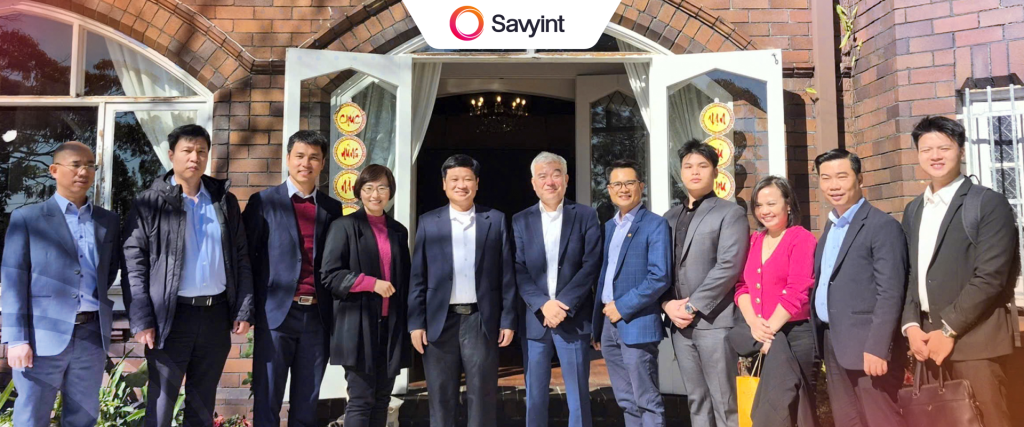
Recently, General Secretary and President Tô Lâm, together with a high-level Vietnamese delegation, paid a State visit to Australia, opening a new chapter for intellectual, technological and innovation cooperation between the two countries. On this occasion, Savyint was honored to join the delegation of the Ministry of Science and Technology in promoting technology and trade cooperation between Vietnam and Australia. Over the course of three working days, the Department of Digital Technology and Artificial Intelligence under the Ministry of Science and Technology organized a series of trade and investment promotion activities with the participation of representatives from Vietnam’s leading technology companies. During the program, Savyint engaged in open and in-depth discussions with leading Australian companies in AI and unmanned systems, as well as prominent universities specializing in science and innovation. These engagements included meetings with the Consulate General of Vietnam in Sydney; DroneShield, a leading defense technology company specializing in UAV detection and counter-drone solutions and a technology partner to the U.S. Department of Defense, NATO, and defense organizations across the Five Eyes alliance; Professor Wenjie Zhang of the University of New South Wales (UNSW) and N2N AI to explore research, technology transfer and commercialization opportunities in trusted and sovereign AI, semiconductors and autonomous drone technologies. The delegation also visited the UTS Tech Lab and met with Professor Diep Nguyen, Head of the UTS 5G/6G Laboratory, Director of the Adaptive Communications and Computing Group, and Director of Transnational Education at the Faculty of Engineering and Information Technology, University of Technology Sydney (UTS). Notably, at the Vietnam – Australia Digital Technology Experts and Businesses Networking Conference, Savyint had the opportunity to introduce its capabilities and connect with more than 30 technology companies and professionals, as well as Vietnamese and Australian experts and intellectuals through the Vietnamese Australian Scholars and Experts Association. The event marked another important step in Savyint’s journey toward the Australia – New Zealand market and its broader strategy of expanding its global network and international presence. SAVYINT is a technology company with extensive market experience and strong capabilities across Financial Services and Banking, Fintech, Healthcare, Education and Digital Government, supported by core expertise in cybersecurity, cryptography, digital identity, electronic authentication, electronic certification and trust services. Building on hands-on implementation experience and a broad technology ecosystem, the company focuses on developing specialized solutions for critical digital systems and infrastructure. Its key technology areas include Crypto & Security, Zero Trust, and fraud detection and prevention for AIoT devices, drones, Smart City systems, aerospace applications, and other environments with stringent requirements for cybersecurity and data protection. In the field of semiconductors and hardware security, SAVYINT is focused on developing technologies such as cryptographic chips, Security ICs, dedicated security chips, Hardware Security Modules (HSMs), and AI Security solutions, strengthening the protection of data, devices and systems from the hardware layer upward. These capabilities also provide the foundation for developing highly specialized and deeply integrated security products across multiple industries. Another key long-term strategic focus is Quantum Security and Quantum-Safe technologies. SAVYINT and SAVIS are investing in research and development of Post-Quantum Cryptography (PQC) and quantum-era cryptographic key management solutions, helping organizations proactively transition and strengthen their resilience against future threats posed by quantum computing. The company’s solutions are designed to comply with leading international security and payment standards, including eIDAS, PSD2/PSD3, NIST, FIPS, Common Criteria (CC), FIDO and PCI DSS. From a market perspective, the company is accelerating its business development and partnerships across Australia and New Zealand, with operations in Melbourne and Sydney, while also pursuing growth opportunities in ASEAN, ASEAN+2, the Middle East and India through its ecosystem of partners, investments and technology collaborations. The company’s goal is to progressively bring SAVYINT’s core technologies and advanced security solutions to regional and international markets. Highlights from the visit:
SAVYINT Showcases Its Comprehensive Digital Trust Ecosystem at Vietnam Television (VTV)

On August 4, at the exhibition “Cybersecurity for Digital Transformation and Artificial Intelligence Applications at Vietnam Television (VTV)”, SAVYINT introduced its comprehensive Digital Trust ecosystem, helping media and broadcasting organizations build secure digital infrastructure, protect critical data, and proactively address emerging security challenges in the AI era. The exhibition was organized in celebration of Vietnam Cybersecurity Day (August 6) by the Technology and Broadcasting Center of Vietnam Television (VTV) in collaboration with the Department of Cybersecurity and High-Tech Crime Prevention (A05), Ministry of Public Security. The event brought together government agencies, cybersecurity experts, and leading technology companies to showcase the latest innovations in information security, digital transformation, and AI applications for the broadcasting industry. Digital Trust – Strengthening Digital Confidence for Broadcasters Artificial intelligence is fundamentally transforming the way television broadcasters produce, manage, and distribute content, significantly improving operational efficiency and accelerating production workflows. However, these opportunities are accompanied by growing risks, including data breaches, identity fraud, cyberattacks on critical systems, copyright infringement, and the misuse of AI technologies. For television and media organizations – where digital content, sensitive data, and broadcasting infrastructure represent mission-critical assets – establishing a robust Digital Trust foundation through data encryption, identity protection, and strong authentication has become essential for secure and sustainable digital transformation. To address these challenges, SAVYINT introduced its comprehensive Digital Trust portfolio for media and broadcasting organizations. Built on Identity-First and Zero Trust architectures and enhanced with Post-Quantum Cryptography (PQC), the ecosystem enables organizations to secure identities, data, and digital infrastructure against both current and future cyber threats. Beyond compliance with Vietnam’s cybersecurity regulations, SAVYINT’s solutions adhere to internationally recognized security standards and frameworks, including eIDAS, FIPS 140-2 Level 3, ISO 9001:2015, ISO 14001:2015, ISO/IEC 27001:2022, GDPR, SOC 2 Type II, HIPAA, and PCI DSS. At the exhibition, SAVYINT made a strong impression on leaders of Vietnam Television (VTV), representatives from the Ministry of Public Security, the Ministry of National Defence, as well as government agencies and media organizations. The event further reinforced SAVYINT’s position as a leading provider of advanced cybersecurity and Digital Trust solutions, supporting the protection of data, digital content, and Vietnam’s digital sovereignty.
SAVYINT Showcases Post-Quantum Digital Trust Solutions at the International Conference: “Shaping the Future of PKI Infrastructure: Transitioning Cryptographic Standards for Trust Services into the Post-Quantum Era”
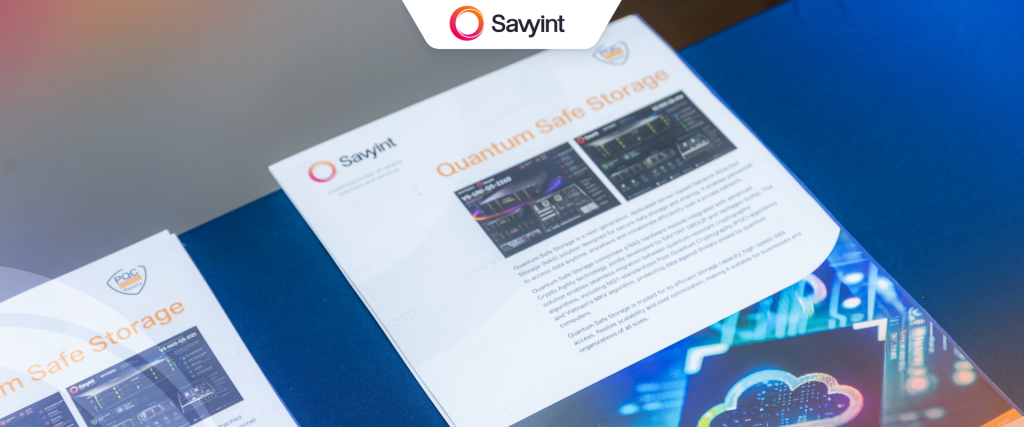
On July 21, in Hanoi, the National Electronic Authentication Center (NEAC) under the Ministry of Science and Technology hosted the international conference “Shaping the Future of PKI Infrastructure: Transitioning Cryptographic Standards for Trust Services into the Post-Quantum Era.” At the event, SAVYINT demonstrated its forward-looking vision by showcasing its comprehensive Digital Trust solutions powered by Post-Quantum Cryptography (PQC). The Post-Quantum Era and New Challenges for Digital Trust The conference was held at a time when countries around the world are accelerating research and preparations for the impact of quantum computing on digital infrastructure. While quantum computing promises unprecedented computational capabilities, it also presents significant challenges to the cryptographic mechanisms currently used to safeguard data, digital identities, and electronic transactions. During the conference, experts discussed emerging trends and challenges in trust services, shared international experiences in modernizing PKI infrastructure, enhancing crypto agility, and preparing migration roadmaps toward next-generation security technologies to ensure digital trust in the post-quantum era. Digital Trust Infrastructure as the Foundation of the Digital Economy In her opening remarks, Ms. To Thi Thu Huong, Director General of the National Electronic Authentication Center (NEAC), emphasized that Vietnam is entering a period of rapid development in its digital economy, digital society, and digital government. In this transformation, Public Key Infrastructure (PKI), digital signatures, and trust services serve as the foundation for electronic identity authentication, data integrity, and trust in digital transactions. Proactively studying international standards, adopting global best practices, and preparing for future cryptographic transitions will not only help maintain digital trust and protect electronic transactions, but also facilitate cross-border interoperability and mutual recognition of trust services, supporting Vietnam’s international integration in the digital era. Three Major Challenges Facing Digital Trust Infrastructure in the Next Decade At the conference, domestic and international experts highlighted three critical challenges that are reshaping digital trust infrastructure worldwide. First, the rapid advancement of quantum computing requires a transition to new cryptographic standards capable of protecting data, digital identities, and electronic transactions in the future. Second, the explosive growth of cloud computing, artificial intelligence (AI), the Internet of Things (IoT), and large-scale digital systems is dramatically increasing the number of digital certificates, connected devices, and trust services requiring authentication, making PKI modernization an urgent priority. Third, the global trend toward shorter digital certificate lifecycles, aimed at strengthening cybersecurity, is placing increasing pressure on certificate lifecycle management and operational efficiency. Experts agreed that the transition to the post-quantum era is not merely a technological challenge, but also one of governance, standardization, and organizational adaptability in an increasingly digital world. One of the key concepts highlighted during the conference was Crypto Agility – the capability that enables systems to seamlessly adopt and transition between cryptographic algorithms. Experts emphasized that adopting Hybrid Cryptography represents the most practical and strategic approach for Certification Authorities (CAs) in Vietnam to gradually migrate to post-quantum security while ensuring uninterrupted operation of existing systems. Strengthening Cryptographic Security Mr. Hoang Nguyen Van, Vice President of theVietnam Institute for Digital Transformation and Innovation (VIDTI), pointed out that the threat posed by quantum computing is no longer a distant concern – it is becoming a reality. Once sufficiently powerful quantum computers emerge, many of today’s cryptographic algorithms protecting government systems, national defense, financial services, banking, healthcare, and other critical infrastructures could be broken. Every nation is facing this security challenge. As economies become increasingly digital, the issue extends beyond protecting data – it is about safeguarding digital sovereigntyandtechnological sovereignty. “Long-lived data with retention periods of 25 to 30 years – such as financial records, strategic assets, public service contracts, and healthcare data faces a significant risk if not protected by next-generation cryptographic standards. Such data could be collected today and decrypted in the future through ‘harvest now, decrypt later’ attacks,” Mr. Hoang Nguyen Van stated. He also proposed a reference roadmap for the 2026 – 2030 period, including: Conducting a comprehensive inventory of cryptographic assets, assessing cryptographic risks, piloting new algorithms and deployment models; and gradually building national capabilities in post-quantum cryptography to safeguard data, electronic transactions, and financial security in the years ahead. According to Mr. Hoang Nguyen Van, the guiding principle for this transition should be “Crypto-Agility First.” This approach enables organizations to update cryptographic algorithms flexibly while maintaining interoperability and minimizing operational disruption when traditional algorithms are no longer considered secure. He further emphasized that the migration extends far beyond replacing cryptographic algorithms. It requires comprehensive modernization across the entire IT ecosystem, including network infrastructure, servers, authentication systems, operational processes, and business applications. To ensure security throughout the transition period, he recommended adopting a Hybrid Cryptography model that combines today’s widely deployed algorithms with quantum-resistant algorithms such as lattice-based cryptography. SAVYINT Brings Post-Quantum Digital Trust Technologies to Vietnam and the Region More than just delivering technology, SAVYINT provides a comprehensive Digital Trust platform that empowers organizations to protect their most valuable data and critical digital assets – both today and in the post-quantum future. SAVYINT’s Digital Trust portfolio addresses the full spectrum of enterprise security and trust requirements while meeting the specialized needs of highly regulated industries such as banking and financial services. Its solution portfolio spans Data Security & Cryptography, Digital Identity & Fraud, and Secure Payment. Post-Quantum Cryptography (PQC) is a foundational technology embedded across many of SAVYINT’s solutions. While awareness of post-quantum security remains relatively limited among many organizations, SAVYINT has proactively integrated globally standardized PQC algorithms into its existing platforms. This enables both existing and new customers to benefit from the latest cryptographic innovations while ensuring that their data and electronic transactions remain protected over the long term – regardless of future algorithm transitions or emerging cyber threats. – SAVYINT SAM FIDO2 Identity Server is a passwordless mobile authentication and identity solution based on the FIDO2 standard, combining data encryption and transaction security. The solution ensures compliance with requirements for blockchain, cryptocurrency, mobile payments, data encryption, transaction encryption, system security, and authentication, addressing the security demands of modern digital ecosystems. – SAVYINT SAM Auth Server is an all-in-one solution for strong authentication data encryption, digital signature
Savyint Showcases Comprehensive Security Capabilities at Vietnam – Asia DX Summit 2026
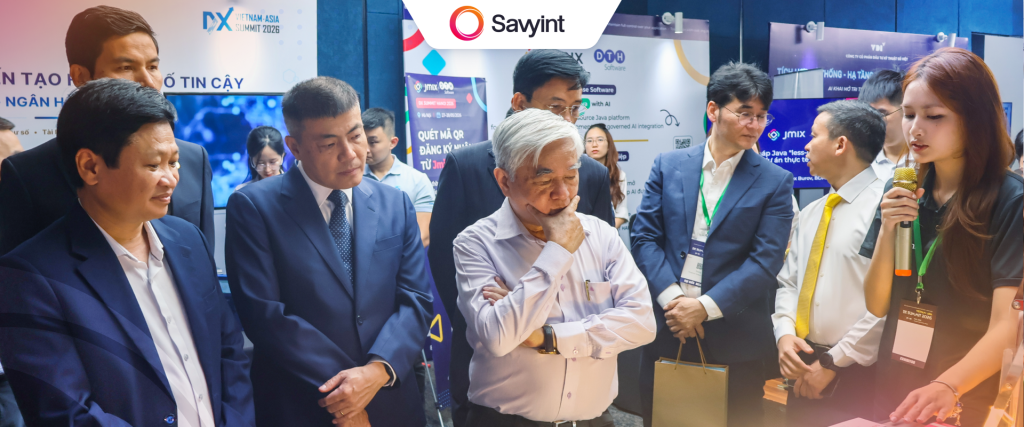
At Vietnam – Asia DX Summit 2026, Savyint Group showcased its comprehensive solution ecosystem, pioneering PQC algorithms to address critical challenges in data encryption, digital trust, fraud prevention, and open banking. Held in Hanoi from May 27–28, 2026, Vietnam – Asia DX Summit 2026 was organized by VINASA under the patronage of the Ministry of Science and Technology. As one of Asia’s leading digital transformation forums, the event gathered government leaders, ministries, local authorities, and 2,000 delegates from 12 economies to discuss solutions for Vietnam’s double-digit growth goals. Under the theme “Creating New Drivers for Double-Digit Growth”, the forum focused on key topics including AI, Data & Automation; Digital Government & Smart Cities; Safety, Security & Digital Sovereignty; Smart Manufacturing & ESG. It also opened up opportunities for strategic connection and cooperation between Vietnam and the broader Asian region in the 2026–2030 deep digital transformation phase. Digital safety, security, and sovereignty remain among the most pressing priorities globally and in Vietnam. A secure, trusted, and resilient digital infrastructure is becoming a critical foundation for businesses, financial institutions, and government agencies to accelerate growth and adapt to emerging risks. Against this backdrop, Savyint introduced at Vietnam – Asia DX Summit 2026 a security solution portfolio including SAM Appliance, Savyint Digital Trust, and Open Banking Tech Stack. Designed on a Zero Trust architecture, with flexible integration and compliance with international standards, these solutions help organizations protect data, verify identities, prevent fraud, and expand digital connectivity. SAM Appliance – An All-in-one Data Encryption, Digital Signature Authentication, and Mobile Identity Solution At the forum, Savyint introduced SAM Appliance, an all-in-one solution for data encryption, digital signature authentication and mobile identification, built on the Cryptographic Security Platform (CSP). SAM Appliance integrates SCA and MFA authentication, PKI-based passwordless authentication, tokenization, transaction signing with End-to-End Encryption, advanced mobile security using cryptography, and support for PQC algorithms. The solution is designed for the next era of security, enabling secure data and transaction encryption, blockchain and cryptocurrency integration, mobile payment and digital wallet connectivity, timestamped digital signing, and long-term electronic archiving for 5, 10, and 20 years. Beyond its technology capabilities, Savyint’s SAM Appliance complies with regional technical standards and international regulations including FIPS 140-2 Level 3, ISO 9001:2015, ISO 14001:2015, ISO 27001:2022, GDPR, SOC 2 Type II, HIPAA, and PCI DSS. It is well suited for sectors with stringent requirements for security, compliance, and data protection, such as finance, banking, e-government, healthcare, and digital commerce. Savyint Digital Trust Solutions – Strengthening Digital Trust from Authentication to Fraud Prevention Alongside its encryption and authentication capabilities, Savyint also presented its Digital Trust Solutions ecosystem, designed to build digital trust across the entire user journey, from identity verification, authentication, device protection, and application protection to real-time fraud detection and prevention. Open Banking Tech Stack – Secure, Open Infrastructure for Financial Ecosystem Connectivity The global financial sector is shifting rapidly toward open finance. Open banking is no longer just a trend, but a strategic requirement for financial institutions to maintain competitive advantage. Savyint’s Open Banking Tech Stack is developed to help banks, financial institutions, and enterprises accelerate digital transformation, expand ecosystem connectivity, and foster innovation in financial services. Compliant with rigorous global standards such as Berlin Group, UK Open Banking, Singapore, Australia, and Hong Kong frameworks, while also meeting domestic and regional regulations, Open Banking Tech Stack provides a complete toolkit for building a modern open banking system, including: Notably, Open Banking Tech Stack can also integrate with secure online payment gateways, creating an end-to-end process for banks and third-party providers participating in open banking, from registration, identity verification, authentication, integration, and data sharing to payment. With core security technologies built in and a comprehensive security ecosystem spanning SAM Appliance, Digital Trust, and Open Banking Tech Stack, Savyint reaffirms its commitment to supporting organizations, enterprises, and the Government in building a solid digital trust foundation for Vietnam’s digital transformation journey. Some snapshots from the event:
RMiT 2025 Tightens Strong Authentication Requirements in Malaysia and Savyint’s Compliance Solutions for Financial Institutions
In November 2025, Bank Negara Malaysia (BNM) officially issued an updated version of its Risk Management in Technology (RMiT) policy, introducing stricter requirements for enhanced identity verification, device binding, and fraud prevention across Malaysia’s financial sector. 1. About BNM’s RMiT Policy Risk Management in Technology (RMiT) is Bank Negara Malaysia’s central policy framework for managing technology risk and cybersecurity risk in the financial sector. The policy sets out minimum requirements for financial institutions to strengthen governance, cybersecurity, technology operations, digital services, third-party risk management, cloud adoption, fraud detection, and customer protection. Its objective is to ensure that financial institutions can maintain secure, stable, and trusted digital services amid increasingly complex cyber threats. RMiT applies to all financial institutions regulated by BNM, ranging from banks to insurers and reinsurers, electronic money issuers, payment system operators, financial institutions, and money transfer intermediaries. 2. The November 2025 RMiT Update The RMiT policy issued in June 2023 introduced several authentication-related requirements, including multi-factor authentication, access management, and digital service controls. However, these requirements remained largely guidance-based rather than mandatory standards. In November 2025, the updated RMiT policy was issued, marking a significant turning point in strong authentication by introducing clearer mandatory requirements on how organizations must authenticate users and protect digital services. Below are the key changes. a. One Device per User by Default One of the most important changes is the default requirement to use only one device, aimed at preventing SIM-swap fraud and account takeover. Financial institutions must ensure secure device binding and unbinding processes, while limiting digital service transaction authentication by default to one mobile device per account holder. Users may register additional devices, but they must actively request this and accept the associated risks. Financial institutions are not allowed to make multiple devices the default option. The process must include: b. Stronger Verification for Mobile Number Changes Previously, many banking applications allowed users to update their mobile phone numbers by confirming an OTP sent to the existing number. However, this approach is no longer considered secure if the number has already been compromised or affected by SIM swapping. Therefore, under the latest RMiT update, organizations are required to adopt stronger authentication mechanisms, such as: c. Cooling-Off Periods and Transaction Limits for Newly Registered Devices RMiT requires appropriate verification and cooling-off periods in the following cases: Accordingly, newly registered devices should not be granted full transaction privileges immediately. Organizations need to establish time-based limits and transaction frequency controls. Transaction rights should be gradually expanded as the device and user behavior build a trusted history. Combined with fraud detection standards that require behavioral analytics and real-time risk scoring, RMiT requires the authentication layer to understand context, not merely verify login credentials. d. Multi-Factor Authentication and Passwordless Authentication to Reduce Dependence on SMS OTP The most important change in the RMiT update is the requirement to use MFA and passwordless authentication methods. MFA must be resistant to interception or manipulation by third parties throughout the authentication process. Examples of passwordless authentication methods include biometric authentication, device binding, cryptographic key-based authentication, and risk-based step-up authentication. In addition, “transaction linking” requires the authentication code to be bound to specific transaction details, including the recipient and transaction amount, rather than being linked only to the login session. 3. Savyint – A Global Expert in Strong Payment Authentication and Risk Prevention Amid rising security requirements, Savyint provides a comprehensive security ecosystem that helps banks and financial institutions comply with BNM’s RMiT regulations while enhancing their overall security and risk management capabilities. Built on a Zero Trust architecture and centered around four key pillars – Secure Payment, Open Banking, Secure Data, and Digital Trust – Savyint’s RMiT compliance solution enables financial institutions to: This solution is designed in strict compliance with international standards such as FIDO2, PSD2/PSD3 eIDAS, GDPR, PCI DSS,… ensuring rapid deployment, compatibility with existing infrastructure, and the highest level of security. Connect with Savyint experts today to build a secure and compliant payment ecosystem.