OpenID Connect & OAuth 2.0 are important authorization and authentication protocols for access management across websites and applications. So, what exactly are these two concepts? Let’s explore them in the article below.
What is OpenID Connect?
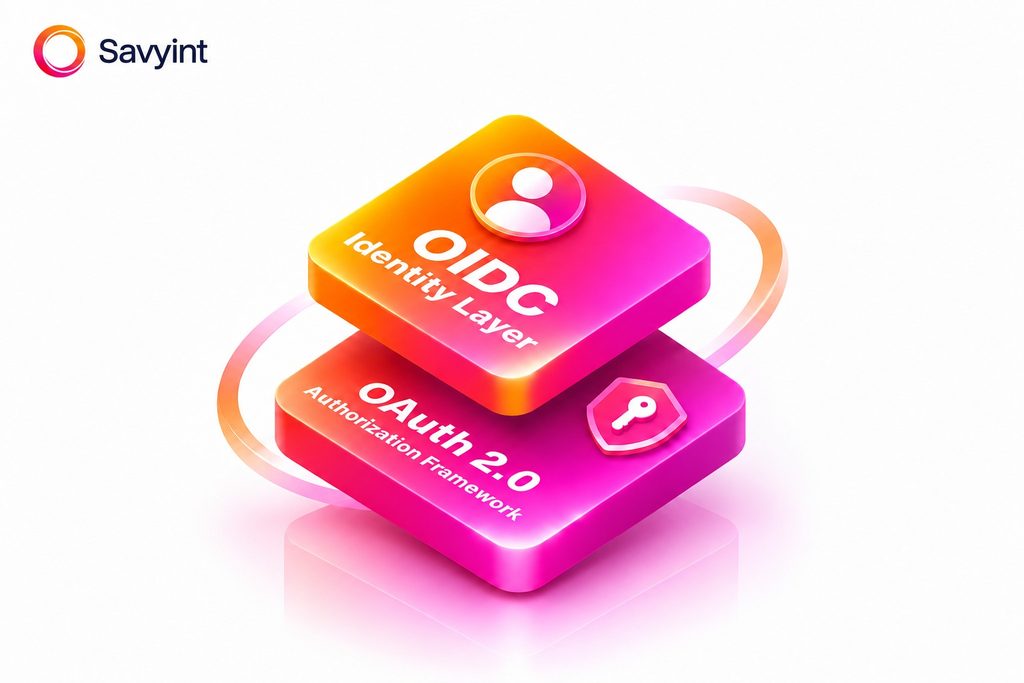
OpenID Connect (OIDC) is an identity authentication protocol built on top of OAuth 2.0. It verifies users’ identities and passes the verified identity information to applications in a standardized, token-based format. Introduced by the OpenID Foundation in 2014, OIDC is now one of the most widely adopted standards for modern identity federation and Single Sign-On (SSO).
What is OAuth 2.0?
Meanwhile, OAuth 2.0, short for “Open Authorization,” is a standard designed to allow a website or application to access resources hosted by other web applications on behalf of a user. It replaced OAuth 1.0 in 2012 and has since become the de facto industry standard for online authorization. OAuth 2.0 provides consent-based access and restricts the actions that a client application can perform on resources on behalf of a user, without requiring the user to share their login credentials.
Principles of OAuth 2.0
OAuth 2.0 is an authorization protocol, NOT an authentication protocol. Therefore, it is designed as a means of granting access to a set of resources, such as remote APIs or user data.
OAuth 2.0 uses Access Tokens. An Access Token is a piece of data representing permission to access resources on behalf of an end user. OAuth 2.0 does not define a specific format for Access Tokens. However, in some cases, the JSON Web Token (JWT) format is commonly used. This allows token issuers to include data directly within the token itself. However, it does not tell the application who the actual user behind the token is.
Why Is OAuth 2.0 Alone Not Enough?
This gap created a practical problem. As platforms such as Google, GitHub, and Facebook evolved into identity providers, each returned user profile data in a different format. Developers building applications that support multiple sign-in options had to write custom code to handle each provider. There was no common standard for the format of “user identity” in responses.
OIDC was developed to address both issues simultaneously: adding authentication to OAuth 2.0 and standardizing how user identity data is structured and transmitted.
| Aspect | OAuth 2.0 | OpenID Connect (OIDC) |
| Purpose | Authorizes access to resources | Authenticates the user’s identity |
| Core Token | Access Token | ID Token (plus Access Token) |
| Use Case | “Can this app access my data?” | “Who is the user logging in?” |
| Focus | Secure resource access | Secure and verified user login |
| Data Scope | Permissions only | Identity + Permissions |
How OIDC Authentication Works
- User initiates sign-in: The user clicks “Sign in” on a third-party application.
- Redirect to the OpenID Provider: The application redirects the user to a trusted Identity Provider (Google, Okta, Azure AD, or an enterprise identity system). The user’s credentials are never handled directly by the application.
- User authenticates: The user enters their credentials on the Identity Provider’s (IdP) login page. The IdP may also trigger multi-factor authentication (MFA) at this stage.
- Tokens are issued: Upon successful authentication, the IdP returns an ID Token, an Access Token, and optionally a Refresh Token.
- Application verifies identity and grants access: The Relying Party (RP) validates the ID Token, confirms the user’s identity, and grants access. It may also call the UserInfo Endpoint to retrieve additional profile details.
Explore Identity and Access Management Solutions with SAVYINT
As digital services continue to evolve, secure authentication and authorization are essential to protecting user identities and managing access to digital resources. SAVYINT provides advanced digital identity and authentication solutions designed to help organizations strengthen security, streamline access management, and build trusted digital experiences.
Visit SAVYINT to learn more about our solutions and connect with our experts to explore how we can support your organization’s identity and access management needs.
Reference:
https://www.oloid.com/blog/what-is-oidc-authentication
https://www.loginradius.com/blog/identity/oidc-authentication-security