

Global Financial Fraud in Recent Years: Alarming Figures

Financial fraud targeting financial activities is becoming increasingly complex and sophisticated. The use of artificial intelligence (AI) by criminals, together with the widespread standardization and replication of malware and other technologies, is acting as a major driver of fraudulent activities. Financial Fraud Is Increasing Globally In INTERPOL’s March 2026 Global Financial Fraud Threat Assessment, financial fraud ranks among the top five global crime threats, with a 54% rise in fraud-related Notices and Diffusions from 2024 to 2025. Global fraud losses climb to $442 billion. The number of INTERPOL Notices and Diffusions related to fraud increased by 54% between 2024 and 2025. The sharp increase in INTERPOL alerts reflects the growing complexity and scale of cross-border fraud. Payment fraud is increasingly taking place across multiple jurisdictions, making purely domestic control measures no longer sufficient. Payment card fraud losses worldwide dipped 1.2% to $33.41 billion in 2024, according to the Nilson Report, the leading trade publication covering the global payment card industry. This fraud was tied to global card volume of $51.920 trillion. The 2026 AFP Payments Fraud and Control Survey Report provides that payments fraud remains widespread, with 76% of organizations reporting that they experienced attempted or actual fraud in 2025. Checks remain the payment method most frequently impacted by fraud. In 2025, 58% of organizations reported check fraud, outpacing ACH fraud and wire fraud. Despite long-standing awareness of check-related risks, checks continue to present persistent vulnerabilities for many organizations managing payments fraud risk. Business Email Compromise (BEC) remains one of the most common forms of payment fraud, as criminals increasingly exploit impersonation techniques to manipulate organizational processes. A 2025 study by global technology research and consulting firm Juniper Research found that e-commerce fraud is expected to increase from $56 billion in 2025 to $131 billion by 2030, representing a 133% increase over the period. This growth is driven by the rising incidence of friendly fraud, in which legitimate transactions are fraudulently disputed. Key Financial Fraud Trends AI-powered deception AI-powered manipulation is rapidly changing people’s perception of what can be considered trustworthy. Advanced AI tools can generate “deepfakes” — including realistic voices, synthetic videos, and highly personalized text — making it easier to stage scenarios that appear completely authentic, even to generations highly familiar with digital environments. As technology advances and the digital world becomes increasingly visual, victims find it more difficult to question what they see or hear. The boundary between reality and fabrication is becoming increasingly blurred. This creates an increasingly complex and unpredictable fraud landscape. According to Koren, once again, understanding human behavior has become critically important. Fraud Is Becoming More Personalized and Persistent Between 2024 and 2025, the number of fraud incidents involving social engineering increased by 33%. This method is not only growing in scale but is also undergoing a fundamental shift in its approach. To address future forms of fraud, technological expertise alone is no longer sufficient; understanding human behavior is equally essential. One clear trend is that social engineering is no longer simply a technical attack, but has evolved into a prolonged process of influencing individuals. Whereas fraud previously often consisted of a single message, we are now seeing multi-step schemes in which trust is gradually built over days or even weeks. Criminals are increasingly using psychological tactics: they spend time learning about their victims, mimicking their language and behavior, and then gradually influencing them to make decisions that ultimately harm themselves. The Professionalization of Fraud Tools One clear emerging trend is the professionalization of fraudulent online storefronts. Scam websites have evolved significantly: they are no longer crude and poorly designed sites, but professionally built platforms with convincing e-commerce interfaces and close integration with digital marketing channels such as Facebook. Fraudsters can quickly create new stores with a trustworthy appearance within just a few hours, while flexibly adapting their visuals and messaging with remarkable sophistication. One alarming trend that Recorded Future called out is the increasing industrialization of support services and technology that allows fraudsters to maximize their effectiveness. One such popular tool allows scam operators to rewrite the code on an online retailer’s payments page and then steal, or “skim,” payment information as transactions happen in attacks called Magecart. The report points out that there were 10,500 such hacks active in 2025, leading to the compromise of over 23 million online transactions. These highly professional fraudulent commercial environments play a critical role in the constantly evolving fraud economy, targeting online shoppers through highly convincing storefront interfaces. Cross-Border and Distributed Fraud Operations We are also seeing a significant increase in cross-border fraud activities, particularly in the movement of illicit funds. Transactions are distributed across multiple countries, with participants — including both willing participants and individuals who are manipulated or unaware of the scheme — being used to break transaction flows into smaller segments, making them more difficult to trace. The recruitment of “money mules” often relies on psychological tactics involving financial pressure, social influence, and emotional manipulation. The “fraud economy” is becoming increasingly professionalized and global, while also becoming far more adaptable and resilient. Savyint Fraud Detection and Prevention Solutions With more than 20 years of experience in cybersecurity, information security, and cyber safety, particularly in the financial and banking sectors, Savyint has developed a comprehensive ecosystem of solutions for fraud detection, payment security, identity, authentication, and system access control. We leverage AI, AI agents, and the latest security standards to detect and respond to fraud, ensuring that every transaction conducted in our customers’ digital environments is protected in real time and capable of withstanding evolving and increasingly sophisticated forms of fraud over the long term. Our solution ecosystem includes: Contact us today for expert consultation HERE! Reference: https://www.helpnetsecurity.com/2026/03/18/online-fraud-victims-losses-interpol-report https://www.tietoevry.com/en/blog/2026/04/five-payment-fraud-trends-to-monitor https://www.mastercard.com/global/en/news-and-trends/stories/2026/recorded-future-annual-payment-fraud-report.html https://www.financialprofessionals.org/training-resources/resources/survey-research-economic-data/details/payments-fraud The Nilson Report
Ensuring Information Security in Electronic Transactions in Selected Countries

In the era of digital transformation, electronic transactions are becoming increasingly prevalent and have become an important foundation for commercial activities, public services, and social governance. Therefore, many countries have enacted legal regulations to protect parties involved in electronic transactions and ensure information security. 1. European Union 2. United States 3. Canada 4. Australia 5. Vietnam The laws governing electronic transactions in many countries, particularly developed economies, have become relatively comprehensive, covering legal frameworks, electronic signature/trust service regulations, personal data protection, enforcement of violations, international recognition, and clear technical standards. However, challenges remain regarding data security, personal data protection, and legal compliance, which need to be further strengthened and more rigorously developed. Reference:
Open Banking: APIs, Data, and User Consent
Open Banking is the development of a new financial ecosystem based on connections between financial institutions and businesses, supported by APIs. Financial institutions are enabling third parties to integrate services, provide access to banking data, and deliver entire banking services through APIs. So how can APIs, data, and user consent be managed and protected? Key Characteristics of Open Banking Open Banking focuses on serving consumers, with API or SDK technology as its core foundation and operates within the financial ecosystem. Open Banking has three key characteristics: data portability, customer autonomy, and recipient accountability. The International Organization for Standardization (ISO) defines data portability as “the ability to easily transfer data from one system to another without having to re-enter the data.” Based on this definition, in Open Banking, consumers can share their relevant banking data with third-party providers (TPPs), in line with “data portability.” Data portability in Open Banking is supported by standardized and interoperable data technologies, primarily APIs. This is a fundamental principle of liberal democracy, in which marketers are permitted to influence customers but must respect their autonomy. Open Banking empowers customers to control the sharing of their banking data, and this right is supported by customers’ legal rights to share data through Open Banking. Open Banking requires recipients of customers’ banking data (TPPs) to be accountable to customers. Therefore, Fintech companies receiving banking data must be responsible for protecting this data from leakage, theft,… This is why strict management of TPPs through a regulatory system is very important. In summary, these three characteristics of Open Banking all reflect the goal of improving competitiveness, promoting innovation, and strengthening consumer protection. Solutions for Managing APIs, Data, and User Consent With many years of experience in developing security solutions as well as specialized solutions for the Financial – Banking sector, Savyint has developed an Open Banking Tech Stack solution that enables banks to comply with the current legal regulations of each country (such as EU PSD2/3, Philippines AFASA, BSP Circular No. 1213 – 1215, Vietnam Circular No. 64, Circular No. 50, Circular No. 77…), ensuring end-to-end security across API protection, payment, data sharing, and consent management operations. In particular, the solution is flexibly designed by Savyint according to scale, prioritizing the use of existing security infrastructure: small banks can deploy it in a simple and lightweight manner; large banks can scale up to a highly redundant model, ensuring continuous and stable operations even in the event of incidents. Contact us now for consultation HERE!
SAVYINT Develops Open Banking Tech Stack – Enabling Secure, Flexible, and Compliant Open Banking Connectivity
Savyint Open Banking Tech Stack enables banks to build and operate an Open Banking ecosystem on a unified architecture, covering TPP management, API management and delivery, consent management, data sharing, and payment initiation. Open Banking is becoming a key pillar of digital transformation strategies across Vietnam’s banking and financial services sector. Through open API, banks can connect with Third-Party Provider (TPP), FinTech, and digital platforms to provide services such as account information access, financial data sharing, and payment initiation. In this context, API serves as the key bridge connecting banks with the broader ecosystem. However, API connectivity also means that banks must extend their security controls beyond internal systems to encompass multiple partners, applications, and users. Every API transaction must be authenticated, access-controlled, and protected to ensure data integrity. At the same time, regulations governing open API deployment, cybersecurity, data protection, and related requirements have been introduced across many countries, including Singapore and Vietnam (Circular No. 64, Circular No. 50, Circular No. 77…), as well as the Philippines (AFASA and BSP Circular Nos. 1213–1215) … Compliance with these requirements has become a critical priority for banks. Banks must not only secure APIs but also protect cryptographic key, authentication information, signature, and evidence associated with data exchange and transaction processing. They must also maintain activity logs, detect anomalous access, and ensure that all operations are traceable for auditing purposes. Therefore, one of the key challenges facing banks today is how to leverage existing infrastructure while integrating the missing capabilities into a unified, comprehensive, scalable Open Banking architecture that can strictly comply with applicable regulations. SAVYINT’s Implementation Solution With extensive expertise in Open Banking, Open Finance, and payment security, Savyint provides a comprehensive HSM-powered Open Banking Tech Stack that enables banks to comply with applicable regulations while strengthening security across API protection, payment processing, data sharing and consent management. SAVYINT’s Open Banking Tech Stack is designed on a Microservices architecture, allowing banks to deploy capabilities in phases, leverage existing systems, and easily expand their Open Banking services in the future. With Savyint Open Banking Tech Stack, banks can build a centralized Open Banking ecosystem where data, consent, and transactions are managed end-to-end on a unified platform. This enables seamless connectivity with FinTech, ecosystem expansion, and the development of new digital financial services, while supporting full compliance with applicable regulations across markets governing open API, data security, and payment transactions.
eIDAS 2.0 – Reshaping a Safer and More Trusted Digital Future for Europe
Building on the foundation of eIDAS – the European framework for “Electronic Identification, Authentication and Trust Services” in the European Single Market – eIDAS 2.0 was introduced to strengthen the region’s digital infrastructure, promising greater efficiency and higher levels of trust in the digital economy. eIDAS – The Regulation on Electronic Identification, Authentication and Trust Services Approved in September 2014, the Regulation on “Electronic Identification, Authentication and Trust Services” for the European Single Market, known as eIDAS, became fully applicable in September 2018. Under eIDAS, European citizens and businesses can use nationally issued electronic identification systems to verify their identities when accessing public services or carrying out cross-border electronic transactions. eIDAS focuses on two key areas: Importantly, eIDAS applies not only to public authorities but also to private-sector organizations that use electronic identification or trust services, including those in the financial services, insurance, healthcare, and e-commerce sectors. As such, eIDAS serves as a unified digital trust infrastructure for cross-border electronic transactions across Europe. Why is eIDAS 2.0 Needed? Although eIDAS significantly improved Europe’s electronic identification and trust services infrastructure, several limitations remained. The emergence of new electronic identification services and models has resulted in a fragmented market. The scope of the existing legal framework no longer fully reflects the way electronic identification and trust services are being used in practice. Today, private companies also provide eID solutions, but these solutions do not necessarily follow a unified standard offering the same high levels of security, assurance, and transparency as eID schemes recognized under eIDAS. While eIDAS-compliant eID solutions are secure, their adoption and usability in the private sector have remained relatively limited. Challenges also exist in areas such as identity verification, data management, and user control. Today’s users expect a seamless and secure online experience. They want to access both public and private services such as healthcare and banking through a single, convenient digital identity or Single Sign-On (SSO) experience. However, the original eIDAS framework focused primarily on cross-border access to public services, while giving less attention to the needs of the private sector. Even for public services, barriers remain that prevent many citizens from accessing trusted electronic identification solutions. Social media platforms and private technology companies already offer login options based on existing accounts, such as Facebook, Microsoft, or Google. However, these solutions raise concerns regarding data control and security. They often lack robust real-world identity verification processes, potentially making systems more vulnerable. In addition, using these platforms across multiple services may result in non-transparent data sharing and privacy concerns. What is eIDAS 2.0? eIDAS 2.0 – officially known as the European Digital Identity Framework under Regulation (EU) 2024/1183 – is the updated version of the European Union’s framework for electronic identification, authentication, and trust services. The updated framework is designed to improve the efficiency of cross-border services while supporting secure electronic identification solutions for both the public and private sectors. eIDAS 2.0 represents a structural evolution of Europe’s digital identity and trust services framework. It addresses limitations in the original framework, expands the range of regulated trust services, strengthens security and governance requirements, and, most notably, introduces the European Digital Identity Wallet (EUDI Wallet) as a core component of Member States’ digital identity ecosystems. Key Changes Introduced by eIDAS 2.0 The transition from eIDAS to eIDAS 2.0 introduces two major developments aimed at strengthening Europe’s legal and regulatory framework for electronic identification and trust services. Expanded Trust Services eIDAS 2.0 further develops the regulatory framework for Qualified Trust Service Providers (QTSPs), with particular emphasis on identity verification processes for individuals and legal entities when qualified certificates are issued. The objective is to ensure greater consistency and harmonization across Europe. In addition, new qualified trust services – including electronic archiving, electronic ledgers, and the management of remote electronic signature devices – have been introduced under eIDAS 2.0. European Digital Identity Wallet (EUDI Wallet) One of the most significant innovations introduced by eIDAS 2.0 is the European Digital Identity Wallet (EUDI Wallet). The EUDI Wallet is a secure, user-controlled digital wallet that enables individuals to store, manage, and selectively share their identity data, credentials, and other personal information, as well as verified legal documents such as driving licences, educational qualifications, professional certificates, or bank account information. The Wallet can be used for both online and offline services, allowing users to conveniently share verified credentials with relying parties including government authorities and private-sector organizations for purposes such as identity verification or electronic signing. Under the original eIDAS framework, EU Member States had the discretion to decide whether to develop or notify official national electronic identification schemes. This resulted in significant differences in adoption rates among Member States and inconsistencies in cross-border interoperability. eIDAS 2.0 replaces this approach with a more unified and mandatory framework. By the end of 2026, each EU Member State is required to make at least one European Digital Identity Wallet (EUDI Wallet) available to its citizens and residents. Conclusion The adoption of eIDAS 2.0 marks a significant step toward a secure, interoperable, and trusted ecosystem for electronic identification and trust services across the European Union. By emphasizing user-friendly experiences, strong security mechanisms, and streamlined processes, eIDAS 2.0 is expected to deliver tangible benefits for citizens, businesses, and government institutions alike. While the detailed implementation roadmap is still being developed, the foundations have now been established for a safer, more inclusive, and more trusted digital future for people across Europe.
SAVYINT Officially Joins the Cloud Signature Consortium (CSC): Advancing the Global Digital Trust Ecosystem
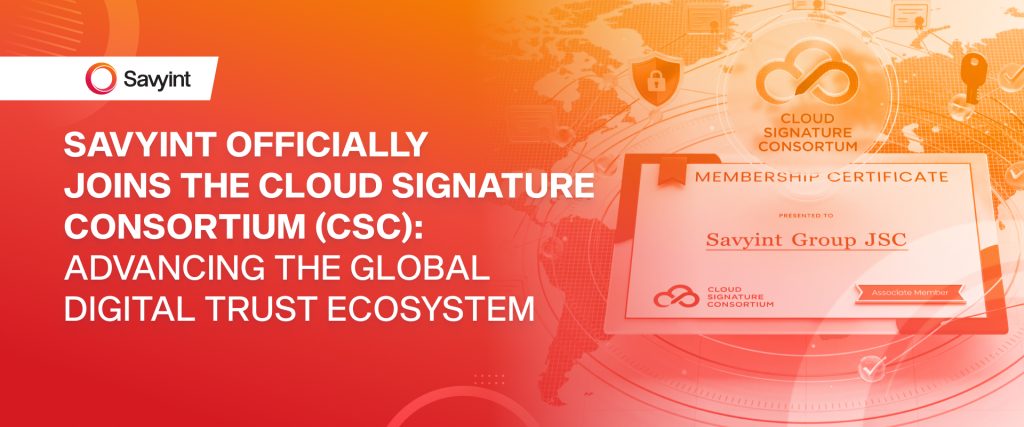
March 2026, SAVYINT has officially become a member of the Cloud Signature Consortium (CSC) – the world’s leading international standardization body in the field of cloud-based digital signatures and digital trust services. As the global digital economy undergoes profound shifts in both regulatory frameworks and technical standards, establishing common benchmarks for cross-border electronic transactions has become an urgent priority. SAVYINT – a pioneer in security and trust services – has officially joined the Cloud Signature Consortium (CSC). This milestone reaffirms SAVYINT’s position and commitment to aligning its digital signature and authentication solutions with the highest international standards. Trust with Cross Border As a CSC member, SAVYINT’s Chairman of the Board, Mr. Steve Huang, made a notable introduction at the CSC online networking session themed “Trust with Cross Border — The EU–Mercosur Free Trade Agreement and Its Impact on the Digital Trust Ecosystem”. During the session, leading experts shared insights on the opportunities and challenges in advancing global interoperability for cross-border digital signatures. For SAVYINT, participating in these international dialogues is not only an opportunity to stay current with the most advanced technical specifications, but also a chance to connect with strategic partners across Europe and Latin America — laying the groundwork for SAVYINT’s international market expansion strategy. SAVYINT – Leading Digital Trust Solutions in the Region SAVYINT Group is a premier IT security company headquartered in Australia, with a Research & Development (R&D) center based in Vietnam. With a strategic focus on building market-adaptive digital trust infrastructure, SAVYINT has developed a comprehensive suite of solutions including: Qualified Remote Signing, VA & Timestamp, PKI in a Box, SAM Appliance, ePaperless, eStamping, and eArchive. All platforms are entirely researched and developed in-house, ensuring high flexibility and customizability to meet the distinct legal frameworks and trust requirements across regional markets including SEA, APAC, and MENA, as well as international standards such as PSD2/PSD3, eIDAS, GDPR, and beyond. Looking further ahead, SAVYINT is also committed to realizing a roadmap toward post-quantum-ready trust services, encompassing PQC-enabled cryptographic infrastructure and PKI. As a member of CSC, SAVYINT commits to long-term contributions to the digital trust community, synchronizing with international standards, sharing real-world implementation experience, and offering practical perspectives from Vietnam and other emerging markets to help make CSC’s standards more comprehensive and reflective of the world’s diverse realities. Digital trust knows no borders, and joining CSC is the foundation upon which SAVYINT will realize that vision on a global scale.
SAM Appliance Wins Asia-Pacific ICT Award (APICTA) 2025
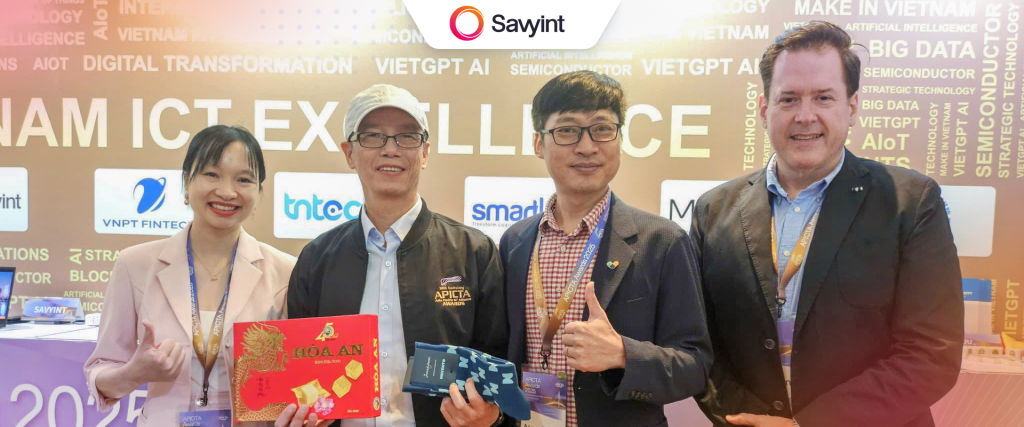
On December 8, at the announcement and awarding ceremony of the Asia-Pacific ICT Awards (APICTA) 2025, SAVYINT’s SAM Appliance was honored as the Second Runner-up in the category Security Solution – Business Service. APICTA is the most prestigious ICT award in the Asia-Pacific region, held annually since 2001 by the Asia Pacific ICT Alliance. This year, APICTA 2025 took place in Kaohsiung, Taiwan, celebrating and recognizing outstanding software products, IT solutions, digital applications, and innovative startup projects from 17 member countries and economies. SAM Appliance by SAVYINT excellently achieved the Second Runner-up title in the Security Solution – Business Service category. This accomplishment is particularly meaningful as it marks SAVYINT’s first participation in APICTA, demonstrating the innovative capabilities and solution quality of Vietnamese technology enterprises on an international stage. SAM Appliance – An all-in-one solution for data encryption, digital signature authentication and mobile identification SAM Appliance is a solution for all-in-one data encryption, digital signature authentication and mobile identification, ensure compliance with standards for remote digital signature, blockchain, crypto currency, mobile payment, data encryption, transaction encryption, timestamp, security, system authentication, IoT, Car2X… SAM Appliance includes a FIPS 140-2 Level 3–certified Server Appliance combined with Hardware Security Module (HSM) devices, integrated with SAM Software, Key Management Software (KMS), and digital signing software, creating a comprehensive and flexible security platform for any deployment needs and sectors such as Finance and Banking, Healthcare, Education, Telecommunications, Broadcasting, Media,… With its compact design and all-in-one hardware architecture, the solution enables fast installation and operation, optimal performance, unlimited integration with existing information systems, and maximum minimization of security vulnerabilities. It ensures system safety thanks to its independent and specialized operating environment, eliminating reliance on third parties, while significantly reducing investment costs compared to traditional specialized security infrastructures. More than just a platform for signing invoices, contracts, documents, certificates, or payment records, SAM Appliance is built on the Cryptographic Security Platform (CSP). It integrates SCA and MFA authentication, PKI-based passwordless authentication, tokenization, transaction signing with end-to-end encryption, advanced mobile security with Cryptography, and supports Post-Quantum Cryptography (PQC) — ready for the new security era. It also supports data and transaction encryption, blockchain and cryptocurrency integration, mobile payment and digital wallet capabilities, timestamped digital signatures, and long-term electronic archiving for 5, 10, and 20 years. SAM Appliance fully complies with regional technical standards and international legal regulations, including FIPS 140-2 Level 3, ISO 9001:2015, ISO 14001:2015, ISO 27001:2022, GDPR, SOC 2 Type II, HIPAA & PCI DSS. During the event, Brad Palmer, COO & EVP of Savyint, shared: “SAM Appliance is a breakthrough technology solution designed to address the core challenges of security, data encryption, and digital identity in today’s era of rapid digital transformation. We developed SAM Appliance as a unified security platform where any organization or enterprise can deploy digital signatures, strong authentication, and secure data and transaction encryption on a single hardware device that meets the highest international standards.” Being honored at APICTA 2025 is a powerful affirmation of Savyint’s technological capabilities. Along with SAM Appliance, Savyint’s solutions will continue to accompany global organizations and enterprises on their journey toward safe, sustainable, and fully compliant digital transformation. Photos from the event:
Establishing Digital Trust in Banking
As digital services continue to grow, user expectations for security and data privacy are rising. Digital Trust has become a competitive advantage in banking, where financial institutions must not only deliver services but also demonstrate reliability in protecting customers’ personal data, assets and privacy. What is Digital Trust? Digital Trust is the confidence customers place in an organization’s ability to protect data, ensure secure transactions, and comply with regulations. It extends beyond mere trust in a business to include confidence in technology, data management, operational transparency, customer service, and adherence to fair, lawful practices. For example, Public Key Infrastructure (PKI) provides a foundation for secure digital identity, document signing, data encryption, and timestamping—core elements for a secure and reliable digital experience. Broadly, adopting PKI is part of building Digital Trust, reinforcing customer confidence in an organization’s ability to safeguard data, comply with laws, and operate transparently. The Importance of Digital Trust in Banking Digital Trust is critical for financial institutions, as banks handle vast amounts of sensitive information daily, from personal data and transaction histories to financial assets. Strengthening Digital Trust enables organizations to: The Core Pillars of Digital Trust in Banking To build robust Digital Trust, banks must focus on six key pillars: security, transparency, privacy, data integrity, ethical technology use, and regulatory compliance. Each pillar plays a critical role: Protecting customer data from unauthorized access, cyberattacks, and fraud is paramount. Banks should adopt modern security technologies, such as: + Data encryption + Multi-factor authentication (MFA) + Biometric authentication (fingerprint, facial recognition) Privacy goes hand-in-hand with security. Banks must minimize unnecessary data collection and sharing while empowering users with transparent, understandable privacy policies and control over their data. Customers must know how their data is used, who has access, and what safeguards are in place. Transparency—from clear privacy policies to timely communication of changes—builds trust. In case of breaches, banks should have response mechanisms in place, including timely customer notification, damage control, and fair compensation if needed. User-friendly and secure authentication is essential for trusted digital transactions. Banks should implement solutions such as: + Biometric authentication + Blockchain-based identity management + Strong authentication to prevent unauthorized access A secure digital identity process also helps banks comply with KYC requirements while ensuring customer convenience and data protection. Customers expect up-to-date, accurate data—from account balances to transaction records. Banks should ensure this by: + Conducting regular audits + Establishing clear data verification processes + Maintaining transparent reporting systems Artificial Intelligence (AI) and Machine Learning (ML) can further enhance reliability by detecting anomalies, automating data handling, and ensuring data consistency. As AI becomes more integrated into banking—from loan suggestions to credit scoring—banks must ensure: + AI systems provide fair, unbiased recommendations, without discrimination based on gender, age, geography, or income (e.g., not denying loans solely based on rural residence). + Use of Explainable AI, allowing customers to understand decisions made. + Clear feedback and appeal channels if customers disagree with AI-driven decisions. To establish Digital Trust, organizations must adopt technology platforms recognized for compliance with national and international standards, ensuring secure, transparent, and verifiable digital transactions. For example, PKI enables secure encryption, digital signing, and identity verification. Leveraging services from trusted providers and adhering to standards like eIDAS, FIPS, GDPR, and ISO/IEC 27001 demonstrates a serious commitment to protecting customer data and privacy. Digital Trust is now a strategic priority in the digital transformation of financial institutions. Building it through robust security, transparency, privacy, data integrity, and ethical technology use is essential for banks to maintain a leading position. Establishing Digital Trust with SAVYINT SAVYINT is a global technology company pioneering open banking, data security, and protection across critical sectors like Finance-Banking, Government, Manufacturing, Telecommunications, Healthcare, Education, and Media. Beyond being a trusted service provider, SAVYINT offers electronic authentication services, including timestamping and Qualified Trust Services (QTSP) for digital signing and electronic seals through its QTSP Remote Signing solution. With extensive experience in designing, deploying, and operating electronic identity systems (eKYC), digital signing, data encryption, and PKI and CA systems (national, internal and public CAs) for numerous banks and financial institutions, SAVYINT provides a comprehensive suite of solutions to establish Digital Trust: Connect with SAVYINT experts HERE to establish Digital Trust for your organization!
Remote Signing – An irreversible trend
Since the COVID-19 pandemic, the need for remote work, online shopping, and digital communication has skyrocketed. As a result, the demand for secure digital signatures has grown exponentially. Remote Signing has emerged as a game-changer, transforming the way we sign and manage electronic documents. Digital signing with USB Token is no longer an optimal choice Digital signatures, akin to personal signatures or company seals, hold legal weight and significantly enhance efficiency. However, USB token-based digital signatures have several drawbacks, including limited compatibility, device dependency, and lack of mobility and scalability. Remote signing is the perfect alternative Remote Signing offers a superior solution, providing efficient, flexible, and secure electronic transactions. Unlike traditional methods, the private key for Remote Signing is securely stored in a service provider’s data center. Nevertheless, activation processes are rigorous, ensuring that even the service provider cannot activate or sign on behalf of the customer. In addition, Remote Signing offers numerous advantages, such as: Sign anytime, anywhere Remote Signing allows users to sign documents anytime, anywhere, without relying on physical devices like USB tokens or SIM cards. Users can sign directly on any mobile device, such as laptops, smartphones, or tablets. High security Remote Signing provides an exceptionally high level of security and reliability. The mechanism ensures that only the authorized user can activate and use the digital signature. Even the service provider cannot intervene in the activation or signing process without the customer’s authorization. Moreover, seamless integration with timestamping and long-term validation technologies (LTV, LTANS) enables the detection of any changes to the document, maximizing data integrity and preventing fraud and forgery in electronic transactions. Batch and bulk signing Users can sign multiple documents simultaneously through automated processes, eliminating the need for manual signing of each page. Easy integration with advanced digital signature technologies SavyintTimestamp, long-term validation, and long-term archiving (LTV, LTANS) can be easily integrated into this model. SAVYINT is proud to be the first trusted service provider in Vietnam to comply with the eIDAS regulation for remote signing services, setting the highest standard for security, reliability, and confidentiality in electronic transactions. This means that SAVYINT’ remote signing services are widely recognized in 27 European Union countries and are the first to provide a full range of services, from basic digital signatures to advanced and long-term validation signatures. In October 2021, we were granted a license by the Ministry of Information and Communications to provide remote signing services and became the only entity to fully comply with all mandatory technical standards and advanced digital signature standards, including long-term validation (AdES) as stipulated in Circular 16/2019/TT-BTTTT on remote signing models. QTSP Remote Signing – The perfect solution for individuals and businesses for electronic document signing. Contact SAVYINT today to own a quality remote signing solution!