For electronic archiving, Long-Term Validation (LTV) technology for digital signatures plays an indispensable role. LTV is understood as the process of validating electronic documents to ensure the validity of digital signatures at the time of signing, using Cryptographic Message Syntax (CMS) technology and advanced Public Key Infrastructure (PKI) formats. To use LTV, the system must accurately determine the signing time through an attached Timestamp.
LTV is an important component of the advanced digital signature standard for PDF, known as PAdES. PAdES is defined as “a set of rules and additional features for PDF/ISO 32000-1 files designed to support advanced digital signatures.” While PAdES is the standard for applying and validating advanced digital signatures in PDF files, CAdES serves as a guiding standard for the technical specifications of advanced digital signature technology.
Advances in digital signature technology for PDF files have become truly useful thanks to the support of new features. Currently, the PAdES digital signature profiles provided by Foxit PDF SDK include:
- PAdES B: Basic Signature – A PKCS#7 signature (adbe.pkcs7.detached), with optional use of a Timestamp and an OCSP response, as specified in the ISO-3200 PDF 1.7 standard.
- PAdES BES: Basic Enhanced Signatures – A CAdES signature (ETSI.CAdES.detached), with optional use of a Timestamp and additional protection mechanisms.
- PAdES EPES: Explicit Policy Enhanced Signatures – A CAdES signature (ETSI.CAdES.detached) with the signature-policy-identifier attribute.
- PAdES LTV: Long-Term Validation – A CAdES signature (ETSI.CAdES.detached) with a Timestamp, the CA’s digital certificate, and an OCSP response attached at the time of signing. Timestamps and validation data can be added to support long-term validation and archiving.
What Is the Purpose of LTV?
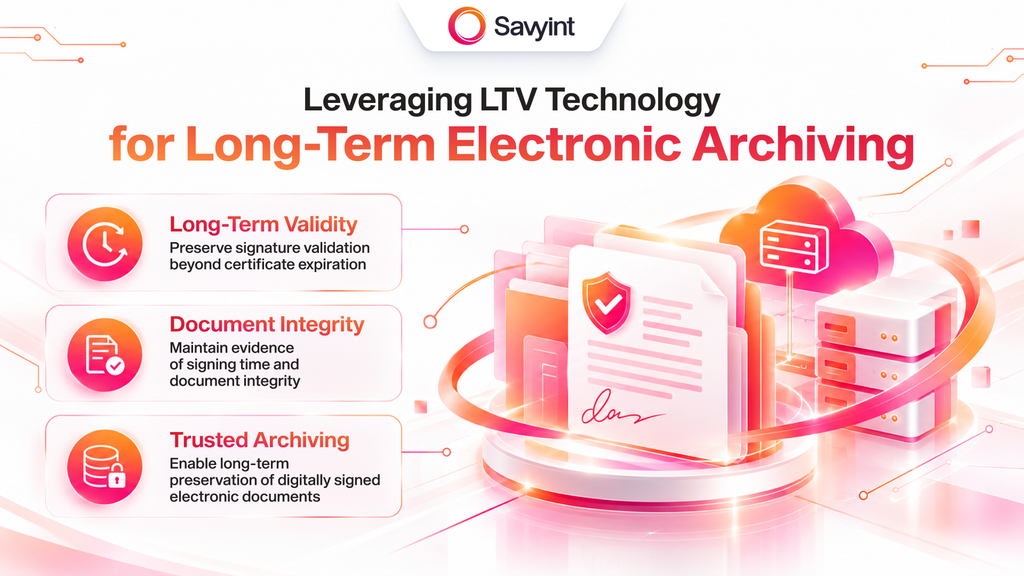
When signing a paper document by hand, the signatory generally assumes that the signature will remain valid indefinitely. The same assurance is required for electronic documents, even as technology continues to evolve. Without LTV, electronic documents are subject to limitations on how long they can be validated and may become invalid when the CA ceases to provide services. This can result in the costs of revalidating and re-signing electronic documents, as well as re-establishing signed contracts or legal instruments.
Using digital signature technology that supports LTV enables users to electronically archive contracts, forms, and PDF documents with full legal validity.
Today’s advanced technology allows users to attach multiple Timestamps and validation data to signatures within the same PDF file. This process can be repeated multiple times, extending validation capabilities through a chain of validation records, even after the original digital certificate has expired or been revoked.
How Does LTV Benefit Electronic Archiving?
Long-Term Validation (LTV) technology ensures the trustworthiness of digital signatures by preserving the signing time and using this information as a reference point for validation. This is far more practical than relying solely on a single CA or a particular clause in a contract or legal document. Documents signed digitally with LTV can be re-signed, and the new digital signatures can be validated without having to repeat the entire contract execution process or create new contracts, thereby reducing associated time and labor costs.
Using LTV with the PDF/A Format
By combining LTV technology with the PDF/A standard, a PDF format specifically designed for long-term archiving, users can maintain electronic archives of digitally signed documents with long-term validation capability for many years. This is an ideal choice for companies and organizations that use PDF/A to archive large volumes of electronic documents.
LTV Compliance
For companies and organizations subject to stringent regulations governing electronic records, particularly electronic contracts, LTV technology provides an effective solution. By implementing LTV, organizations and companies can meet Timestamp requirements by establishing a trusted digital signing time and ensuring the integrity of PDF data. In Europe, the eIDAS Regulation specifies the following mandatory requirements for advanced electronic signatures:
- They must be uniquely linked to the signatory.
- They must be capable of identifying the signatory.
- They must be created using electronic signature creation data that the signatory, with a high level of confidence, can use under their sole control.
- They must be linked to the signed data in such a way that any subsequent changes to the data are detectable.
With LTV, users can meet all these requirements and more!
LTV in Security and Information Protection
Digital signatures are one of the most effective tools for ensuring the integrity of electronic documents. The technology is standardized for use anytime and anywhere, and is recognized by private organizations, governments, and authorities around the world. LTV technology provides users with an additional layer of security through a historical chain of digital signature verification, supported by Timestamps and associated validation mechanisms.
SAVYINT offers a comprehensive suite of solutions that fully supports LTANS/LTV long-term archiving standards, as well as standards for digital signatures and remote digital signing, including eIDAS 2.0 and NIS2, ensuring the ability to archive documents over the long term or permanently. Including the following solutions:
- SAVYINT Qualified Timestamp
- SAVYINT Qualified Digital Signing
- SAVYINT eArchive – Trusted Archive for Paperless Solutions
Contact us today for expert consultation HERE!