
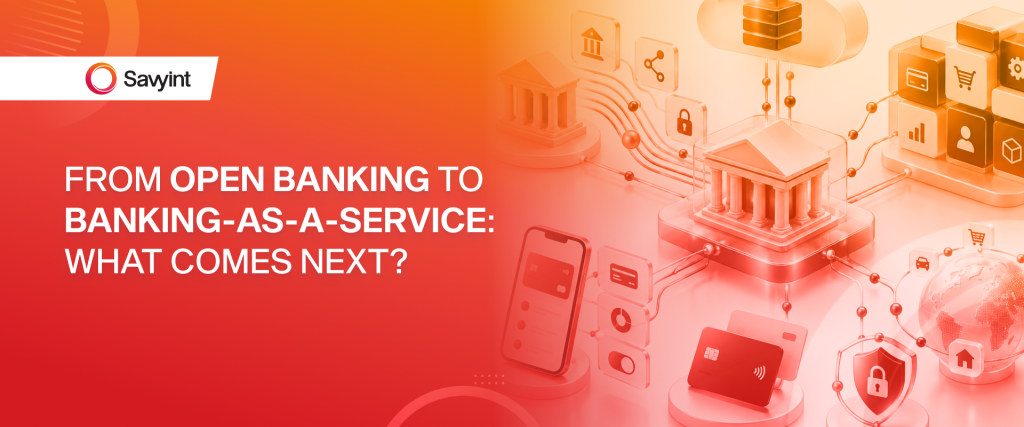
From Open Banking to Banking-as-a-Service: What Comes Next?
Over the past decade, financial innovation has evolved from open banking, which focuses on consumer-authorized data sharing, to banking-as-a-service (BaaS), which uses application programming interfaces (APIs) to make core banking functions more modular and accessible. Open banking & Open Finance The term “Open Banking” emerged around 2016 as a policy initiative aimed at increasing competition in the retail payments sector. The United Kingdom was the first country to explore this approach as a regulatory tool for promoting greater competition in digital payments through the Open Banking Implementation Entity. The idea behind these initiatives was straightforward: by making it easier for third-party providers (TPPs) to access data, regulators could lower barriers to entry, encourage competition, and create more opportunities for innovation in digital payments. A similar approach was taken by the European Union through the Second Payment Services Directive (PSD2), which came into effect in 2018. PSD2 required banks to provide registered third-party providers with access to customer account data through standardized application programming interfaces (APIs). Open Finance takes this concept a step further. While Open Banking mainly focuses on banking and payment data, Open Finance covers a much broader range of financial products and services, including credit, investments, pensions, and insurance. Under an Open Finance model, consumers can give third parties access to a broader set of financial data, potentially providing a more complete picture of their financial lives. While the potential benefits of Open Finance have not yet been fully demonstrated in practice and evidence of its impact remains limited, the concept could give consumers and businesses greater control over their financial data. By making more financial data available, Open Finance could help reduce information gaps, encourage competition, and create opportunities for more personalized financial products. These products could better reflect an individual’s financial profile, spending habits, and long-term goals. Open Finance can also make it easier for consumers to bring together and compare information from multiple providers, helping reduce complexity and make financial decisions easier. Concept of Everything-as-a-Service (XaaS) Against this backdrop, Open Banking is often seen as one of the starting points for the rise of Banking-as-a-Service (BaaS) – a new approach to financial services that brings data-driven capabilities into the way banking services are delivered. BaaS is built around the broader concept of Everything-as-a-Service (XaaS), also known as Anything-as-a-Service. XaaS refers to a wide range of cloud-based and remotely delivered services that companies can access through the Web or similar networks. The idea started with Software-as-a-Service (SaaS), where cloud providers made individual software applications available to customers. Over time, the model expanded into other services such as Infrastructure-as-a-Service (IaaS) and Communications-as-a-Service (CaaS). Eventually, the concept developed into the broader XaaS model, where businesses can access the specific services they need and pay for them on demand. In simple terms, instead of buying a software license and installing the application on individual computers, a business can subscribe to a cloud-hosted application provided by the software company. This approach gives businesses greater flexibility to switch providers while also making software maintenance easier. APIs play a key role in making this possible. They allow different applications and software systems to communicate and work with each other. As XaaS continues to grow, opportunities are also expanding for developers to build third-party applications that connect with existing platforms. The growth of SaaS, for example, has created entire businesses around developers and companies using SaaS platforms. However, APIs and SaaS are not the same thing. APIs do not require SaaS, and they have existed long before the Internet. They can also be used in offline environments. LinkedIn is an example of the SaaS model because it delivers its platform through cloud computing and generates revenue through recurring subscription fees. Facebook, on the other hand, does not operate as a SaaS company. Although it provides data through APIs, its primary source of revenue is advertising, much like Google’s core business model. Unlike SaaS providers, these platforms do not rely on subscription fees for their core services. Bank as a Service What banks can now build with APIs follows a similar XaaS approach. Banking-as-a-Service enables banks to deliver digital banking capabilities through APIs. In other words, banking services can move beyond traditional branches and become part of mobile and web-based experiences. Banks can make their data, functions, and infrastructure available through APIs, allowing other digital platforms and businesses to integrate banking capabilities into their own services. From the customer’s perspective, this can lead to very different types of digital experiences. A bank may continue to interact directly with customers, or it may operate behind the scenes as a white-label service provider. In either case, customers no longer have to interact with their bank in the traditional way. Instead, APIs allow consumers to interact with companies that may not be banks themselves, while still being seamlessly connected to regulated financial institutions through digital interfaces. While Open Banking has opened the door to greater data sharing, its role as a data-sharing mechanism can still have limitations. BaaS, meanwhile, can act as a catalyst for creating more seamless and integrated financial services in the digital economy. This model allows banks to move toward more customer-centric, platform-based business models. For traditional banks, this may also mean rethinking and restructuring how they operate. In many ways, the future of financial institutions could increasingly resemble the broader XaaS model. Making this transition possible requires a connected and collaborative ecosystem, where integration is at the core and APIs become a key enabler. Savyint provides a comprehensive Open Banking and BaaS ecosystem, backed by more than 20 years of experience in the Banking and Financial Services sector, with successful deployments for leading banks and major organizations across Vietnam and Southeast Asia (SEA). Contact us to start your banking digital transformation journey today HERE! Source: From open banking to banking-as-a-service – Nydia Remolin
Global Financial Fraud in Recent Years: Alarming Figures

Financial fraud targeting financial activities is becoming increasingly complex and sophisticated. The use of artificial intelligence (AI) by criminals, together with the widespread standardization and replication of malware and other technologies, is acting as a major driver of fraudulent activities. Financial Fraud Is Increasing Globally In INTERPOL’s March 2026 Global Financial Fraud Threat Assessment, financial fraud ranks among the top five global crime threats, with a 54% rise in fraud-related Notices and Diffusions from 2024 to 2025. Global fraud losses climb to $442 billion. The number of INTERPOL Notices and Diffusions related to fraud increased by 54% between 2024 and 2025. The sharp increase in INTERPOL alerts reflects the growing complexity and scale of cross-border fraud. Payment fraud is increasingly taking place across multiple jurisdictions, making purely domestic control measures no longer sufficient. Payment card fraud losses worldwide dipped 1.2% to $33.41 billion in 2024, according to the Nilson Report, the leading trade publication covering the global payment card industry. This fraud was tied to global card volume of $51.920 trillion. The 2026 AFP Payments Fraud and Control Survey Report provides that payments fraud remains widespread, with 76% of organizations reporting that they experienced attempted or actual fraud in 2025. Checks remain the payment method most frequently impacted by fraud. In 2025, 58% of organizations reported check fraud, outpacing ACH fraud and wire fraud. Despite long-standing awareness of check-related risks, checks continue to present persistent vulnerabilities for many organizations managing payments fraud risk. Business Email Compromise (BEC) remains one of the most common forms of payment fraud, as criminals increasingly exploit impersonation techniques to manipulate organizational processes. A 2025 study by global technology research and consulting firm Juniper Research found that e-commerce fraud is expected to increase from $56 billion in 2025 to $131 billion by 2030, representing a 133% increase over the period. This growth is driven by the rising incidence of friendly fraud, in which legitimate transactions are fraudulently disputed. Key Financial Fraud Trends AI-powered deception AI-powered manipulation is rapidly changing people’s perception of what can be considered trustworthy. Advanced AI tools can generate “deepfakes” — including realistic voices, synthetic videos, and highly personalized text — making it easier to stage scenarios that appear completely authentic, even to generations highly familiar with digital environments. As technology advances and the digital world becomes increasingly visual, victims find it more difficult to question what they see or hear. The boundary between reality and fabrication is becoming increasingly blurred. This creates an increasingly complex and unpredictable fraud landscape. According to Koren, once again, understanding human behavior has become critically important. Fraud Is Becoming More Personalized and Persistent Between 2024 and 2025, the number of fraud incidents involving social engineering increased by 33%. This method is not only growing in scale but is also undergoing a fundamental shift in its approach. To address future forms of fraud, technological expertise alone is no longer sufficient; understanding human behavior is equally essential. One clear trend is that social engineering is no longer simply a technical attack, but has evolved into a prolonged process of influencing individuals. Whereas fraud previously often consisted of a single message, we are now seeing multi-step schemes in which trust is gradually built over days or even weeks. Criminals are increasingly using psychological tactics: they spend time learning about their victims, mimicking their language and behavior, and then gradually influencing them to make decisions that ultimately harm themselves. The Professionalization of Fraud Tools One clear emerging trend is the professionalization of fraudulent online storefronts. Scam websites have evolved significantly: they are no longer crude and poorly designed sites, but professionally built platforms with convincing e-commerce interfaces and close integration with digital marketing channels such as Facebook. Fraudsters can quickly create new stores with a trustworthy appearance within just a few hours, while flexibly adapting their visuals and messaging with remarkable sophistication. One alarming trend that Recorded Future called out is the increasing industrialization of support services and technology that allows fraudsters to maximize their effectiveness. One such popular tool allows scam operators to rewrite the code on an online retailer’s payments page and then steal, or “skim,” payment information as transactions happen in attacks called Magecart. The report points out that there were 10,500 such hacks active in 2025, leading to the compromise of over 23 million online transactions. These highly professional fraudulent commercial environments play a critical role in the constantly evolving fraud economy, targeting online shoppers through highly convincing storefront interfaces. Cross-Border and Distributed Fraud Operations We are also seeing a significant increase in cross-border fraud activities, particularly in the movement of illicit funds. Transactions are distributed across multiple countries, with participants — including both willing participants and individuals who are manipulated or unaware of the scheme — being used to break transaction flows into smaller segments, making them more difficult to trace. The recruitment of “money mules” often relies on psychological tactics involving financial pressure, social influence, and emotional manipulation. The “fraud economy” is becoming increasingly professionalized and global, while also becoming far more adaptable and resilient. Savyint Fraud Detection and Prevention Solutions With more than 20 years of experience in cybersecurity, information security, and cyber safety, particularly in the financial and banking sectors, Savyint has developed a comprehensive ecosystem of solutions for fraud detection, payment security, identity, authentication, and system access control. We leverage AI, AI agents, and the latest security standards to detect and respond to fraud, ensuring that every transaction conducted in our customers’ digital environments is protected in real time and capable of withstanding evolving and increasingly sophisticated forms of fraud over the long term. Our solution ecosystem includes: Contact us today for expert consultation HERE! Reference: https://www.helpnetsecurity.com/2026/03/18/online-fraud-victims-losses-interpol-report https://www.tietoevry.com/en/blog/2026/04/five-payment-fraud-trends-to-monitor https://www.mastercard.com/global/en/news-and-trends/stories/2026/recorded-future-annual-payment-fraud-report.html https://www.financialprofessionals.org/training-resources/resources/survey-research-economic-data/details/payments-fraud The Nilson Report
Savyint eArchive BOX – An All-in-One electronic archiving solution for every organization

In the digital age, data is considered the “new oil” of the digital economy. Archiving is no longer just about preserving information but a strategic component in every organization’s operations. An effective electronic archiving solution enables organizations to build a solid infrastructure—from digitization and security to intelligent data exploitation. The current state of archiving in organizations Although many organizations are becoming aware of digital archiving, most still lack proper systems for digitization and electronic document management. Traditional methods prevail, such as printing documents for storage or saving them across personal hard drives, USBs, etc. This lack of synchronization leads to fragmented data management and several risks: In addition to risks from fragmented or traditional archiving, many organizations struggle with deploying electronic archiving solutions. International solutions may be powerful but costly and difficult to customize for Vietnamese business needs, while domestic solutions often fall short of ISO technical standards or recommended digital archiving architecture. Hence, the demand for a comprehensive, standards-compliant, easy-to-operate electronic archiving solution is growing across sectors. Savyint eArchive BOX – The All-in-One Electronic Archiving Solution As a leading archiving solution provider, Savyint is the first and only company to introduce Savyint eArchive BOX, designed in compliance with the international OAIS reference model (ISO 14721:2012) and Circular No. 02/2019/TT-BNV from the Ministry of Home Affairs regarding electronic archive data and preservation standards in Vietnam. Savyint eArchive BOX includes a full package: server, OS software, database software, integrated with digital signing and long-term preservation tools—allowing organizations to easily build an independent storage system for operation and integration. 2.1. Secure storage – Long-Term preservation – Efficient exploitation Savyint eArchive BOX is equipped with modern features to deliver three core objectives: a. Secure Storage b. Long-term Preservation c. Efficient Utilization 2.2. Multiple editions for every need Savyint eArchive BOX offers three flexible editions, tailored to organizations of all sizes and security/compliance requirements: Standard Advanced Premium Storage Capacity 5TB 7 – 10 TB 10TB++ Archiving staff accounts Free 5 accounts for archival staff Free 6–10 accounts for archival staff Free 10+ accounts for archival staff Digital certificates included Free 5 personal digital certificates and 1 organizational/business digital certificate for 3 years. Free 10 personal digital certificates and 1 organizational/business digital certificate for 3 years. Free 10+ personal digital certificates and 1 organizational/business digital certificate for 3 years. Access accounts Unlimited Unlimited Unlimited Digital signature software Electronic and digital signing using USB tokens. Supports integration with HSM Electronic and digital signing using USB tokens. Supports integration with HSM Includes digital signing with USB tokens, HSM, remote signing, and mobile signing. Supports advanced signing standards, timestamp embedding, and electronic authentication for long-term archiving. Document conversion tools Pre-integrated tool for converting Office documents and PDFs into formats suitable for storage and long-term archiving, such as PDF/A, TIFF,… Training & Support Guidance on digitization, data initialization, data standardization, data type creation, technology transfer,… Each version is designed for quick setup, clear access control, ease of use, and includes lifetime support to ensure seamless implementation. Connect with SAVYINT experts today to accelerate your digital archiving journey and move toward a paperless future with Savyint eArchive BOX.