

Detecting and Preventing Real-Time Deepfake Impersonation
If you are concerned about the growing threat of deepfakes, you are not alone. The spread of deepfakes is closely tied to the question of what is real and what is fake, as well as the growing erosion of digital trust. So, what exactly are deepfakes, and how can we detect and prevent them? Let’s explore these questions in today’s article. 1. What Are Deepfakes? Deepfakes are highly realistic forms of synthetic media, typically in the form of video or audio, created using AI to manipulate or fabricate content, making viewers believe that someone said or did something they never actually said or did. As a result, deepfakes are increasingly being used to facilitate financial fraud, undermine user trust, and create risks for legal systems. However, like many other AI technologies, deepfakes also have positive applications, including online education, digital content creation, and enhanced film production. Nevertheless, the risks associated with deepfakes are increasingly beginning to outweigh their potential benefits. 2. How to Detect Deepfakes Deepfakes affect users in three primary ways: by manipulating personal data or images; deceiving viewers into believing that fake content is real; and causing genuine content to be mistakenly identified as fake. So, how can we determine whether content is a deepfake? Below are four key techniques that can help. 2.1 Manual Inspection Using the Naked Eye 2.2 Contextual Checks 2.3 Technical Detection Tools The rapid development of AI technology is making the detection and prevention of deepfakes increasingly challenging. To mitigate and prevent these threats, technology providers, users, and regulators must work together. From a technology perspective, capabilities such as Blockchain-based content provenance and verification need to be strengthened to help establish the origin and integrity of digital content. Users need to develop stronger media literacy, verify content before sharing it or carrying out requested transactions, and report suspicious content. Finally, regulators need to strengthen platform policies and enforcement mechanisms, establish proactive content moderation systems, clearly label deepfake and AI-generated content, introduce effective deterrents against the malicious use of deepfakes, mandate greater transparency for AI-generated content, and work toward global standards for digital integrity. By bringing these efforts together, we have a real opportunity to restore digital trust and give users greater confidence and security in the online environment. Contact SAVYINT’s experts today for consultation on digital fraud detection solutions HERE.
Singapore’s Singpass Introduces Passkeys to Strengthen National Digital Identity
The Government Technology Agency of Singapore (GovTech Singapore) announced the rollout passkey on Jun 30, 2026 as a new login method for Singpass, Singapore’s national digital identity platform. Singpass is every Singapore resident’s trusted digital identity to prove who we are when performing everyday transactions like checking our CPF balance, booking medical appointments, renewing insurance and more. Access over 2,700 services across 800 government agencies and businesses, simply by authenticating with your biometrics or SMS Two-Factor Authentication (2FA). Created by GovTech as a key enabler of Singapore’s digital economy, Singpass facilitates over 41 million transactions every month. Out of 5 million Singpass users, more than 4.2 million people use the Singpass app to easily log in to services, prove their identity over counters, digitally sign documents and do more on the go. Passkeys add to existing authentication methods such as QR login, Face Verification, and SMS One-Time Passwords (OTPs). Passkeys are a secure, password-free way to log in to services with Singpass. They are phishing resistant and use device-based authentication such as facial recognition, fingerprint, or app passcode to verify your identity. If a device is lost or stolen, the Singpass app and passkey on it will be automatically deactivated when the user sets up Singpass on another device. What is a Passkey? A passkey is a cryptographic key designed to replace passwords. As old passwords could easily be stolen, hacked, or even guessed, passkeys would work on a completely different level, with public-private key pairs authentication. Unlike a password, passkeys cannot be shared, remembered, or written down. This makes it far less vulnerable to the types of attacks that commonly target password-based systems. While early biometric authentication technologies laid the foundation for identity verification, the journey toward passkeys began in 2012 with the establishment of the FIDO Alliance, with the mission of eliminating passwords. The passkey revolution began in 2021, when major technology companies adopted the FIDO2 and WebAuthn standards, enabling passwordless authentication. Today, passkeys have become an authentication method accessible to billions of users worldwide. A significant milestone in the evolution of passkeys was the National Institute of Standards and Technology (NIST) formally recognizing synced passkeys in its supplement to the SP 800-63B guidelines. NIST SP 800-63B Supplement This recognition highlights the phishing-resistant nature of passkeys, while demonstrating their potential to replace traditional passwords with a more secure, convenient, and user-friendly authentication method. With NIST’s recognition, passkeys are well positioned for widespread adoption, particularly in highly regulated industries such as banking and healthcare. This is expected to drive the next phase of secure digital identity verification. The Difference Between Passkeys and Passwords Types of Passkeys There are two main types of passkeys, designed for different use cases and, more importantly, different security requirements. Within the digital security ecosystem, the two primary categories are Multi-Device Passkeys and Device-Bound Passkeys. Let’s explore the differences between them. Multi-Device Passkeys Multi-Device Passkeys, also known as Synced Passkeys, are well suited for personal use. They can be seamlessly synchronized across multiple devices, such as smartphones, tablets, and laptops, provided those devices are linked to an Apple, Google, or Microsoft account. This flexibility allows users to access their accounts from any trusted device without having to remember or enter a password. Device-Bound Passkeys In contrast, Device-Bound Passkeys can be viewed as a “security shield” for enterprise environments. Because they are bound to a single device and cannot be copied, this type of passkey provides an additional layer of security that is particularly valuable for organizations with strict data protection and access control requirements. In other words, Multi-Device Passkeys prioritize convenience and flexibility, while Device-Bound Passkeys prioritize stronger control and security. Benefits of Passkeys Benefits for Users Benefits for Developers As these technologies continue to evolve, more people are asking: What is a passkey, and how does it work? Growing interest in passkeys is encouraging technology innovators to invest significant resources in researching, developing, and advancing this technology. Passkeys are set to bring profound changes to security and digital identity while shaping how future generations interact with the digital world. Reference source: https://www.passkeys.com/ Contact us HERE to explore Savyint’s most advanced and secure solutions for authentication and digital identity.
SAVYINT Develops Open Banking Tech Stack – Enabling Secure, Flexible, and Compliant Open Banking Connectivity
Savyint Open Banking Tech Stack enables banks to build and operate an Open Banking ecosystem on a unified architecture, covering TPP management, API management and delivery, consent management, data sharing, and payment initiation. Open Banking is becoming a key pillar of digital transformation strategies across Vietnam’s banking and financial services sector. Through open API, banks can connect with Third-Party Provider (TPP), FinTech, and digital platforms to provide services such as account information access, financial data sharing, and payment initiation. In this context, API serves as the key bridge connecting banks with the broader ecosystem. However, API connectivity also means that banks must extend their security controls beyond internal systems to encompass multiple partners, applications, and users. Every API transaction must be authenticated, access-controlled, and protected to ensure data integrity. At the same time, regulations governing open API deployment, cybersecurity, data protection, and related requirements have been introduced across many countries, including Singapore and Vietnam (Circular No. 64, Circular No. 50, Circular No. 77…), as well as the Philippines (AFASA and BSP Circular Nos. 1213–1215) … Compliance with these requirements has become a critical priority for banks. Banks must not only secure APIs but also protect cryptographic key, authentication information, signature, and evidence associated with data exchange and transaction processing. They must also maintain activity logs, detect anomalous access, and ensure that all operations are traceable for auditing purposes. Therefore, one of the key challenges facing banks today is how to leverage existing infrastructure while integrating the missing capabilities into a unified, comprehensive, scalable Open Banking architecture that can strictly comply with applicable regulations. SAVYINT’s Implementation Solution With extensive expertise in Open Banking, Open Finance, and payment security, Savyint provides a comprehensive HSM-powered Open Banking Tech Stack that enables banks to comply with applicable regulations while strengthening security across API protection, payment processing, data sharing and consent management. SAVYINT’s Open Banking Tech Stack is designed on a Microservices architecture, allowing banks to deploy capabilities in phases, leverage existing systems, and easily expand their Open Banking services in the future. With Savyint Open Banking Tech Stack, banks can build a centralized Open Banking ecosystem where data, consent, and transactions are managed end-to-end on a unified platform. This enables seamless connectivity with FinTech, ecosystem expansion, and the development of new digital financial services, while supporting full compliance with applicable regulations across markets governing open API, data security, and payment transactions.
SAVYINT: Making Its Mark in the Australian Market

Recently, General Secretary and President Tô Lâm, together with a high-level Vietnamese delegation, paid a State visit to Australia, opening a new chapter for intellectual, technological and innovation cooperation between the two countries. On this occasion, Savyint was honored to join the delegation of the Ministry of Science and Technology in promoting technology and trade cooperation between Vietnam and Australia. Over the course of three working days, the Department of Digital Technology and Artificial Intelligence under the Ministry of Science and Technology organized a series of trade and investment promotion activities with the participation of representatives from Vietnam’s leading technology companies. During the program, Savyint engaged in open and in-depth discussions with leading Australian companies in AI and unmanned systems, as well as prominent universities specializing in science and innovation. These engagements included meetings with the Consulate General of Vietnam in Sydney; DroneShield, a leading defense technology company specializing in UAV detection and counter-drone solutions and a technology partner to the U.S. Department of Defense, NATO, and defense organizations across the Five Eyes alliance; Professor Wenjie Zhang of the University of New South Wales (UNSW) and N2N AI to explore research, technology transfer and commercialization opportunities in trusted and sovereign AI, semiconductors and autonomous drone technologies. The delegation also visited the UTS Tech Lab and met with Professor Diep Nguyen, Head of the UTS 5G/6G Laboratory, Director of the Adaptive Communications and Computing Group, and Director of Transnational Education at the Faculty of Engineering and Information Technology, University of Technology Sydney (UTS). Notably, at the Vietnam – Australia Digital Technology Experts and Businesses Networking Conference, Savyint had the opportunity to introduce its capabilities and connect with more than 30 technology companies and professionals, as well as Vietnamese and Australian experts and intellectuals through the Vietnamese Australian Scholars and Experts Association. The event marked another important step in Savyint’s journey toward the Australia – New Zealand market and its broader strategy of expanding its global network and international presence. SAVYINT is a technology company with extensive market experience and strong capabilities across Financial Services and Banking, Fintech, Healthcare, Education and Digital Government, supported by core expertise in cybersecurity, cryptography, digital identity, electronic authentication, electronic certification and trust services. Building on hands-on implementation experience and a broad technology ecosystem, the company focuses on developing specialized solutions for critical digital systems and infrastructure. Its key technology areas include Crypto & Security, Zero Trust, and fraud detection and prevention for AIoT devices, drones, Smart City systems, aerospace applications, and other environments with stringent requirements for cybersecurity and data protection. In the field of semiconductors and hardware security, SAVYINT is focused on developing technologies such as cryptographic chips, Security ICs, dedicated security chips, Hardware Security Modules (HSMs), and AI Security solutions, strengthening the protection of data, devices and systems from the hardware layer upward. These capabilities also provide the foundation for developing highly specialized and deeply integrated security products across multiple industries. Another key long-term strategic focus is Quantum Security and Quantum-Safe technologies. SAVYINT and SAVIS are investing in research and development of Post-Quantum Cryptography (PQC) and quantum-era cryptographic key management solutions, helping organizations proactively transition and strengthen their resilience against future threats posed by quantum computing. The company’s solutions are designed to comply with leading international security and payment standards, including eIDAS, PSD2/PSD3, NIST, FIPS, Common Criteria (CC), FIDO and PCI DSS. From a market perspective, the company is accelerating its business development and partnerships across Australia and New Zealand, with operations in Melbourne and Sydney, while also pursuing growth opportunities in ASEAN, ASEAN+2, the Middle East and India through its ecosystem of partners, investments and technology collaborations. The company’s goal is to progressively bring SAVYINT’s core technologies and advanced security solutions to regional and international markets. Highlights from the visit:
SAVYINT Showcases Post-Quantum Digital Trust Solutions at the International Conference: “Shaping the Future of PKI Infrastructure: Transitioning Cryptographic Standards for Trust Services into the Post-Quantum Era”
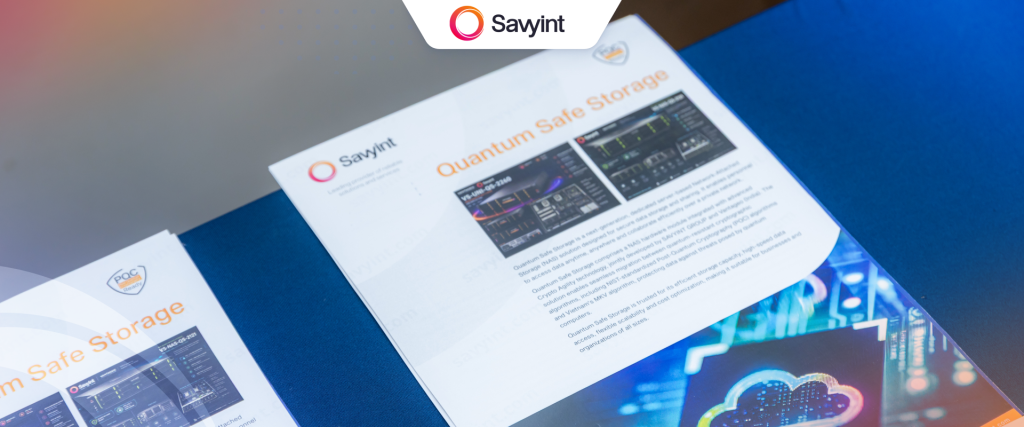
On July 21, in Hanoi, the National Electronic Authentication Center (NEAC) under the Ministry of Science and Technology hosted the international conference “Shaping the Future of PKI Infrastructure: Transitioning Cryptographic Standards for Trust Services into the Post-Quantum Era.” At the event, SAVYINT demonstrated its forward-looking vision by showcasing its comprehensive Digital Trust solutions powered by Post-Quantum Cryptography (PQC). The Post-Quantum Era and New Challenges for Digital Trust The conference was held at a time when countries around the world are accelerating research and preparations for the impact of quantum computing on digital infrastructure. While quantum computing promises unprecedented computational capabilities, it also presents significant challenges to the cryptographic mechanisms currently used to safeguard data, digital identities, and electronic transactions. During the conference, experts discussed emerging trends and challenges in trust services, shared international experiences in modernizing PKI infrastructure, enhancing crypto agility, and preparing migration roadmaps toward next-generation security technologies to ensure digital trust in the post-quantum era. Digital Trust Infrastructure as the Foundation of the Digital Economy In her opening remarks, Ms. To Thi Thu Huong, Director General of the National Electronic Authentication Center (NEAC), emphasized that Vietnam is entering a period of rapid development in its digital economy, digital society, and digital government. In this transformation, Public Key Infrastructure (PKI), digital signatures, and trust services serve as the foundation for electronic identity authentication, data integrity, and trust in digital transactions. Proactively studying international standards, adopting global best practices, and preparing for future cryptographic transitions will not only help maintain digital trust and protect electronic transactions, but also facilitate cross-border interoperability and mutual recognition of trust services, supporting Vietnam’s international integration in the digital era. Three Major Challenges Facing Digital Trust Infrastructure in the Next Decade At the conference, domestic and international experts highlighted three critical challenges that are reshaping digital trust infrastructure worldwide. First, the rapid advancement of quantum computing requires a transition to new cryptographic standards capable of protecting data, digital identities, and electronic transactions in the future. Second, the explosive growth of cloud computing, artificial intelligence (AI), the Internet of Things (IoT), and large-scale digital systems is dramatically increasing the number of digital certificates, connected devices, and trust services requiring authentication, making PKI modernization an urgent priority. Third, the global trend toward shorter digital certificate lifecycles, aimed at strengthening cybersecurity, is placing increasing pressure on certificate lifecycle management and operational efficiency. Experts agreed that the transition to the post-quantum era is not merely a technological challenge, but also one of governance, standardization, and organizational adaptability in an increasingly digital world. One of the key concepts highlighted during the conference was Crypto Agility – the capability that enables systems to seamlessly adopt and transition between cryptographic algorithms. Experts emphasized that adopting Hybrid Cryptography represents the most practical and strategic approach for Certification Authorities (CAs) in Vietnam to gradually migrate to post-quantum security while ensuring uninterrupted operation of existing systems. Strengthening Cryptographic Security Mr. Hoang Nguyen Van, Vice President of theVietnam Institute for Digital Transformation and Innovation (VIDTI), pointed out that the threat posed by quantum computing is no longer a distant concern – it is becoming a reality. Once sufficiently powerful quantum computers emerge, many of today’s cryptographic algorithms protecting government systems, national defense, financial services, banking, healthcare, and other critical infrastructures could be broken. Every nation is facing this security challenge. As economies become increasingly digital, the issue extends beyond protecting data – it is about safeguarding digital sovereigntyandtechnological sovereignty. “Long-lived data with retention periods of 25 to 30 years – such as financial records, strategic assets, public service contracts, and healthcare data faces a significant risk if not protected by next-generation cryptographic standards. Such data could be collected today and decrypted in the future through ‘harvest now, decrypt later’ attacks,” Mr. Hoang Nguyen Van stated. He also proposed a reference roadmap for the 2026 – 2030 period, including: Conducting a comprehensive inventory of cryptographic assets, assessing cryptographic risks, piloting new algorithms and deployment models; and gradually building national capabilities in post-quantum cryptography to safeguard data, electronic transactions, and financial security in the years ahead. According to Mr. Hoang Nguyen Van, the guiding principle for this transition should be “Crypto-Agility First.” This approach enables organizations to update cryptographic algorithms flexibly while maintaining interoperability and minimizing operational disruption when traditional algorithms are no longer considered secure. He further emphasized that the migration extends far beyond replacing cryptographic algorithms. It requires comprehensive modernization across the entire IT ecosystem, including network infrastructure, servers, authentication systems, operational processes, and business applications. To ensure security throughout the transition period, he recommended adopting a Hybrid Cryptography model that combines today’s widely deployed algorithms with quantum-resistant algorithms such as lattice-based cryptography. SAVYINT Brings Post-Quantum Digital Trust Technologies to Vietnam and the Region More than just delivering technology, SAVYINT provides a comprehensive Digital Trust platform that empowers organizations to protect their most valuable data and critical digital assets – both today and in the post-quantum future. SAVYINT’s Digital Trust portfolio addresses the full spectrum of enterprise security and trust requirements while meeting the specialized needs of highly regulated industries such as banking and financial services. Its solution portfolio spans Data Security & Cryptography, Digital Identity & Fraud, and Secure Payment. Post-Quantum Cryptography (PQC) is a foundational technology embedded across many of SAVYINT’s solutions. While awareness of post-quantum security remains relatively limited among many organizations, SAVYINT has proactively integrated globally standardized PQC algorithms into its existing platforms. This enables both existing and new customers to benefit from the latest cryptographic innovations while ensuring that their data and electronic transactions remain protected over the long term – regardless of future algorithm transitions or emerging cyber threats. – SAVYINT SAM FIDO2 Identity Server is a passwordless mobile authentication and identity solution based on the FIDO2 standard, combining data encryption and transaction security. The solution ensures compliance with requirements for blockchain, cryptocurrency, mobile payments, data encryption, transaction encryption, system security, and authentication, addressing the security demands of modern digital ecosystems. – SAVYINT SAM Auth Server is an all-in-one solution for strong authentication data encryption, digital signature
Top 6 Benefits of Zero Trust Security Architecture
As cyberattacks become increasingly sophisticated, traditional security models such as firewalls, VPNs, or trusted internal networks are no longer sufficient to protect modern enterprises. Zero Trust Architecture has emerged as a critical approach in today’s cybersecurity landscape, helping organizations strengthen protection across users, devices, applications, data, and digital transactions. What is Zero Trust Architecture? Zero Trust Architecture is a modern security model built on the principle of “never trust, always verify.” It is designed for today’s complex, distributed, and increasingly cloud-based IT environments. Unlike traditional security models, Zero Trust requires every access request to be continuously verified, whether it originates from inside or outside the organization. Zero Trust Architecture typically combines multiple security technologies, including: Key Benefits of Zero Trust Security Architecture Implementing Zero Trust can bring significant benefits to enterprises and organizations, including: 1. Strengthening Comprehensive Security Against Advanced Threats Zero Trust helps organizations defend against threats such as ransomware, phishing, compromised accounts, and insider risks. By enforcing least-privilege access and continuous verification, businesses can significantly reduce the risk of attackers exploiting exposed credentials to access sensitive systems and data. 2. Reducing the Risk of Data Breaches Since every access request must be verified, attackers cannot easily reach sensitive data even if they manage to compromise an account or device. This helps limit unauthorized access, reduce lateral movement within the system, and minimize the potential impact of security incidents. 3. Improving Monitoring and Incident Detection Zero Trust enables organizations to monitor user behavior, devices, applications, and access activities in real time. With stronger visibility across the digital environment, businesses can detect unusual activities earlier, respond to risks more quickly, and improve their overall incident response capability. 4. Supporting Remote Work, Cloud, and Hybrid Infrastructure With Zero Trust, users can securely access enterprise resources from anywhere, as long as their identity, device, and access permissions are properly verified. This is especially valuable for remote and hybrid work models, where employees may access corporate systems from different locations, networks, and personal devices. 5. Enhancing Regulatory Compliance Zero Trust provides a unified governance framework for enforcing security policies, authenticating users, managing access rights, and maintaining activity logs. This allows organizations to better meet data protection and information security requirements in highly regulated sectors such as finance, banking, healthcare, telecommunications, and government. 6. Optimizing Long-Term Security Costs While Zero Trust implementation may require initial investment, it can help optimize security costs in the long run. By consolidating security controls, reducing the likelihood of data breaches, and limiting damage when incidents occur, Zero Trust helps organizations build a more sustainable and cost-effective cybersecurity strategy. A Comprehensive Zero Trust-Based Security and Fraud Prevention Solution for BFSI Organizations With deep experience in the Finance and Banking sector and a proven track record of implementing projects for major banks, SAVYINT introducs e a comprehensive security and fraud prevention solution built on Zero Trust Architecture. Aligned with the core pillars of modern Zero Trust, SAVYINT’ solution enables end-to-end protection across users, devices, applications, data, and digital transactions: + Identity verification and user access control + Establish device trust + Real-time application protection with RASP+ + API security and third-party connectivity + Consent management and personal data protection + AI/ML integration, transaction risk assessment, and real-time fraud prevention + Automated compliance reporting + Support compliance with Vietnamese regulations, including Circular 50, Circular 64, Circular 77 of the State Bank of Vietnam, Decree 356, the Data Protection Law, and the Cybersecurity Law,…; international standards such as eIDAS, GDPR, and PCI-DSS…; and regional regulations such as Malaysia’s PDPA and RMiT, and the Philippines’ AFASA and BSP 1213–1215… Connect with SAVYINT experts today to take the lead in enterprise-wide security and fraud prevention! Read more: Zero Trust – A Next-Gen Security Architecture for Vietnamese Banks Amid Increasingly Stringent Regulations
SAVYINT YEAR-END PARTY 2025 | RE:IMAGINE – REDEFINING DIGITAL TRUST FOR THE GLOBAL STAGE
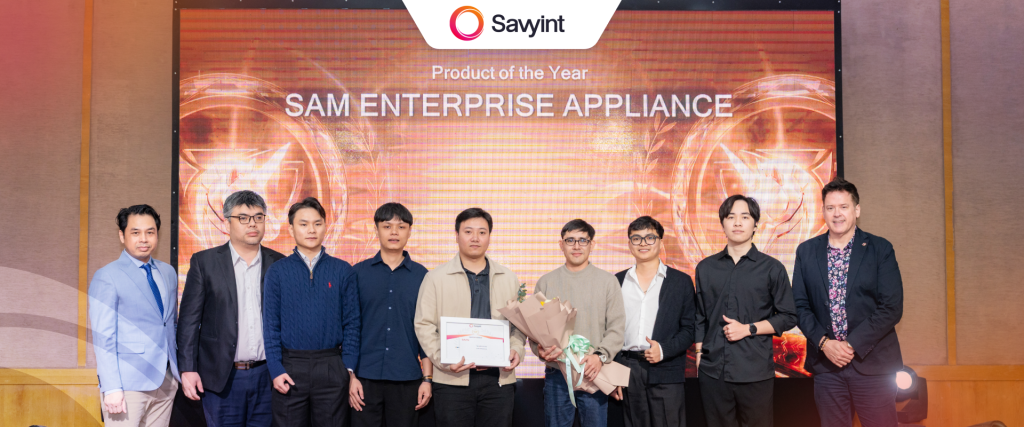
Closing 2025 with pride and opening a new chapter of aspiration, Savyint gathered for its year-end party under the theme “RE:IMAGINE.” More than a celebration, this event served as a strategic milestone, declaring a bold vision to conquer the APAC and MENA markets in 2026. A Global Vision with Strong Roots With its office located in Australia, Savyint serves as a beacon of technological excellence, seamlessly connecting world-class R&D with practical, high-scale deployment. With a core team comprising top Australian and Vietnamese talent, Savyint operates a dual R&D structure in Sydney and Vietnam, supported by a robust service center in Vietnam and business centers strategically located across Hanoi, HCMC, Singapore, the Philippines, Dubai, Sydney, and the EU. The “REIMAGINE” theme signifies a major strategic pivot. It is a commitment to breaking familiar boundaries and creating distinctive value on a global scale. As Executive Chairman Steve Huang emphasised during the opening speech, amidst a rapid global digital transformation, Savyint is steadfast in mastering core technologies to meet the most stringent international standards. The 2026 Strategy focuses on Advanced Technology and Zero Trust Moving into 2026, Savyint is restructuring its strategic focus to deepen its expertise in cutting-edge domains. The group is well-positioned to take the lead in the following areas: At the heart of this strategy is the Zero Trust Framework. Savyint positions itself as a pillar of digital trust, ensuring absolute safety in payment transactions and cryptocurrency dealings, while providing a total fraud prevention mechanism. Compliance: The Competitive Edge Savyint distinguishes itself not just by technology but by rigorous adherence to global and local compliance standards. Savyint’s solutions are engineered to comply with a comprehensive matrix of regulations: This dedication ensures that Savyint acts as a secure bridge for enterprises as they navigate the complicated regulatory landscapes of APAC and MENA. Highlighting this success, SAM Enterprise Appliance was honoured as the “Product of the Year”. Already successfully deployed in major financial institutions like Agribank, BIDV, Sacombank, and Bac A Bank, this solution recently won at APICTA 2025 (the “Oscars” of Asia-Pacific ICT), affirming Savyint’s ability to compete on the international stage. Reaching the Open Seas The Year End Party 2025 concluded not just with festivities but with a unified spirit of determination. The Savyint team’s energy – from the R&D engineers to the business units – reflected a readiness to step into the “Open Seas”. With a redefined strategy, a footprint stretching from Sydney to Dubai, and a portfolio of certified, high-security solutions, Savyint Group is ready to dominate the competitive landscape of 2026, delivering uncompromised Digital Trust to the world. Highlights at the event:
Strengthening Authentication and Security in the Financial and Banking Sector in Southeast Asia
Alongside the rapid growth of the financial and banking sector, regulatory frameworks across many Southeast Asian countries have been continuously updated and refined to enhance safety and security in financial operations. In Vietnam, Singapore, the Philippines, and Malaysia, newly issued regulations go beyond technical compliance requirements and increasingly focus on protecting users and strengthening trust in digital financial systems. Safeguarding digital identities, personal data, and financial transactions is now widely recognized as a prerequisite for the sustainable development of the electronic financial ecosystem. In response to these increasingly stringent requirements, financial institutions are compelled to comprehensively upgrade their authentication capabilities, security controls, and risk-management frameworks to a higher level. Security Requirements for Open API Implementation The rapid expansion of digital banking, e-wallets, Open Banking, and fintech partnership models has made fraud, cyberattacks, and data leakage common challenges across the region. Establishing strict security requirements for Open API implementation has therefore become a critical prerequisite for protecting financial systems and maintaining customer trust. In Singapore, as early as 2016, the Monetary Authority of Singapore (MAS) issued Open Banking and API guidelines requiring financial institutions to implement strong authentication mechanisms, customer consent management, identity and access control, and strict authorization when sharing data with partners. From an early stage, Singapore mandated standards such as secure API gateways, OAuth/OIDC-based security, multi-factor authentication (MFA), and contextual access monitoring as foundational requirements for sustaining trust within the open financial ecosystem. In 2021, the Philippines introduced the Open Finance Framework, which defines a phased roadmap for data sharing with clearly articulated technical, governance, and security standards aimed at building an open financial ecosystem. One year later, in 2022, Bank Negara Malaysia (BNM) launched the Open API Framework, providing clear guidance on how banks and third-party fintech providers can securely share data. The framework emphasizes strict security controls, customer-consent-based access management, and technical reference guidelines to promote innovation and fair competition within the digital financial ecosystem. In Vietnam, Circular 64/2024/TT-NHNN regulates the implementation of Open Application Programming Interfaces (Open APIs) in the banking sector, allowing credit institutions to connect and collaborate with third parties to deliver new financial services. However, ecosystem expansion must be accompanied by stringent requirements for authentication, access control, data protection, and customer consent management. The Circular also defines a clear roadmap for banks that have already deployed Open APIs, ensuring a controlled and secure transition process. Data Protection and Financial Fraud Prevention Requirements Singapore and the Philippines have long established comprehensive legal frameworks to protect customer data. Singapore is a regional pioneer in data-protection and digital-banking regulation. The Personal Data Protection Act (PDPA), enacted in 2012 and amended in 2020, provides detailed rules governing the collection, use, and storage of personal data, and requires organizations to notify authorities in the event of data breaches. In the banking sector, the Technology Risk Management Guidelines issued by MAS mandate multi-factor authentication (MFA), the use of OTPs or biometrics, and enhanced monitoring of high-risk transactions. The Philippines adopted the Data Privacy Act in 2012, one of the earliest such frameworks in the region, granting users the right to access, correct, and delete personal data. Compliance is overseen by the National Privacy Commission (NPC). In banking, the Bangko Sentral ng Pilipinas (BSP) mandates MFA for electronic payment services, the implementation of eKYC, and device and transaction risk management. Most recently, BSP Circulars 1213 and 1214 were issued in response to rising financial account fraud, to enforce the Anti-Financial Account Scamming Act (AFASA). These regulations emphasize enhanced technology risk management, the adoption of modern authentication methods, and the establishment of coordinated investigation and information-sharing mechanisms between banks and law-enforcement authorities. Specifically: In Vietnam, the Personal Data Protection Decrees (2023), together with the Cybersecurity Law (2018), impose strict requirements on customer consent, impact assessments for sensitive data, and data localization. More recently, Circular 50/2024/TT-NHNN establishes security requirements for online banking services, mandating that credit institutions and foreign bank branches implement customer-protection guidelines (PINs, OTPs, fraud awareness), encryption, access monitoring, and incident reporting to ensure confidentiality, integrity, and availability while protecting customer rights. Overall, regulatory priorities in Singapore, Vietnam, the Philippines, and Malaysia converge around the adoption of advanced security measures to protect customers from technological risks, online fraud, and cyberattacks, alongside clearly defined Open API implementation roadmaps. Strengthening Authentication and Security with Savyint’s Comprehensive Solutions In response to increasingly stringent compliance requirements, Savyint delivers a comprehensive security ecosystem that enables banks and financial institutions to effectively comply with Circulars 64 and 50, as well as BSP Circulars 1213 and 1214, while strengthening long-term security capabilities and risk governance. Savyint’s solution portfolio is built around four core pillars: Secure Payments, Open Banking, Data Protection, and Digital Trust. Under the Secure Payments pillar, Savyint deploys strong customer authentication (SCA), multi-factor authentication (MFA), Smart OTP, passkeys, FIDO2, biometrics, 3D Secure, tokenization, and fraud-management capabilities such as risk scoring and real-time monitoring. This security layer directly protects card payments, e-wallets, online transfers, and e-commerce transactions, reducing fraud risks for customers, financial institutions, and merchants while safeguarding wallet and card data. To support controlled Open API connectivity under Circular 64 and Open Banking standards, Savyint provides a full Open Banking solution suite, including API Management, Open Banking Portal, Consent Management, CIAM/SCA-PSD2, TPP Management, and Tokenization. These solutions enable banks to securely deploy Open APIs with strict access control, robust customer consent management, and purpose-limited data sharing in line with security and compliance requirements. For transaction and data protection, Savyint secures information throughout its lifecycle with solutions such as Sam Appliance, Sam Auth Server, Savyint PKI-in-a-Box, Enterprise Security Appliance, KMS, and DSS. Notably, Sam Appliance is an all-in-one platform for data encryption, digital signatures, and mobile identity, featuring a FIPS 140-2 Level 3-certified server appliance integrated with Hardware Security Modules (HSMs), SAM software, key-management systems, and digital-signing software. This flexible security platform supports diverse deployment needs across banking, finance, healthcare, education, telecommunications, broadcasting, and media sectors. Beyond digital signatures for invoices, contracts, documents, certificates, and payment records, Sam Appliance is built on a Cryptographic
AI/ML-Based Banking Transaction Fraud Prevention
As digital transformation accelerates, detecting and preventing banking transaction fraud through advanced technologies such as AI and machine learning (AI/ML) has become a top strategic priority for financial institutions, as cybercrime continues to grow in both scale and sophistication. According to the latest data from the U.S. Federal Trade Commission (FTC), total consumer-reported fraud losses in 2024 reached approximately USD 12.5 billion, representing an increase of nearly 25% compared to 2023. This highlights the rapidly escalating severity of fraudulent activities. Beyond direct financial losses, banks also incur substantial additional costs related to investigations, legal proceedings, incident response, and reputation recovery – often making the actual cost several times higher than the initial monetary loss. More critically, fraud incidents significantly erode customer trust, negatively impacting customer retention and the ability to attract new users. Investing in advanced fraud detection systems and proactive prevention measures is therefore not merely an operational requirement, but a strategic imperative for banks to protect assets and maintain credibility in the digital era. What Is Banking Fraud Prevention? Banking fraud prevention refers to the use of multiple, layered protection methods by banks to detect early signs of fraud, reduce risk exposure, and prevent financial fraud before it causes serious damage. Today, modern fraud prevention strategies no longer focus solely on incident response after fraud has occurred. Instead, they emphasize proactive prevention from the outset. These approaches integrate advanced data analytics, real-time monitoring, and AI-driven risk assessment, enabling banks to stay ahead of increasingly complex financial threats. As fraud types become more sophisticated, fraud detection technologies are more critical than ever to maintaining the security and integrity of banking data and transactions. Using AI/ML to Detect and Prevent Banking Fraud By deploying a flexible and adaptive defense system against financial fraud threats, banks and financial institutions can effectively prevent and minimize the impact of fraudulent activities. At the core of this defense system is the application of advanced data analytics, artificial intelligence, and machine learning to detect fraud patterns in real time and provide early warnings of potential risks. In parallel, banks deploy phishing-resistant Strong Customer Authentication (SCA) and Multi-Factor Authentication (MFA), incorporating FIDO2 security keys, passkeys, transaction signing, device-bound cryptographic keys, and biometric factors. Together, these mechanisms create a flexible, adaptive and resilient defense against financial fraud, ensuring that only authorized users can access accounts and sensitive information. Real-time transaction monitoring serves as a foundational component of financial fraud prevention systems. Beyond supporting compliance with KYC and anti-money laundering requirements, continuous AI/ML-driven monitoring enables large-scale data analysis to identify abnormal behaviors as soon as they occur, thereby mitigating risks before fraud results in actual losses. Periodic risk assessments involve analyzing emerging fraud trends, reviewing vulnerabilities in existing systems, and adjusting prevention strategies accordingly. This allows banks to continuously refine and enhance the effectiveness of fraud detection over time. Beyond detection and assessment, AI/ML enables the prediction of future fraud risks. By learning from past fraud incidents, systems can identify individuals or groups with a higher likelihood of committing fraud, helping organizations allocate preventive resources more precisely and effectively. Strong Customer Authentication and Multi-Factor Authentication enhance the security of user access and transaction approval by moving beyond traditional password-based mechanisms. When implemented with phishing-resistant authentication methods such as FIDO2 security keys, passkeys, transaction signing, device-bound cryptographic keys, and biometrics, SCA/MFA provides a flexible, adaptive, and resilient security layer. This method ensures that only legitimate users can access accounts and authorize transactions, effectively mitigating risks such as phishing, credential theft, account takeover, and financial fraud, while meeting stringent regulatory and security requirements. Alongside technology, customers play an increasingly important role. Proactively raising customer awareness of common scam techniques and providing guidance on safe transaction practices empowers users to protect themselves against fraud and social engineering attacks. Financial fraud prevention is a continuous journey that requires banks and financial institutions to constantly update and adopt new technologies to enhance prevention capabilities and minimize fraud-related losses. Savyint delivers a comprehensive Fraud Prevention and Risk Management solution suite designed to help banks and financial institutions detect fraud early, prevent incidents promptly, and manage fraud risks effectively. Connect with Savyint’s experts today to strengthen your defenses and minimize financial fraud risks. Source: