
SAVYINT: Making Its Mark in the Australian Market

Recently, General Secretary and President Tô Lâm, together with a high-level Vietnamese delegation, paid a State visit to Australia, opening a new chapter for intellectual, technological and innovation cooperation between the two countries. On this occasion, Savyint was honored to join the delegation of the Ministry of Science and Technology in promoting technology and trade cooperation between Vietnam and Australia. Over the course of three working days, the Department of Digital Technology and Artificial Intelligence under the Ministry of Science and Technology organized a series of trade and investment promotion activities with the participation of representatives from Vietnam’s leading technology companies. During the program, Savyint engaged in open and in-depth discussions with leading Australian companies in AI and unmanned systems, as well as prominent universities specializing in science and innovation. These engagements included meetings with the Consulate General of Vietnam in Sydney; DroneShield, a leading defense technology company specializing in UAV detection and counter-drone solutions and a technology partner to the U.S. Department of Defense, NATO, and defense organizations across the Five Eyes alliance; Professor Wenjie Zhang of the University of New South Wales (UNSW) and N2N AI to explore research, technology transfer and commercialization opportunities in trusted and sovereign AI, semiconductors and autonomous drone technologies. The delegation also visited the UTS Tech Lab and met with Professor Diep Nguyen, Head of the UTS 5G/6G Laboratory, Director of the Adaptive Communications and Computing Group, and Director of Transnational Education at the Faculty of Engineering and Information Technology, University of Technology Sydney (UTS). Notably, at the Vietnam – Australia Digital Technology Experts and Businesses Networking Conference, Savyint had the opportunity to introduce its capabilities and connect with more than 30 technology companies and professionals, as well as Vietnamese and Australian experts and intellectuals through the Vietnamese Australian Scholars and Experts Association. The event marked another important step in Savyint’s journey toward the Australia – New Zealand market and its broader strategy of expanding its global network and international presence. SAVYINT is a technology company with extensive market experience and strong capabilities across Financial Services and Banking, Fintech, Healthcare, Education and Digital Government, supported by core expertise in cybersecurity, cryptography, digital identity, electronic authentication, electronic certification and trust services. Building on hands-on implementation experience and a broad technology ecosystem, the company focuses on developing specialized solutions for critical digital systems and infrastructure. Its key technology areas include Crypto & Security, Zero Trust, and fraud detection and prevention for AIoT devices, drones, Smart City systems, aerospace applications, and other environments with stringent requirements for cybersecurity and data protection. In the field of semiconductors and hardware security, SAVYINT is focused on developing technologies such as cryptographic chips, Security ICs, dedicated security chips, Hardware Security Modules (HSMs), and AI Security solutions, strengthening the protection of data, devices and systems from the hardware layer upward. These capabilities also provide the foundation for developing highly specialized and deeply integrated security products across multiple industries. Another key long-term strategic focus is Quantum Security and Quantum-Safe technologies. SAVYINT and SAVIS are investing in research and development of Post-Quantum Cryptography (PQC) and quantum-era cryptographic key management solutions, helping organizations proactively transition and strengthen their resilience against future threats posed by quantum computing. The company’s solutions are designed to comply with leading international security and payment standards, including eIDAS, PSD2/PSD3, NIST, FIPS, Common Criteria (CC), FIDO and PCI DSS. From a market perspective, the company is accelerating its business development and partnerships across Australia and New Zealand, with operations in Melbourne and Sydney, while also pursuing growth opportunities in ASEAN, ASEAN+2, the Middle East and India through its ecosystem of partners, investments and technology collaborations. The company’s goal is to progressively bring SAVYINT’s core technologies and advanced security solutions to regional and international markets. Highlights from the visit:
SAVYINT Showcases Post-Quantum Digital Trust Solutions at the International Conference: “Shaping the Future of PKI Infrastructure: Transitioning Cryptographic Standards for Trust Services into the Post-Quantum Era”
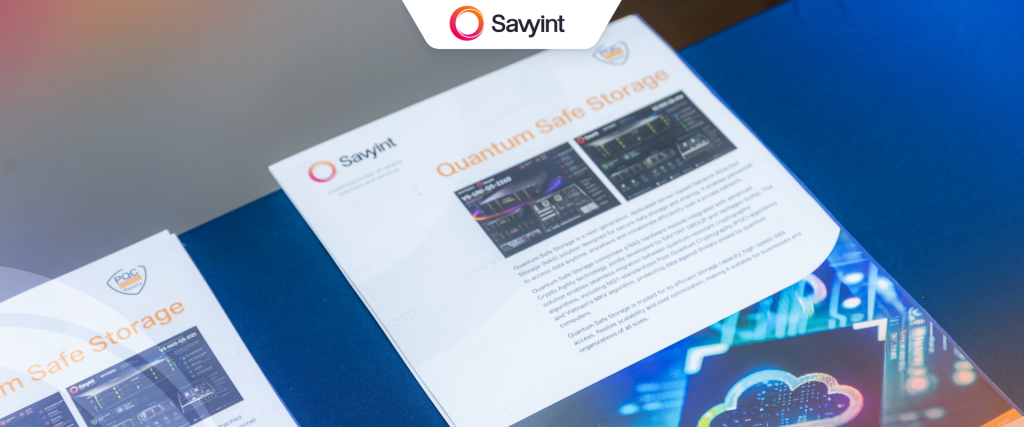
On July 21, in Hanoi, the National Electronic Authentication Center (NEAC) under the Ministry of Science and Technology hosted the international conference “Shaping the Future of PKI Infrastructure: Transitioning Cryptographic Standards for Trust Services into the Post-Quantum Era.” At the event, SAVYINT demonstrated its forward-looking vision by showcasing its comprehensive Digital Trust solutions powered by Post-Quantum Cryptography (PQC). The Post-Quantum Era and New Challenges for Digital Trust The conference was held at a time when countries around the world are accelerating research and preparations for the impact of quantum computing on digital infrastructure. While quantum computing promises unprecedented computational capabilities, it also presents significant challenges to the cryptographic mechanisms currently used to safeguard data, digital identities, and electronic transactions. During the conference, experts discussed emerging trends and challenges in trust services, shared international experiences in modernizing PKI infrastructure, enhancing crypto agility, and preparing migration roadmaps toward next-generation security technologies to ensure digital trust in the post-quantum era. Digital Trust Infrastructure as the Foundation of the Digital Economy In her opening remarks, Ms. To Thi Thu Huong, Director General of the National Electronic Authentication Center (NEAC), emphasized that Vietnam is entering a period of rapid development in its digital economy, digital society, and digital government. In this transformation, Public Key Infrastructure (PKI), digital signatures, and trust services serve as the foundation for electronic identity authentication, data integrity, and trust in digital transactions. Proactively studying international standards, adopting global best practices, and preparing for future cryptographic transitions will not only help maintain digital trust and protect electronic transactions, but also facilitate cross-border interoperability and mutual recognition of trust services, supporting Vietnam’s international integration in the digital era. Three Major Challenges Facing Digital Trust Infrastructure in the Next Decade At the conference, domestic and international experts highlighted three critical challenges that are reshaping digital trust infrastructure worldwide. First, the rapid advancement of quantum computing requires a transition to new cryptographic standards capable of protecting data, digital identities, and electronic transactions in the future. Second, the explosive growth of cloud computing, artificial intelligence (AI), the Internet of Things (IoT), and large-scale digital systems is dramatically increasing the number of digital certificates, connected devices, and trust services requiring authentication, making PKI modernization an urgent priority. Third, the global trend toward shorter digital certificate lifecycles, aimed at strengthening cybersecurity, is placing increasing pressure on certificate lifecycle management and operational efficiency. Experts agreed that the transition to the post-quantum era is not merely a technological challenge, but also one of governance, standardization, and organizational adaptability in an increasingly digital world. One of the key concepts highlighted during the conference was Crypto Agility – the capability that enables systems to seamlessly adopt and transition between cryptographic algorithms. Experts emphasized that adopting Hybrid Cryptography represents the most practical and strategic approach for Certification Authorities (CAs) in Vietnam to gradually migrate to post-quantum security while ensuring uninterrupted operation of existing systems. Strengthening Cryptographic Security Mr. Hoang Nguyen Van, Vice President of theVietnam Institute for Digital Transformation and Innovation (VIDTI), pointed out that the threat posed by quantum computing is no longer a distant concern – it is becoming a reality. Once sufficiently powerful quantum computers emerge, many of today’s cryptographic algorithms protecting government systems, national defense, financial services, banking, healthcare, and other critical infrastructures could be broken. Every nation is facing this security challenge. As economies become increasingly digital, the issue extends beyond protecting data – it is about safeguarding digital sovereigntyandtechnological sovereignty. “Long-lived data with retention periods of 25 to 30 years – such as financial records, strategic assets, public service contracts, and healthcare data faces a significant risk if not protected by next-generation cryptographic standards. Such data could be collected today and decrypted in the future through ‘harvest now, decrypt later’ attacks,” Mr. Hoang Nguyen Van stated. He also proposed a reference roadmap for the 2026 – 2030 period, including: Conducting a comprehensive inventory of cryptographic assets, assessing cryptographic risks, piloting new algorithms and deployment models; and gradually building national capabilities in post-quantum cryptography to safeguard data, electronic transactions, and financial security in the years ahead. According to Mr. Hoang Nguyen Van, the guiding principle for this transition should be “Crypto-Agility First.” This approach enables organizations to update cryptographic algorithms flexibly while maintaining interoperability and minimizing operational disruption when traditional algorithms are no longer considered secure. He further emphasized that the migration extends far beyond replacing cryptographic algorithms. It requires comprehensive modernization across the entire IT ecosystem, including network infrastructure, servers, authentication systems, operational processes, and business applications. To ensure security throughout the transition period, he recommended adopting a Hybrid Cryptography model that combines today’s widely deployed algorithms with quantum-resistant algorithms such as lattice-based cryptography. SAVYINT Brings Post-Quantum Digital Trust Technologies to Vietnam and the Region More than just delivering technology, SAVYINT provides a comprehensive Digital Trust platform that empowers organizations to protect their most valuable data and critical digital assets – both today and in the post-quantum future. SAVYINT’s Digital Trust portfolio addresses the full spectrum of enterprise security and trust requirements while meeting the specialized needs of highly regulated industries such as banking and financial services. Its solution portfolio spans Data Security & Cryptography, Digital Identity & Fraud, and Secure Payment. Post-Quantum Cryptography (PQC) is a foundational technology embedded across many of SAVYINT’s solutions. While awareness of post-quantum security remains relatively limited among many organizations, SAVYINT has proactively integrated globally standardized PQC algorithms into its existing platforms. This enables both existing and new customers to benefit from the latest cryptographic innovations while ensuring that their data and electronic transactions remain protected over the long term – regardless of future algorithm transitions or emerging cyber threats. – SAVYINT SAM FIDO2 Identity Server is a passwordless mobile authentication and identity solution based on the FIDO2 standard, combining data encryption and transaction security. The solution ensures compliance with requirements for blockchain, cryptocurrency, mobile payments, data encryption, transaction encryption, system security, and authentication, addressing the security demands of modern digital ecosystems. – SAVYINT SAM Auth Server is an all-in-one solution for strong authentication data encryption, digital signature
Top 6 Benefits of Zero Trust Security Architecture
As cyberattacks become increasingly sophisticated, traditional security models such as firewalls, VPNs, or trusted internal networks are no longer sufficient to protect modern enterprises. Zero Trust Architecture has emerged as a critical approach in today’s cybersecurity landscape, helping organizations strengthen protection across users, devices, applications, data, and digital transactions. What is Zero Trust Architecture? Zero Trust Architecture is a modern security model built on the principle of “never trust, always verify.” It is designed for today’s complex, distributed, and increasingly cloud-based IT environments. Unlike traditional security models, Zero Trust requires every access request to be continuously verified, whether it originates from inside or outside the organization. Zero Trust Architecture typically combines multiple security technologies, including: Key Benefits of Zero Trust Security Architecture Implementing Zero Trust can bring significant benefits to enterprises and organizations, including: 1. Strengthening Comprehensive Security Against Advanced Threats Zero Trust helps organizations defend against threats such as ransomware, phishing, compromised accounts, and insider risks. By enforcing least-privilege access and continuous verification, businesses can significantly reduce the risk of attackers exploiting exposed credentials to access sensitive systems and data. 2. Reducing the Risk of Data Breaches Since every access request must be verified, attackers cannot easily reach sensitive data even if they manage to compromise an account or device. This helps limit unauthorized access, reduce lateral movement within the system, and minimize the potential impact of security incidents. 3. Improving Monitoring and Incident Detection Zero Trust enables organizations to monitor user behavior, devices, applications, and access activities in real time. With stronger visibility across the digital environment, businesses can detect unusual activities earlier, respond to risks more quickly, and improve their overall incident response capability. 4. Supporting Remote Work, Cloud, and Hybrid Infrastructure With Zero Trust, users can securely access enterprise resources from anywhere, as long as their identity, device, and access permissions are properly verified. This is especially valuable for remote and hybrid work models, where employees may access corporate systems from different locations, networks, and personal devices. 5. Enhancing Regulatory Compliance Zero Trust provides a unified governance framework for enforcing security policies, authenticating users, managing access rights, and maintaining activity logs. This allows organizations to better meet data protection and information security requirements in highly regulated sectors such as finance, banking, healthcare, telecommunications, and government. 6. Optimizing Long-Term Security Costs While Zero Trust implementation may require initial investment, it can help optimize security costs in the long run. By consolidating security controls, reducing the likelihood of data breaches, and limiting damage when incidents occur, Zero Trust helps organizations build a more sustainable and cost-effective cybersecurity strategy. A Comprehensive Zero Trust-Based Security and Fraud Prevention Solution for BFSI Organizations With deep experience in the Finance and Banking sector and a proven track record of implementing projects for major banks, SAVYINT introducs e a comprehensive security and fraud prevention solution built on Zero Trust Architecture. Aligned with the core pillars of modern Zero Trust, SAVYINT’ solution enables end-to-end protection across users, devices, applications, data, and digital transactions: + Identity verification and user access control + Establish device trust + Real-time application protection with RASP+ + API security and third-party connectivity + Consent management and personal data protection + AI/ML integration, transaction risk assessment, and real-time fraud prevention + Automated compliance reporting + Support compliance with Vietnamese regulations, including Circular 50, Circular 64, Circular 77 of the State Bank of Vietnam, Decree 356, the Data Protection Law, and the Cybersecurity Law,…; international standards such as eIDAS, GDPR, and PCI-DSS…; and regional regulations such as Malaysia’s PDPA and RMiT, and the Philippines’ AFASA and BSP 1213–1215… Connect with SAVYINT experts today to take the lead in enterprise-wide security and fraud prevention! Read more: Zero Trust – A Next-Gen Security Architecture for Vietnamese Banks Amid Increasingly Stringent Regulations
SAVYINT YEAR-END PARTY 2025 | RE:IMAGINE – REDEFINING DIGITAL TRUST FOR THE GLOBAL STAGE
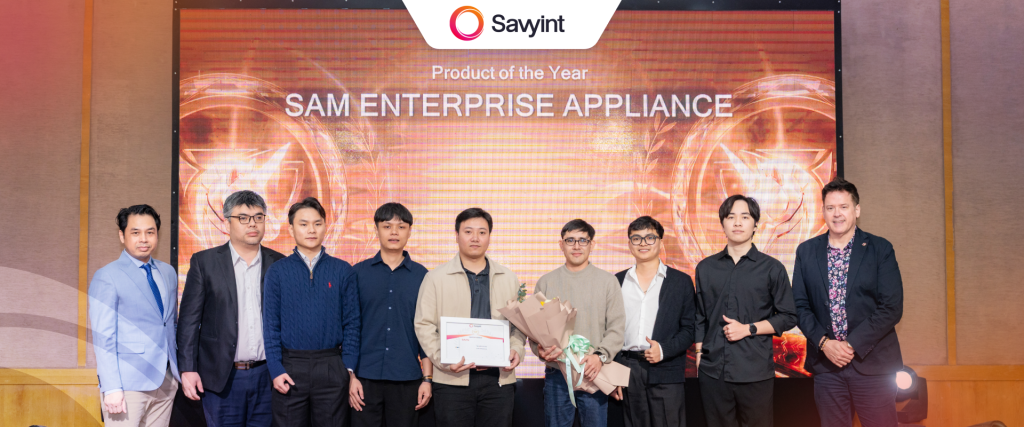
Closing 2025 with pride and opening a new chapter of aspiration, Savyint gathered for its year-end party under the theme “RE:IMAGINE.” More than a celebration, this event served as a strategic milestone, declaring a bold vision to conquer the APAC and MENA markets in 2026. A Global Vision with Strong Roots With its office located in Australia, Savyint serves as a beacon of technological excellence, seamlessly connecting world-class R&D with practical, high-scale deployment. With a core team comprising top Australian and Vietnamese talent, Savyint operates a dual R&D structure in Sydney and Vietnam, supported by a robust service center in Vietnam and business centers strategically located across Hanoi, HCMC, Singapore, the Philippines, Dubai, Sydney, and the EU. The “REIMAGINE” theme signifies a major strategic pivot. It is a commitment to breaking familiar boundaries and creating distinctive value on a global scale. As Executive Chairman Steve Huang emphasised during the opening speech, amidst a rapid global digital transformation, Savyint is steadfast in mastering core technologies to meet the most stringent international standards. The 2026 Strategy focuses on Advanced Technology and Zero Trust Moving into 2026, Savyint is restructuring its strategic focus to deepen its expertise in cutting-edge domains. The group is well-positioned to take the lead in the following areas: At the heart of this strategy is the Zero Trust Framework. Savyint positions itself as a pillar of digital trust, ensuring absolute safety in payment transactions and cryptocurrency dealings, while providing a total fraud prevention mechanism. Compliance: The Competitive Edge Savyint distinguishes itself not just by technology but by rigorous adherence to global and local compliance standards. Savyint’s solutions are engineered to comply with a comprehensive matrix of regulations: This dedication ensures that Savyint acts as a secure bridge for enterprises as they navigate the complicated regulatory landscapes of APAC and MENA. Highlighting this success, SAM Enterprise Appliance was honoured as the “Product of the Year”. Already successfully deployed in major financial institutions like Agribank, BIDV, Sacombank, and Bac A Bank, this solution recently won at APICTA 2025 (the “Oscars” of Asia-Pacific ICT), affirming Savyint’s ability to compete on the international stage. Reaching the Open Seas The Year End Party 2025 concluded not just with festivities but with a unified spirit of determination. The Savyint team’s energy – from the R&D engineers to the business units – reflected a readiness to step into the “Open Seas”. With a redefined strategy, a footprint stretching from Sydney to Dubai, and a portfolio of certified, high-security solutions, Savyint Group is ready to dominate the competitive landscape of 2026, delivering uncompromised Digital Trust to the world. Highlights at the event:
Strengthening Authentication and Security in the Financial and Banking Sector in Southeast Asia
Alongside the rapid growth of the financial and banking sector, regulatory frameworks across many Southeast Asian countries have been continuously updated and refined to enhance safety and security in financial operations. In Vietnam, Singapore, the Philippines, and Malaysia, newly issued regulations go beyond technical compliance requirements and increasingly focus on protecting users and strengthening trust in digital financial systems. Safeguarding digital identities, personal data, and financial transactions is now widely recognized as a prerequisite for the sustainable development of the electronic financial ecosystem. In response to these increasingly stringent requirements, financial institutions are compelled to comprehensively upgrade their authentication capabilities, security controls, and risk-management frameworks to a higher level. Security Requirements for Open API Implementation The rapid expansion of digital banking, e-wallets, Open Banking, and fintech partnership models has made fraud, cyberattacks, and data leakage common challenges across the region. Establishing strict security requirements for Open API implementation has therefore become a critical prerequisite for protecting financial systems and maintaining customer trust. In Singapore, as early as 2016, the Monetary Authority of Singapore (MAS) issued Open Banking and API guidelines requiring financial institutions to implement strong authentication mechanisms, customer consent management, identity and access control, and strict authorization when sharing data with partners. From an early stage, Singapore mandated standards such as secure API gateways, OAuth/OIDC-based security, multi-factor authentication (MFA), and contextual access monitoring as foundational requirements for sustaining trust within the open financial ecosystem. In 2021, the Philippines introduced the Open Finance Framework, which defines a phased roadmap for data sharing with clearly articulated technical, governance, and security standards aimed at building an open financial ecosystem. One year later, in 2022, Bank Negara Malaysia (BNM) launched the Open API Framework, providing clear guidance on how banks and third-party fintech providers can securely share data. The framework emphasizes strict security controls, customer-consent-based access management, and technical reference guidelines to promote innovation and fair competition within the digital financial ecosystem. In Vietnam, Circular 64/2024/TT-NHNN regulates the implementation of Open Application Programming Interfaces (Open APIs) in the banking sector, allowing credit institutions to connect and collaborate with third parties to deliver new financial services. However, ecosystem expansion must be accompanied by stringent requirements for authentication, access control, data protection, and customer consent management. The Circular also defines a clear roadmap for banks that have already deployed Open APIs, ensuring a controlled and secure transition process. Data Protection and Financial Fraud Prevention Requirements Singapore and the Philippines have long established comprehensive legal frameworks to protect customer data. Singapore is a regional pioneer in data-protection and digital-banking regulation. The Personal Data Protection Act (PDPA), enacted in 2012 and amended in 2020, provides detailed rules governing the collection, use, and storage of personal data, and requires organizations to notify authorities in the event of data breaches. In the banking sector, the Technology Risk Management Guidelines issued by MAS mandate multi-factor authentication (MFA), the use of OTPs or biometrics, and enhanced monitoring of high-risk transactions. The Philippines adopted the Data Privacy Act in 2012, one of the earliest such frameworks in the region, granting users the right to access, correct, and delete personal data. Compliance is overseen by the National Privacy Commission (NPC). In banking, the Bangko Sentral ng Pilipinas (BSP) mandates MFA for electronic payment services, the implementation of eKYC, and device and transaction risk management. Most recently, BSP Circulars 1213 and 1214 were issued in response to rising financial account fraud, to enforce the Anti-Financial Account Scamming Act (AFASA). These regulations emphasize enhanced technology risk management, the adoption of modern authentication methods, and the establishment of coordinated investigation and information-sharing mechanisms between banks and law-enforcement authorities. Specifically: In Vietnam, the Personal Data Protection Decrees (2023), together with the Cybersecurity Law (2018), impose strict requirements on customer consent, impact assessments for sensitive data, and data localization. More recently, Circular 50/2024/TT-NHNN establishes security requirements for online banking services, mandating that credit institutions and foreign bank branches implement customer-protection guidelines (PINs, OTPs, fraud awareness), encryption, access monitoring, and incident reporting to ensure confidentiality, integrity, and availability while protecting customer rights. Overall, regulatory priorities in Singapore, Vietnam, the Philippines, and Malaysia converge around the adoption of advanced security measures to protect customers from technological risks, online fraud, and cyberattacks, alongside clearly defined Open API implementation roadmaps. Strengthening Authentication and Security with Savyint’s Comprehensive Solutions In response to increasingly stringent compliance requirements, Savyint delivers a comprehensive security ecosystem that enables banks and financial institutions to effectively comply with Circulars 64 and 50, as well as BSP Circulars 1213 and 1214, while strengthening long-term security capabilities and risk governance. Savyint’s solution portfolio is built around four core pillars: Secure Payments, Open Banking, Data Protection, and Digital Trust. Under the Secure Payments pillar, Savyint deploys strong customer authentication (SCA), multi-factor authentication (MFA), Smart OTP, passkeys, FIDO2, biometrics, 3D Secure, tokenization, and fraud-management capabilities such as risk scoring and real-time monitoring. This security layer directly protects card payments, e-wallets, online transfers, and e-commerce transactions, reducing fraud risks for customers, financial institutions, and merchants while safeguarding wallet and card data. To support controlled Open API connectivity under Circular 64 and Open Banking standards, Savyint provides a full Open Banking solution suite, including API Management, Open Banking Portal, Consent Management, CIAM/SCA-PSD2, TPP Management, and Tokenization. These solutions enable banks to securely deploy Open APIs with strict access control, robust customer consent management, and purpose-limited data sharing in line with security and compliance requirements. For transaction and data protection, Savyint secures information throughout its lifecycle with solutions such as Sam Appliance, Sam Auth Server, Savyint PKI-in-a-Box, Enterprise Security Appliance, KMS, and DSS. Notably, Sam Appliance is an all-in-one platform for data encryption, digital signatures, and mobile identity, featuring a FIPS 140-2 Level 3-certified server appliance integrated with Hardware Security Modules (HSMs), SAM software, key-management systems, and digital-signing software. This flexible security platform supports diverse deployment needs across banking, finance, healthcare, education, telecommunications, broadcasting, and media sectors. Beyond digital signatures for invoices, contracts, documents, certificates, and payment records, Sam Appliance is built on a Cryptographic
AI/ML-Based Banking Transaction Fraud Prevention
As digital transformation accelerates, detecting and preventing banking transaction fraud through advanced technologies such as AI and machine learning (AI/ML) has become a top strategic priority for financial institutions, as cybercrime continues to grow in both scale and sophistication. According to the latest data from the U.S. Federal Trade Commission (FTC), total consumer-reported fraud losses in 2024 reached approximately USD 12.5 billion, representing an increase of nearly 25% compared to 2023. This highlights the rapidly escalating severity of fraudulent activities. Beyond direct financial losses, banks also incur substantial additional costs related to investigations, legal proceedings, incident response, and reputation recovery – often making the actual cost several times higher than the initial monetary loss. More critically, fraud incidents significantly erode customer trust, negatively impacting customer retention and the ability to attract new users. Investing in advanced fraud detection systems and proactive prevention measures is therefore not merely an operational requirement, but a strategic imperative for banks to protect assets and maintain credibility in the digital era. What Is Banking Fraud Prevention? Banking fraud prevention refers to the use of multiple, layered protection methods by banks to detect early signs of fraud, reduce risk exposure, and prevent financial fraud before it causes serious damage. Today, modern fraud prevention strategies no longer focus solely on incident response after fraud has occurred. Instead, they emphasize proactive prevention from the outset. These approaches integrate advanced data analytics, real-time monitoring, and AI-driven risk assessment, enabling banks to stay ahead of increasingly complex financial threats. As fraud types become more sophisticated, fraud detection technologies are more critical than ever to maintaining the security and integrity of banking data and transactions. Using AI/ML to Detect and Prevent Banking Fraud By deploying a flexible and adaptive defense system against financial fraud threats, banks and financial institutions can effectively prevent and minimize the impact of fraudulent activities. At the core of this defense system is the application of advanced data analytics, artificial intelligence, and machine learning to detect fraud patterns in real time and provide early warnings of potential risks. In parallel, banks deploy phishing-resistant Strong Customer Authentication (SCA) and Multi-Factor Authentication (MFA), incorporating FIDO2 security keys, passkeys, transaction signing, device-bound cryptographic keys, and biometric factors. Together, these mechanisms create a flexible, adaptive and resilient defense against financial fraud, ensuring that only authorized users can access accounts and sensitive information. Real-time transaction monitoring serves as a foundational component of financial fraud prevention systems. Beyond supporting compliance with KYC and anti-money laundering requirements, continuous AI/ML-driven monitoring enables large-scale data analysis to identify abnormal behaviors as soon as they occur, thereby mitigating risks before fraud results in actual losses. Periodic risk assessments involve analyzing emerging fraud trends, reviewing vulnerabilities in existing systems, and adjusting prevention strategies accordingly. This allows banks to continuously refine and enhance the effectiveness of fraud detection over time. Beyond detection and assessment, AI/ML enables the prediction of future fraud risks. By learning from past fraud incidents, systems can identify individuals or groups with a higher likelihood of committing fraud, helping organizations allocate preventive resources more precisely and effectively. Strong Customer Authentication and Multi-Factor Authentication enhance the security of user access and transaction approval by moving beyond traditional password-based mechanisms. When implemented with phishing-resistant authentication methods such as FIDO2 security keys, passkeys, transaction signing, device-bound cryptographic keys, and biometrics, SCA/MFA provides a flexible, adaptive, and resilient security layer. This method ensures that only legitimate users can access accounts and authorize transactions, effectively mitigating risks such as phishing, credential theft, account takeover, and financial fraud, while meeting stringent regulatory and security requirements. Alongside technology, customers play an increasingly important role. Proactively raising customer awareness of common scam techniques and providing guidance on safe transaction practices empowers users to protect themselves against fraud and social engineering attacks. Financial fraud prevention is a continuous journey that requires banks and financial institutions to constantly update and adopt new technologies to enhance prevention capabilities and minimize fraud-related losses. Savyint delivers a comprehensive Fraud Prevention and Risk Management solution suite designed to help banks and financial institutions detect fraud early, prevent incidents promptly, and manage fraud risks effectively. Connect with Savyint’s experts today to strengthen your defenses and minimize financial fraud risks. Source:
SAM Appliance Wins Asia-Pacific ICT Award (APICTA) 2025
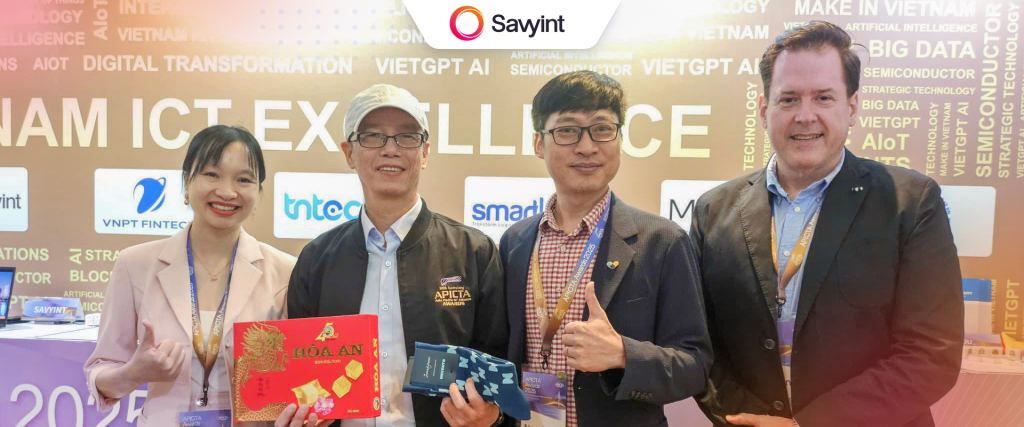
On December 8, at the announcement and awarding ceremony of the Asia-Pacific ICT Awards (APICTA) 2025, SAVYINT’s SAM Appliance was honored as the Second Runner-up in the category Security Solution – Business Service. APICTA is the most prestigious ICT award in the Asia-Pacific region, held annually since 2001 by the Asia Pacific ICT Alliance. This year, APICTA 2025 took place in Kaohsiung, Taiwan, celebrating and recognizing outstanding software products, IT solutions, digital applications, and innovative startup projects from 17 member countries and economies. SAM Appliance by SAVYINT excellently achieved the Second Runner-up title in the Security Solution – Business Service category. This accomplishment is particularly meaningful as it marks SAVYINT’s first participation in APICTA, demonstrating the innovative capabilities and solution quality of Vietnamese technology enterprises on an international stage. SAM Appliance – An all-in-one solution for data encryption, digital signature authentication and mobile identification SAM Appliance is a solution for all-in-one data encryption, digital signature authentication and mobile identification, ensure compliance with standards for remote digital signature, blockchain, crypto currency, mobile payment, data encryption, transaction encryption, timestamp, security, system authentication, IoT, Car2X… SAM Appliance includes a FIPS 140-2 Level 3–certified Server Appliance combined with Hardware Security Module (HSM) devices, integrated with SAM Software, Key Management Software (KMS), and digital signing software, creating a comprehensive and flexible security platform for any deployment needs and sectors such as Finance and Banking, Healthcare, Education, Telecommunications, Broadcasting, Media,… With its compact design and all-in-one hardware architecture, the solution enables fast installation and operation, optimal performance, unlimited integration with existing information systems, and maximum minimization of security vulnerabilities. It ensures system safety thanks to its independent and specialized operating environment, eliminating reliance on third parties, while significantly reducing investment costs compared to traditional specialized security infrastructures. More than just a platform for signing invoices, contracts, documents, certificates, or payment records, SAM Appliance is built on the Cryptographic Security Platform (CSP). It integrates SCA and MFA authentication, PKI-based passwordless authentication, tokenization, transaction signing with end-to-end encryption, advanced mobile security with Cryptography, and supports Post-Quantum Cryptography (PQC) — ready for the new security era. It also supports data and transaction encryption, blockchain and cryptocurrency integration, mobile payment and digital wallet capabilities, timestamped digital signatures, and long-term electronic archiving for 5, 10, and 20 years. SAM Appliance fully complies with regional technical standards and international legal regulations, including FIPS 140-2 Level 3, ISO 9001:2015, ISO 14001:2015, ISO 27001:2022, GDPR, SOC 2 Type II, HIPAA & PCI DSS. During the event, Brad Palmer, COO & EVP of Savyint, shared: “SAM Appliance is a breakthrough technology solution designed to address the core challenges of security, data encryption, and digital identity in today’s era of rapid digital transformation. We developed SAM Appliance as a unified security platform where any organization or enterprise can deploy digital signatures, strong authentication, and secure data and transaction encryption on a single hardware device that meets the highest international standards.” Being honored at APICTA 2025 is a powerful affirmation of Savyint’s technological capabilities. Along with SAM Appliance, Savyint’s solutions will continue to accompany global organizations and enterprises on their journey toward safe, sustainable, and fully compliant digital transformation. Photos from the event:
Savyint Proudly Sponsors World Financial Innovation Series (WFIS) 2025 Philippines as Bronze Sponsor
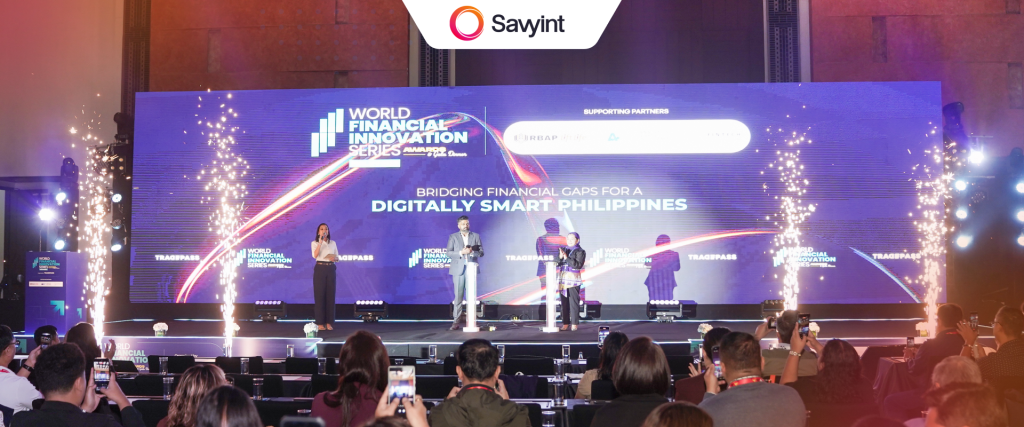
Savyint is honored to be a Bronze Sponsor of the World Financial Innovation Series (WFIS) 2025 Philippines, the premier fintech event in the ASEAN region, organized by Tradepass. The event will bring together over 600 leaders and experts from the finance, banking, and insurance sectors, representing more than 200 organizations across the region. The Philippines is at the forefront of the digital financial transformation, with the online lending market projected to reach USD 1.68 billion by 2027 and over 65 million e-wallet users expected by 2025. Additionally, electronic payments account for 52.8% of total retail transactions, reflecting the widespread adoption of digital technologies in financial services. This surge is driven by three key factors: supportive government policies, the rapid rise of fintech, and the growing demand for a comprehensive financial ecosystem. Initiatives led by the Bangko Sentral ng Pilipinas (BSP), such as the Open Finance pilot program and Project Nexus for enhanced cross-border payments, underscore the country’s commitment to fostering financial inclusion and sustainable development. Against this backdrop, WFIS 2025 Philippines, hosted by Tradepass, serves as a pivotal platform, uniting over 600 industry leaders and experts from 200 organizations. Under the theme “Bridging Financial Gaps for a Digitally Smart Philippines,” WFIS 2025 is more than an event—it is a hub for strategic collaboration and discussions on critical topics such as Open Finance, Central Bank Digital Currency (CBDC), and the application of AI and blockchain in financial services. With over 300 active fintech companies and online payments comprising 52.8% of retail transactions, WFIS 2025 is the ideal stage to shape the future of fintech in the Philippines and drive financial innovation. Over the course of two days, WFIS 2025 Philippines will feature a robust lineup of activities, including: As a Bronze Sponsor, Savyint is represented at the event by Mr. Steve Hoang, Chief Technology Officer, and Mr. Brad Palmer, Chief Operating Officer and Executive Vice President. Savyint’s leadership will engage with top regional executives, investors, and strategic partners, sharing insights on secure digital transformation, electronic identity, and building digital trust within the financial ecosystem. Mr. Brad Palmer stated: “WFIS 2025 is a vital platform for Savyint to connect with strategic partners in the region while reaffirming our long-term commitment to delivering advanced security, identity, and digital finance solutions. This event provides an opportunity to showcase our latest technologies, engage with banking and fintech leaders, and contribute to the secure and sustainable growth of the Philippines’ and ASEAN’s financial ecosystems.” With over 20 years of expertise in developing encryption, identity, and authentication solutions, Savyint offers the market’s most comprehensive authentication platforms, fully compliant with BSP Circular No. 1213. The company is dedicated to supporting the Philippines’ financial sector by implementing modern security standards, combating fraud, and fostering digital trust. Images from the event:
SAM Auth Server – Next-Gen Digital Identity & Authentication Compliant with Philippines BSP Circular No. 1213
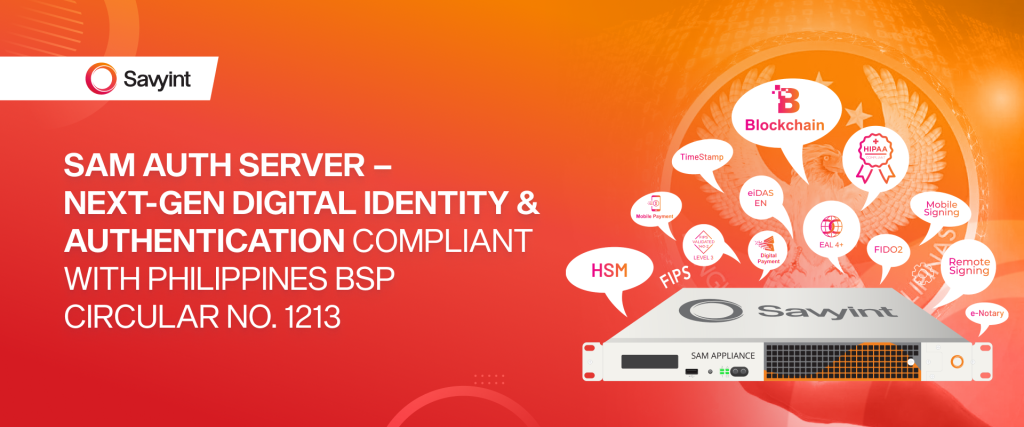
The Philippines BSP Circular No. 1213 introduces specific changes that will reshape authentication policies across financial institutions in the Philippines, with a one-year compliance window starting June 2025. The pressing question now is how to adapt effectively Bangko Sentral ng Pilipinas (BSP) Circular No. 1213, issued in June 2025, is a regulation mandating stricter, phishing-resistant, device-bound authentication for financial institutions in the Philippines to combat digital fraud. The circular aims to enhance security in digital customer onboarding, transactions, and session management by replacing insecure methods like SMS/email OTPs with stronger tools such as passkeys and biometrics. The requirements apply to all BSP-supervised financial entities, including banks, fintech companies, payment providers, and lending firms, and cover critical areas such as: Financial institutions have one year from June 2025 to fully comply with all the requirements of this Circular. 1. Specific regulations BSP Circular No. 1213 highlights the growing security risks of traditional OTP methods – particularly those delivered via SMS or email—and advises against their use. This stance reflects global recognition that such channels are highly vulnerable to phishing, SIM swap attacks, and other forms of social engineering. Biometric authentication, Behavioral biometrics, Passwordless authentication (biometrics, hardware tokens and cryptographic keys, FIDO), Adaptive authentication, considered perfectly aligned with BSP Circular No. 1213 because they directly address the circular’s core security objectives: preventing phishing, eliminating interceptable authentication, and binding user access to a secure device. Fundamentally, the provisions of BSP Circular No. 1213 adopt a similar approach to those of other countries around the world, as cyberattacks are a global issue. 2. Comprehensive Compliance Solution – SAM Auth Server With over 20 years of experience in developing encryption, identity, and authentication solutions, Savyint offers one of the most comprehensive authentication platforms, fully meeting and even exceeding the requirements of BSP Circular No. 1213. SAM Auth Server is an all-in-one strong authentication solution that enables system authentication, data encryption, transaction encryption, multi-layer authentication, multi-level security, and integration with hardware security devices as well as software functional modules, ensuring maximum safety for electronic transactions. 2.1 Key features of the solution Transaction Authentication Features Access Control Token Types Data Encryption – Transaction Encryption Encrypt data and transactions, ensuring that all information cannot be stolen or tampered with during initiation, storage, and transmission. Integration with AML monitoring systems and Fraud Management Systems (FMS) 2.2 Full compliance with international standards With a flexible design and high scalability, SAM Auth Server can be easily deployed across various system models (on-premise, cloud), supports multiple platforms, and delivers the most advanced authentication methods available today. Contact us now for a consultation HERE!